The White Horse (Horse at the Ford) — History & Facts
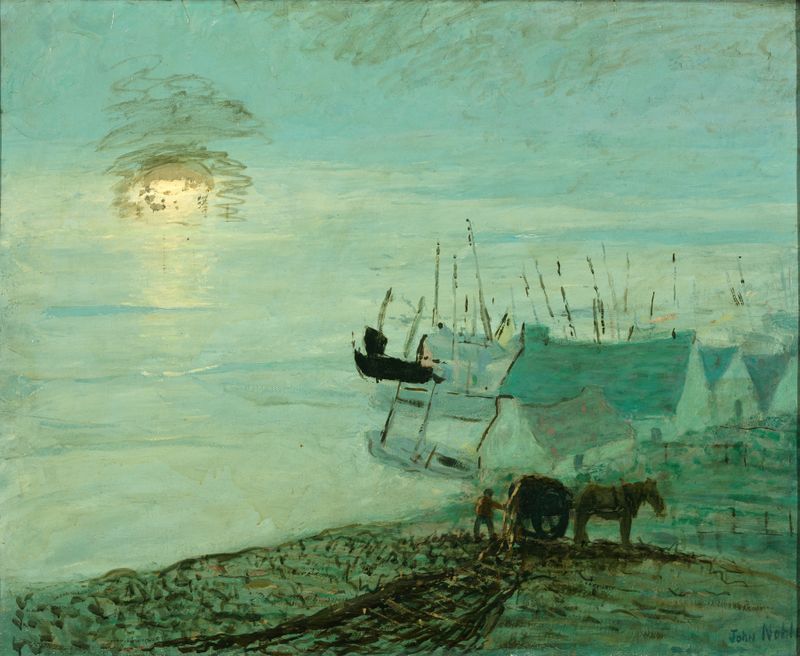
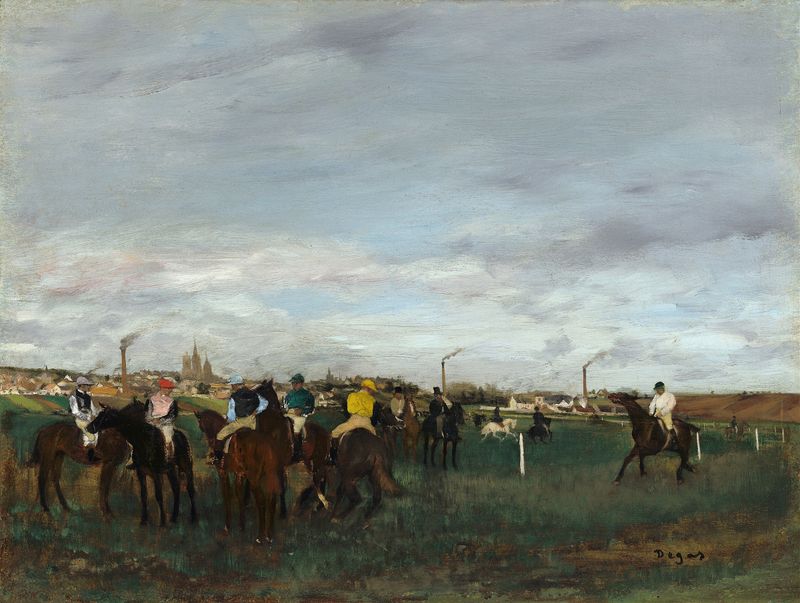
When did color learn to lie? In the vivid dreamscape of The White Horse (Horse at the Ford), hues echo the unsaid, blurring the boundaries between reality and imagination. Look to the left at the striking white horse, its coat shining with an ethereal glow, standing poised at the edge of the tranquil water. Notice how the light cascades over the surface, creating ripples that mimic the horse’s graceful form. The background dances in soft greens and blues, suggesting a landscape that breathes with life yet feels suspended in time, inviting the viewer to step closer into this melancholic reverie. Yet, beneath the surface beauty lies a sense of tension—the horse stands alone, caught between two worlds: the solid ground and the shimmering reflection.
The merging of colors evokes both serenity and uncertainty, hinting at a deeper longing. The contrasts between the vibrant horse and the muted backdrop suggest a struggle for existence, perhaps symbolizing the artist's own yearnings in a tumultuous era. In 1917, John Noble painted this piece amidst the shadows of World War I, a time when the world grappled with profound loss and change. Living in the United States, he sought to capture both the beauty of nature and the disquietude of the human spirit, reflecting the complexities of his own experiences and the broader societal landscape.
This artwork emerges as a poignant testament to resilience amidst turmoil, inviting viewers to explore the depths of their own dreams and fears.