Beach Scene — History & Facts
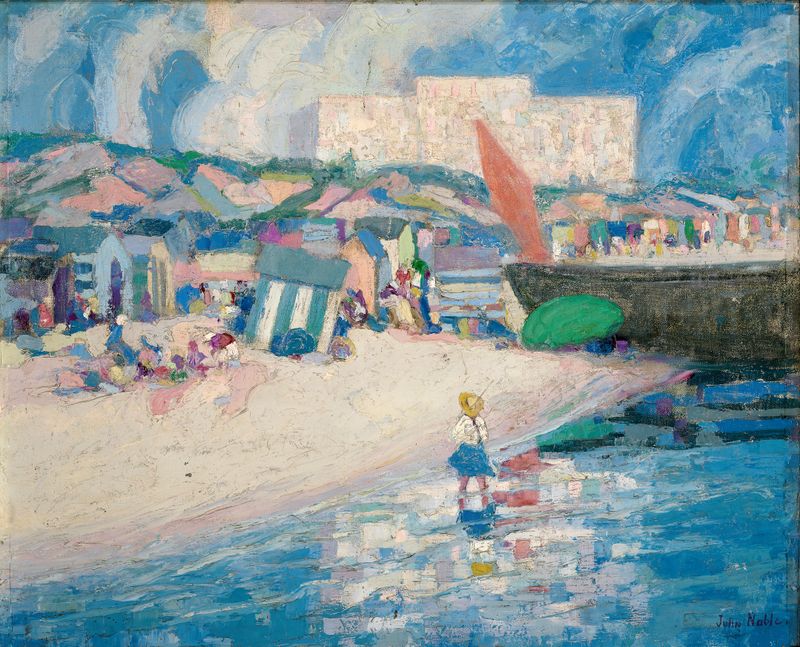
In the dynamic interplay of hues on canvas, chaos finds its voice amid the tranquility of a beach. Look to the lower right corner, where vibrant strokes of sandy yellows and muted browns converge, grounding the viewer in the lively movement of waves lapping against the shore. The restless sea, painted in swirling greens and blues, draws the eye upward, where a sky, dappled with soft pastels, hints at a fading day. The careful layering of color creates a rhythm that evokes the rhythmic pulse of the ocean, while gestural brushstrokes suggest the frenetic energy of life at the beach, a moment caught between calm and tumult. Amid this vivid portrayal, contrasts emerge.
The vibrant chaos of the water stands in stark opposition to the solidity of the sand, highlighting the perpetual struggle between nature's serene beauty and its unpredictable ferocity. Silhouettes of sunbathers scattered along the shore exude a sense of both isolation and communal experience, inviting viewers to contemplate their own presence in this sweeping scene, caught in the duality of joy and unrest that a day at the beach can evoke. In 1910, John Noble created Beach Scene during a time when he was deeply influenced by the Impressionist movement, which sought to capture fleeting moments of light and atmosphere. Living in the embrace of a rapidly modernizing world, he aimed to reflect the vibrancy of contemporary life, intertwining the chaos of nature with human emotion, a theme that resonated within the broader art community of the time.