
Magnificent Clay Bluffs, 1800 Miles Above St. Louis — History & Facts
Where does light end, and longing begin? The bluffs rise like ancient sentinels, casting shadows over the river below, each curve of the clay forming a testament to time's unyielding passage. Look to the left at the towering cliffs; their rich ochre and deep umber tones encapsulate the rugged beauty of the landscape. Notice how the light dances on the surface, revealing a texture that is almost tactile, inviting you to run your fingers across the earth itself. At the river’s edge, soft blues and greens reflect the sky’s embrace, a visual contrast that breathes life into the stillness.
The composition draws your gaze along the natural contours, leading you into a world that seems both remote and achingly familiar. Yet beneath the surface beauty lies an emotional depth that speaks to a profound grief. The bluffs, majestic and timeless, embody the weight of loss, representing both the resilience of nature and the transient nature of human existence. The juxtaposition of light and shadow evokes a sense of longing, hinting at stories untold and memories faded, as if the landscape itself mourns the passage of those who once thrived here.
The painting captures a moment where beauty and sorrow coexist, reminding us that even the most breathtaking vistas are tinged with the echoes of what has been lost. In 1832, the artist journeyed through the American frontier, deeply immersed in the landscapes and cultures he encountered. As a prominent figure in the movement to document Native American life, his work emerged during a time when the world was transitioning rapidly, and the ethos of exploration and expansion overshadowed the intimate connections to the land. This painting reflects not only the physical beauty of the bluffs but also the spiritual and emotional complexity of a nation grappling with its identity.
More Artworks by George Catlin
Browse all →
Wichita Lodge, Thatched With Prairie Grass
George Catlin

Ball-play of the Choctaw–Ball Up
George Catlin

Sioux Worshiping At The Red Boulders
George Catlin
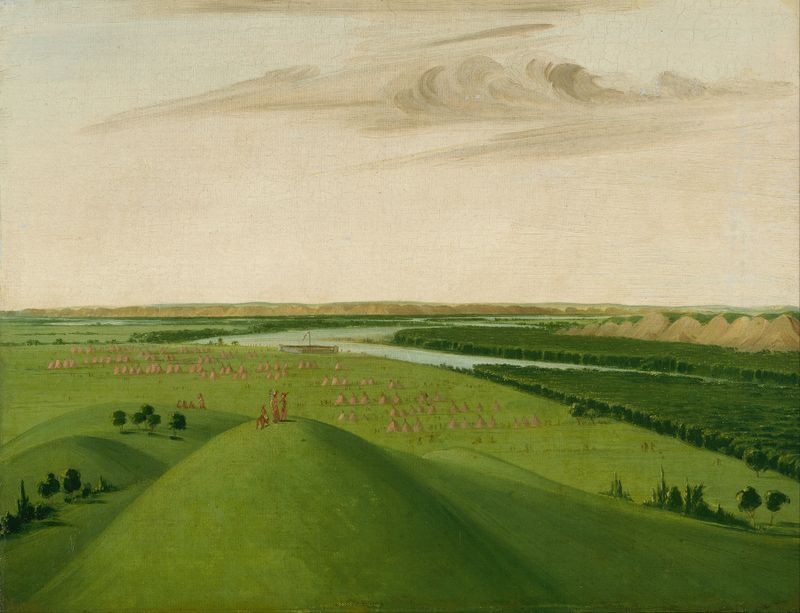
Fort Union, Mouth of the Yellowstone River, 2000 Miles above St. Louis
George Catlin
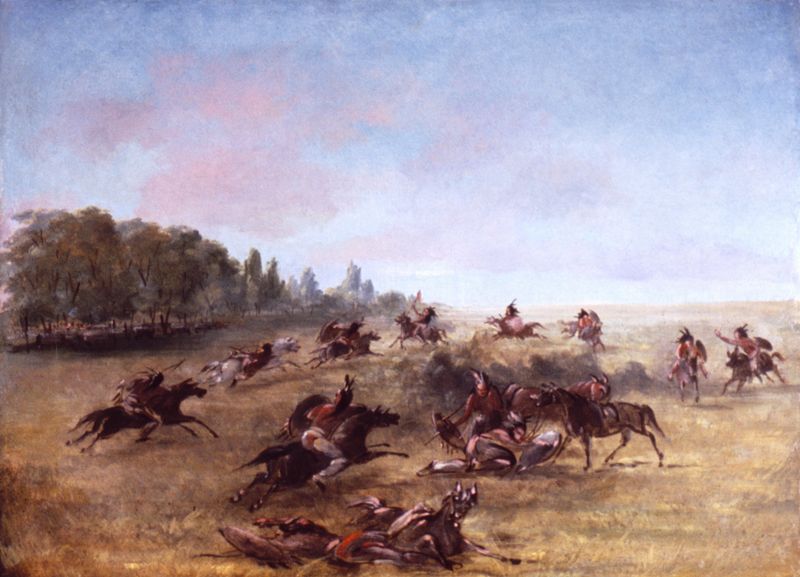
Mounted War Party Scouring A Thicket
George Catlin

Buffalo Chase, A Surround by the Hidatsa
George Catlin
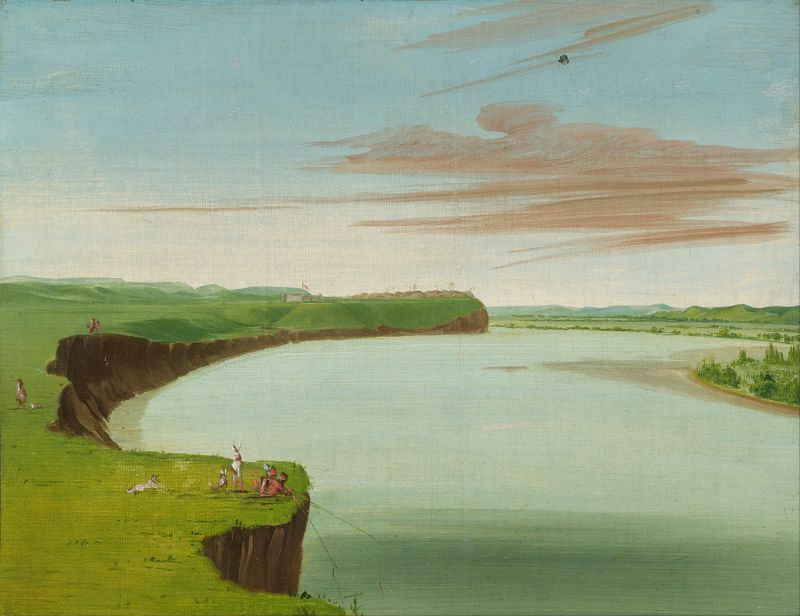
Distant View of the Mandan Village
George Catlin
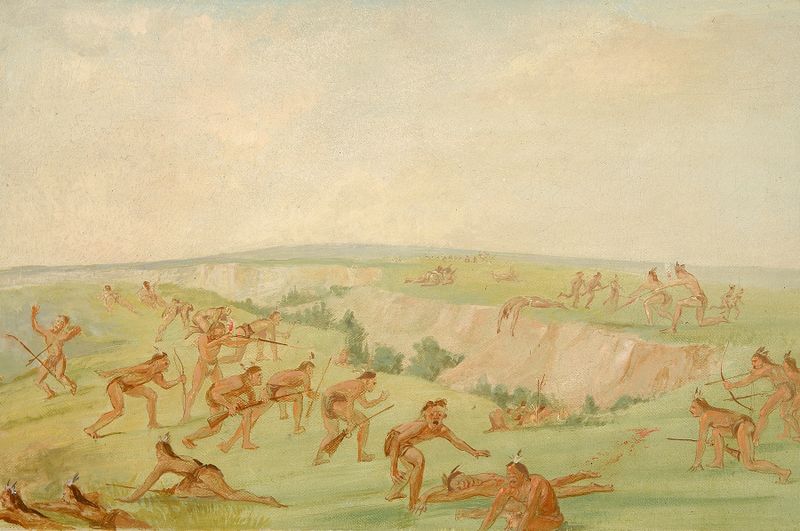
Mandan Attacking A Party Of Arikara
George Catlin
View On The Upper Mississippi, Beautiful Prairie Bluffs
George Catlin
Sac And Fox Sailing In Canoes
George Catlin





