
Mandan Attacking A Party Of Arikara — History & Facts
Look closely at the striking hues employed in the canvas. The foreground bursts with deep reds and earthy browns, drawing your gaze to the determined expressions of the Mandan warriors, poised in an act of aggression. Notice how the soft, muted blues of the sky contrast with their vibrant attire, emphasizing the tension of the moment.
The sharp lines and fluid movements create a sense of urgency, inviting you into the heart of this clash between two cultures. Within the scene lie layers of meaning; the bold colors not only evoke the raw emotions of battle but also symbolize the struggle for survival. The juxtaposition of fierce warriors against a tranquil backdrop highlights the duality of their existence—bravery intertwined with vulnerability. Each figure carries a story, a history that speaks to the resilience of a people facing encroaching change, while the lush landscape hints at the rich heritage they fight to preserve. George Catlin painted this work between 1832 and 1833, during his travels through the American West.
At that time, he was deeply invested in documenting Native American life, believing it essential to preserve their stories before they vanished. Amidst a rapidly changing world, his commitment to portraying the richness of indigenous cultures set a pivotal course in American art history.
More Artworks by George Catlin

Ball-play of the Choctaw–Ball Up
George Catlin

Wichita Lodge, Thatched With Prairie Grass
George Catlin
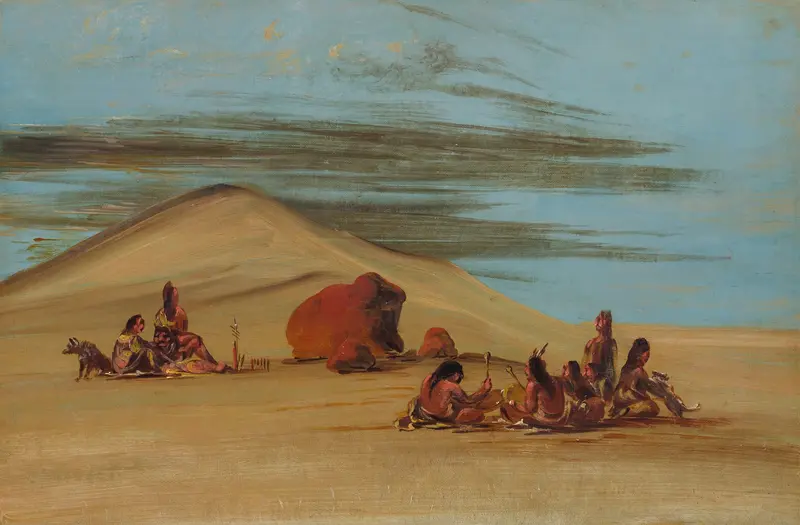
Sioux Worshiping At The Red Boulders
George Catlin
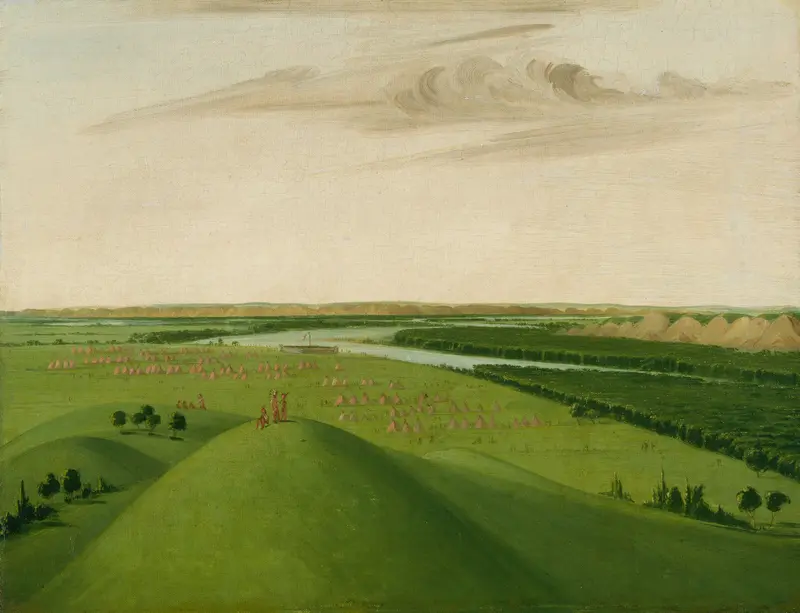
Fort Union, Mouth of the Yellowstone River, 2000 Miles above St. Louis
George Catlin
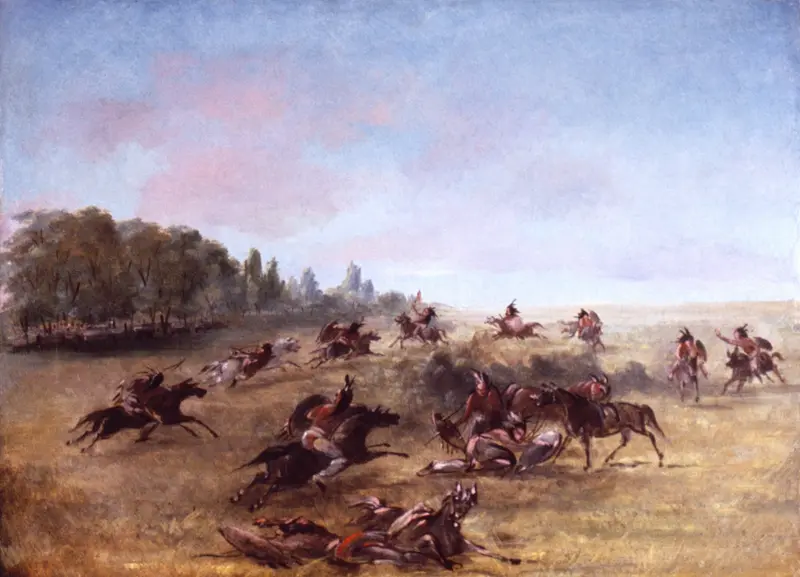
Mounted War Party Scouring A Thicket
George Catlin
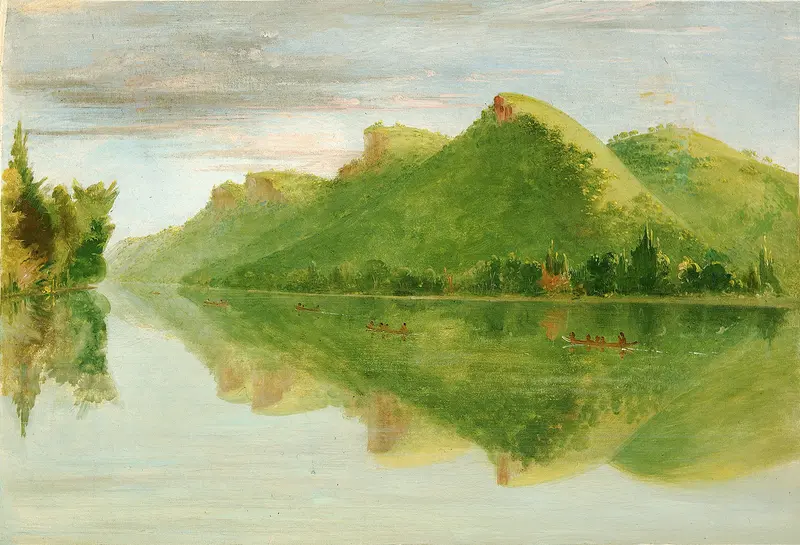
View On The Upper Mississippi, Beautiful Prairie Bluffs
George Catlin
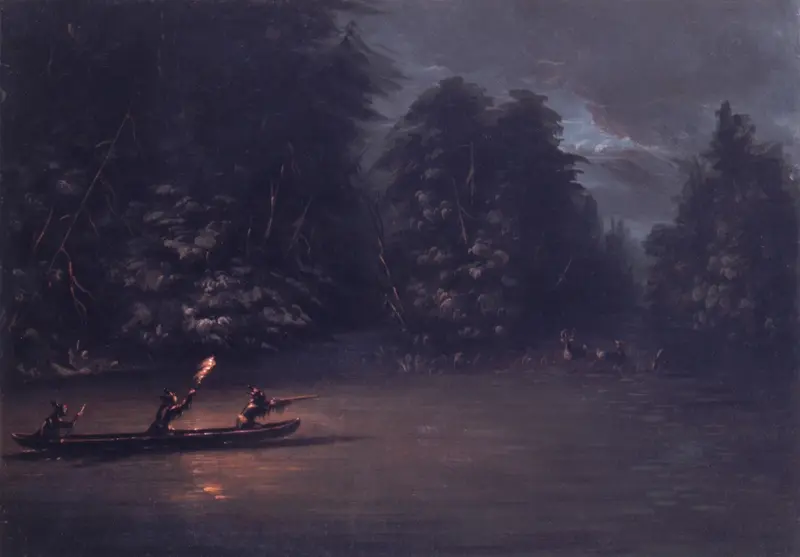
Deer Hunting By Torchlight In Bark Canoes
George Catlin
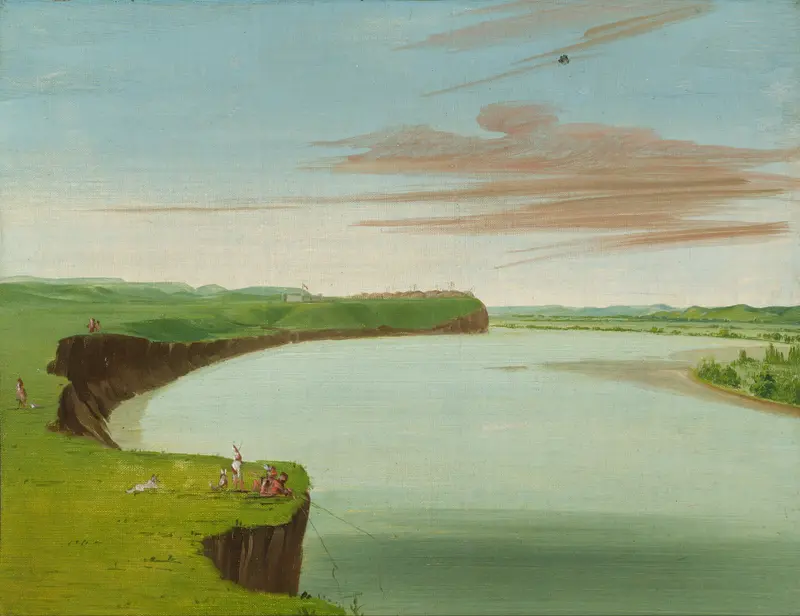
Distant View of the Mandan Village
George Catlin
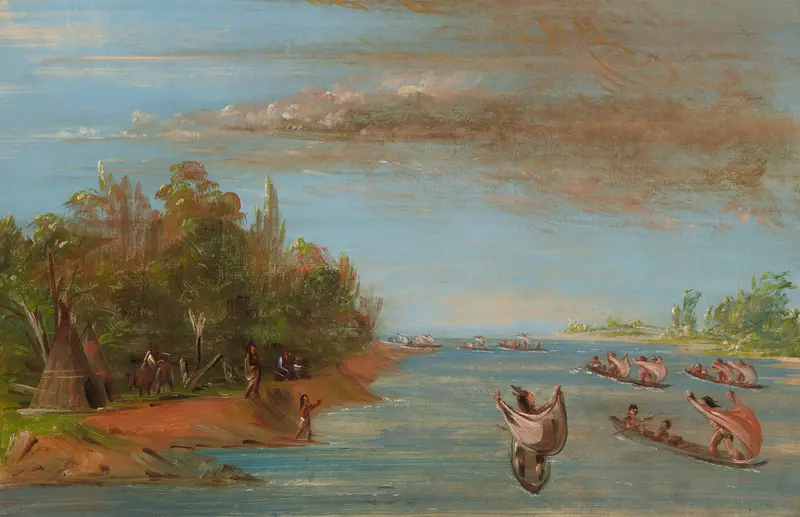
Sac And Fox Sailing In Canoes
George Catlin
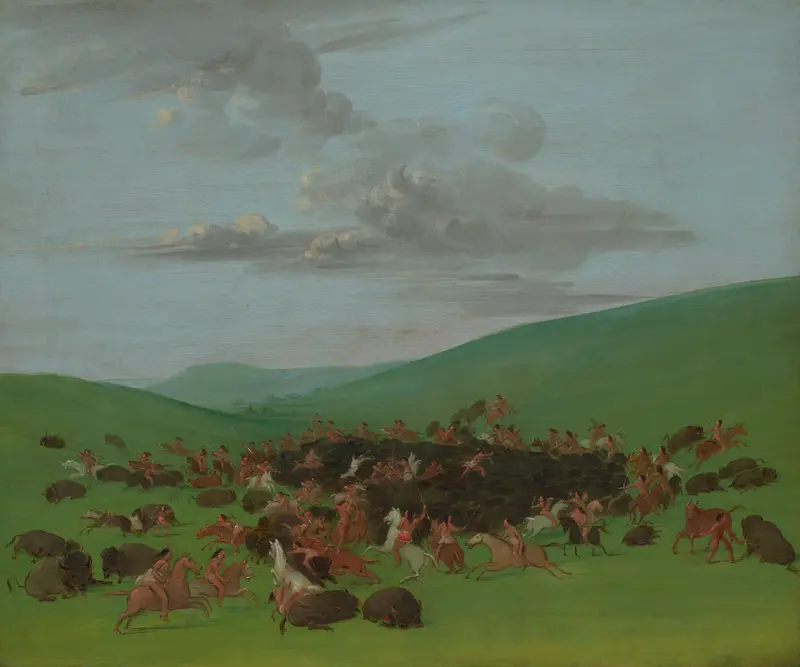
Buffalo Chase, A Surround by the Hidatsa
George Catlin





