
Ball-play of the Choctaw–Ball Up — History & Facts
Who listens when art speaks of silence? In Ball-play of the Choctaw–Ball Up, movement captures a moment suspended in time, where the energy of play intertwines with the gravity of cultural expression. Look to the center, where a group of figures, vibrant and animated, engage in a traditional game that bursts forth within the confines of a natural setting. Notice how the players are clad in colorful attire, their limbs outstretched, each gesture echoing the thrill of competition. The artist's use of earthy tones contrasts sharply with splashes of color, evoking the vitality of the scene while grounding it in its cultural context.
The gentle brushwork suggests both movement and rhythm, allowing the viewer to feel the pulse of the moment. Dive deeper into the symbolism woven through this depiction. The ball, at the heart of the scene, represents not just a game but the spirit of unity and communal identity among the Choctaw people. Each player's expression conveys an intricate tapestry of emotion—determination, joy, and a hint of nostalgia for traditions that face the threat of erasure.
The background, while seemingly tranquil, hints at a world outside this sacred space, one that may not understand or appreciate the significance of what unfolds. During the mid-19th century, George Catlin traveled extensively through North America, striving to document the lives and cultures of Indigenous peoples before they disappeared due to expansion and conflict. Created during his time in the 1830s, this painting reflects his commitment to preserving their stories and traditions through art, offering a legacy of respect and remembrance in a rapidly changing world.
More Artworks by George Catlin
Browse all →
Wichita Lodge, Thatched With Prairie Grass
George Catlin

Sioux Worshiping At The Red Boulders
George Catlin
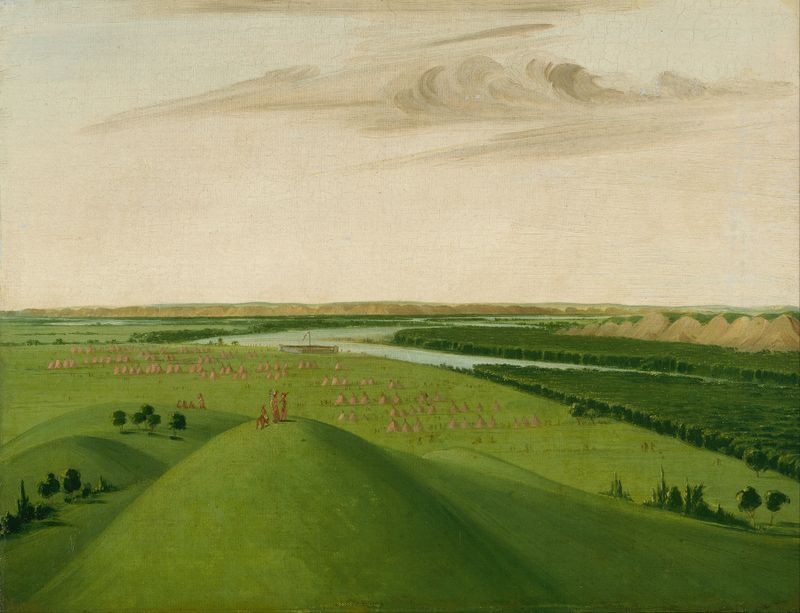
Fort Union, Mouth of the Yellowstone River, 2000 Miles above St. Louis
George Catlin
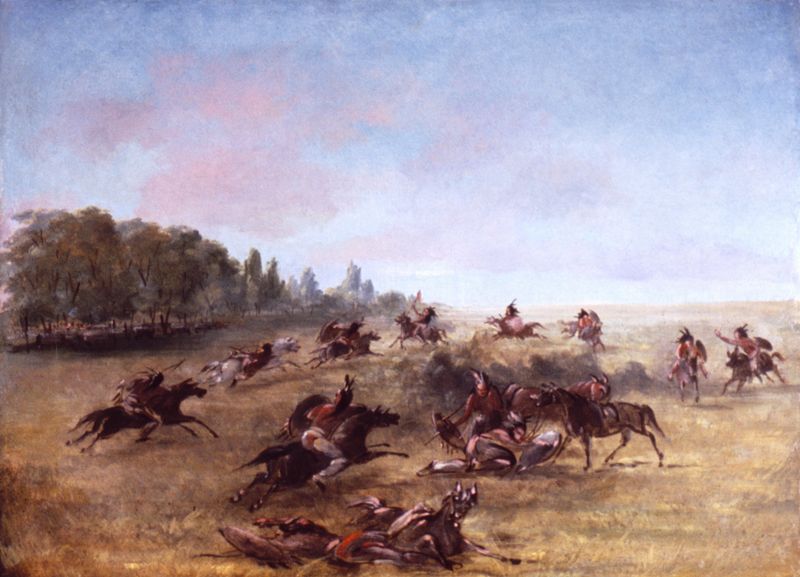
Mounted War Party Scouring A Thicket
George Catlin

Buffalo Chase, A Surround by the Hidatsa
George Catlin
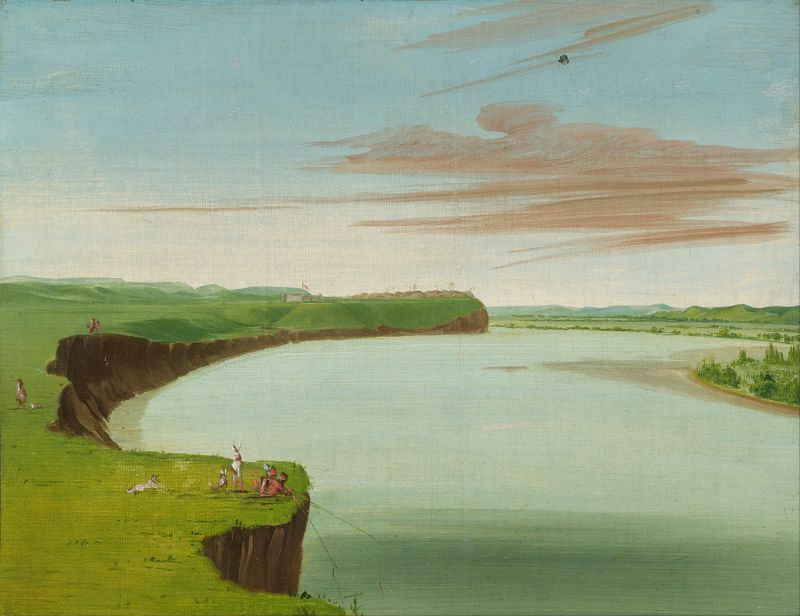
Distant View of the Mandan Village
George Catlin
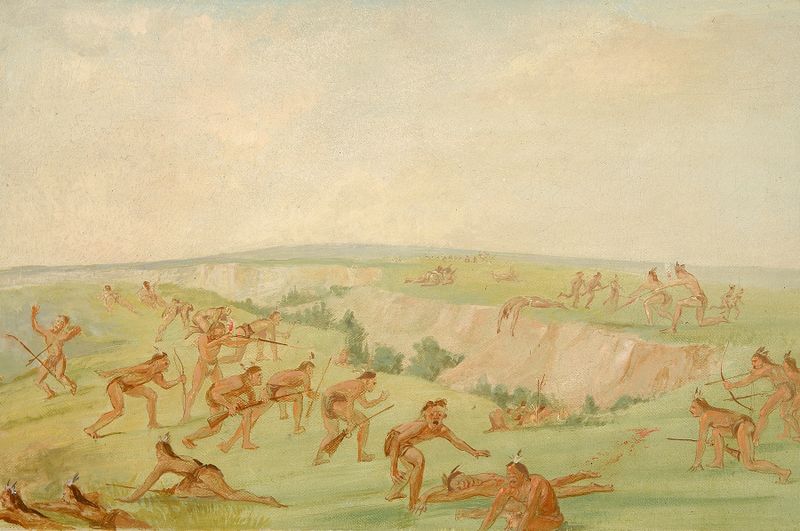
Mandan Attacking A Party Of Arikara
George Catlin
View On The Upper Mississippi, Beautiful Prairie Bluffs
George Catlin
Sac And Fox Sailing In Canoes
George Catlin
Sham Fight, Mandan Boys
George Catlin





