
Mounted War Party Scouring A Thicket — History & Facts
What if silence could speak through light? In George Catlin’s Mounted War Party Scouring A Thicket, the delicate interplay of shadow and hue whispers the fragility of existence amid the chaos of human endeavor. The tension crafted within the frame invites contemplation on the ephemeral nature of life and the world around us. Look to the center of the canvas, where the riders command their horses, poised in a moment of anxious anticipation. The vibrant earth tones of the landscape contrast sharply with the intense energy exuded by the mounted figures, highlighted by the dappled sunlight filtering through the thicket.
The meticulous brushwork captures the texture of the grass and foliage, drawing the viewer's eye through the wild environment that envelops them, while hints of movement add a sense of urgency. Beneath the surface, this composition reveals deeper narratives. The riders, perhaps a metaphor for the relentless spirit of exploration and conquest, find themselves in a paradoxical dance with nature, hinting at the fleeting balance between civilization and wilderness. Notably, the thicket serves as both a refuge and a barrier, symbolizing the complexity of the relationship between man and the untamed world—a reminder of the fragility inherent in both. During the years 1846 to 1848, Catlin was immersed in documenting Native American cultures, capturing their essence before the inevitable tide of change.
Working in the American West, he aimed to raise awareness of their plight and the encroachment on their lands. This painting, like many of his works, stands as a visual testament to both the beauty and the impending loss of these rich traditions amidst a rapidly transforming landscape.
More Artworks by George Catlin
Browse all →
Wichita Lodge, Thatched With Prairie Grass
George Catlin

Ball-play of the Choctaw–Ball Up
George Catlin

Sioux Worshiping At The Red Boulders
George Catlin
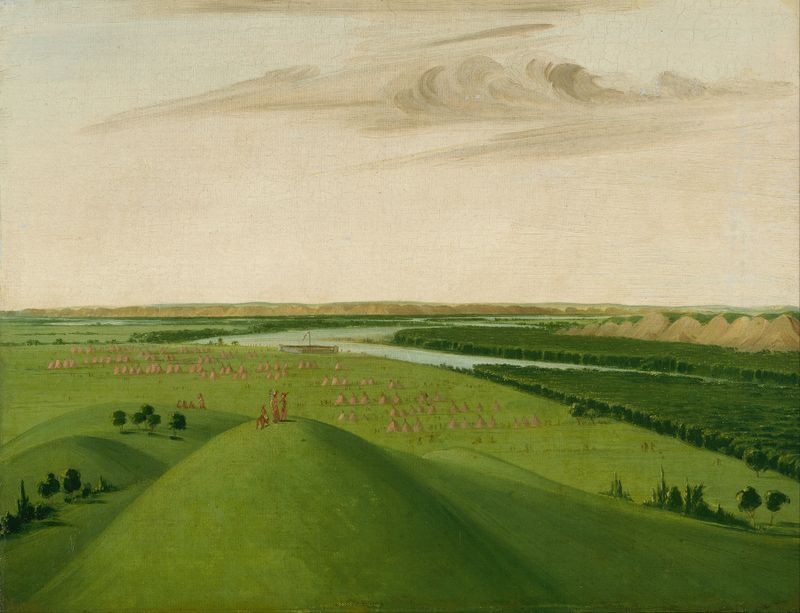
Fort Union, Mouth of the Yellowstone River, 2000 Miles above St. Louis
George Catlin

Buffalo Chase, A Surround by the Hidatsa
George Catlin
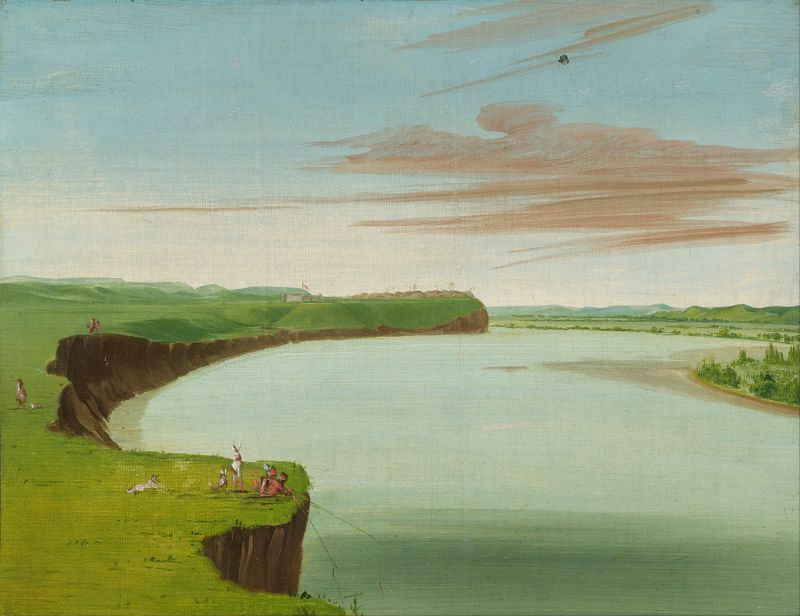
Distant View of the Mandan Village
George Catlin
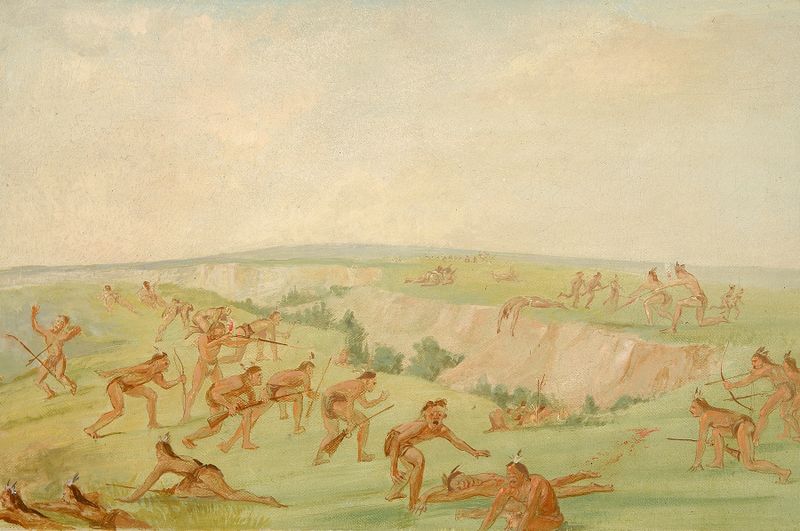
Mandan Attacking A Party Of Arikara
George Catlin
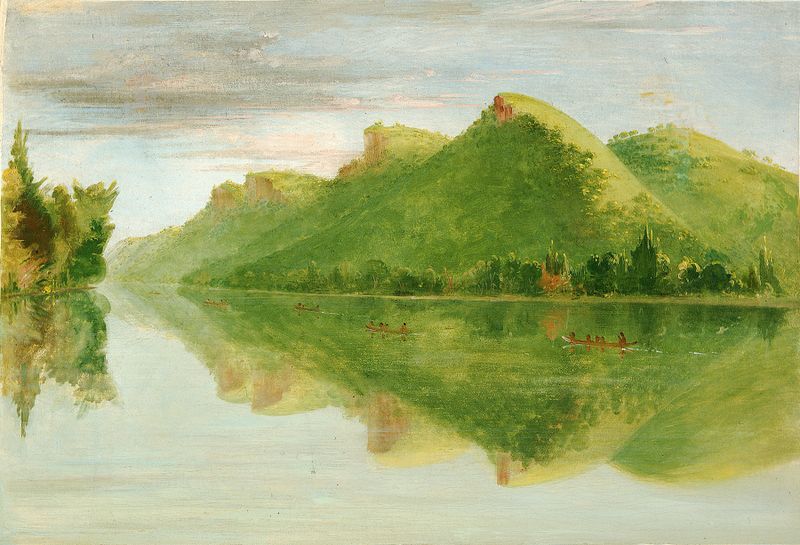
View On The Upper Mississippi, Beautiful Prairie Bluffs
George Catlin
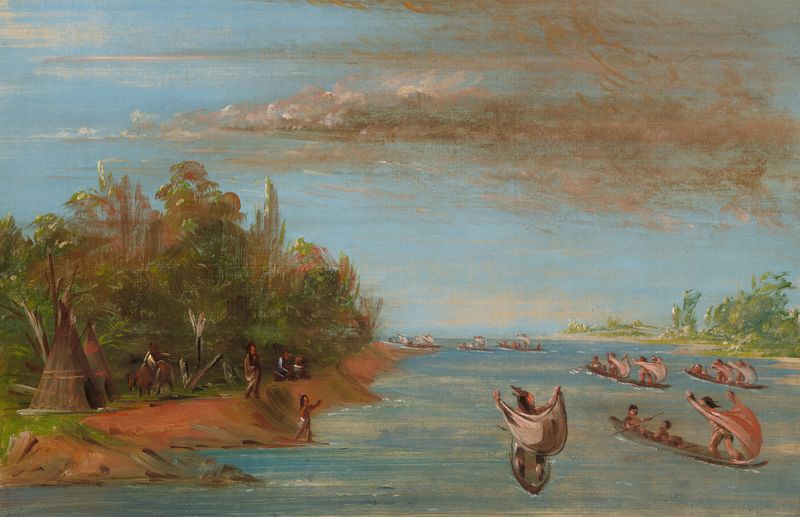
Sac And Fox Sailing In Canoes
George Catlin
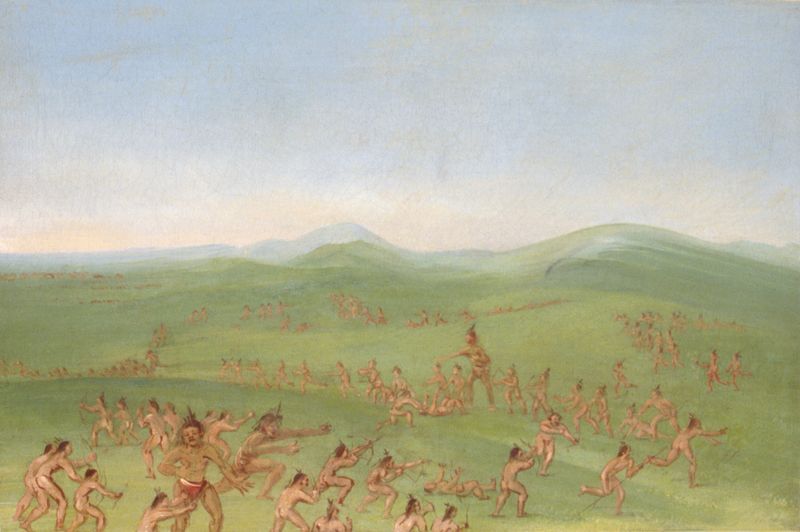
Sham Fight, Mandan Boys
George Catlin
More Historical Art
Browse all →
The Night Watch Militia Company of District II under the Command of Captain Frans Banninck Cocq
Rembrandt van Rijn

Lincoln Memorial
Henry Bacon

The Third of May 1808
Francisco de Goya

Isaac and Rebecca, Known as ‘The Jewish Bride’
Rembrandt van Rijn

The Charge of the Mamelukes (1814)
Francisco de Goya

De vier ruiters van de apocalyps
Albrecht Dürer