Discover insights about this artwork
Mahana no atua (Day of the God) — History & Facts
In Mahana no atua (Day of the God), Paul Gauguin presents a vibrant scene filled with rich colors. The painting features figures engaged in various activities, set against a lush, tropical landscape. The use of bold colors, such as deep greens and bright reds, creates a striking contrast that draws the viewer's eye.
Gauguin's style emphasizes the emotional and spiritual connection to the Polynesian culture he sought to depict. This artwork is an oil on canvas, measuring approximately 90 x 116 cm. Gauguin's technique involves the use of flat areas of color and simplified forms, which are characteristic of his Post-Impressionist style. The composition is carefully arranged, with figures and nature harmoniously integrated.
The painting's vibrant palette enhances the overall impact, making it a captivating piece. Paul Gauguin created Mahana no atua in 1894 during his time in Tahiti, where he sought to escape European civilization. This work reflects his fascination with Polynesian mythology and culture, which he believed was more authentic than Western society. An interesting fact about this painting is that it was part of a series of works that Gauguin produced during his stay in Tahiti, aiming to capture the essence of the island's spiritual life.
More Artworks by Paul Gauguin
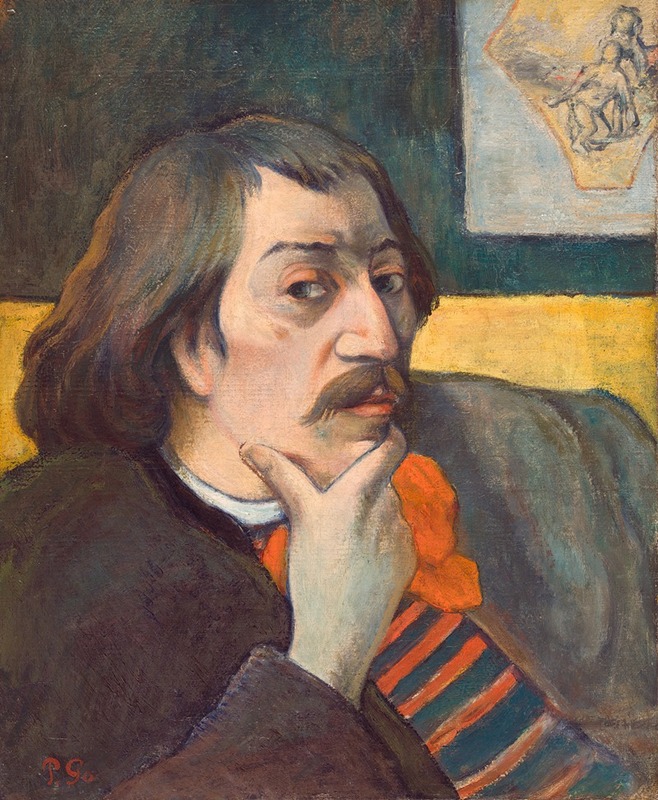
Self Portrait
Paul Gauguin
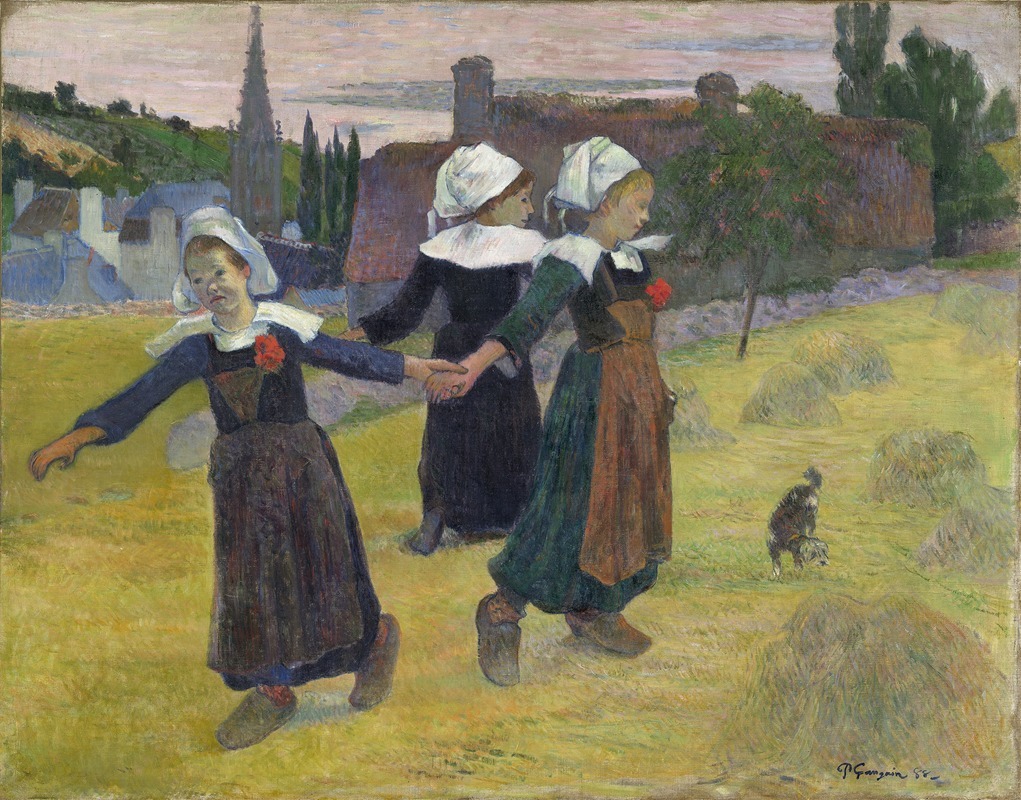
Breton Girls Dancing,Pont-Aven
Paul Gauguin
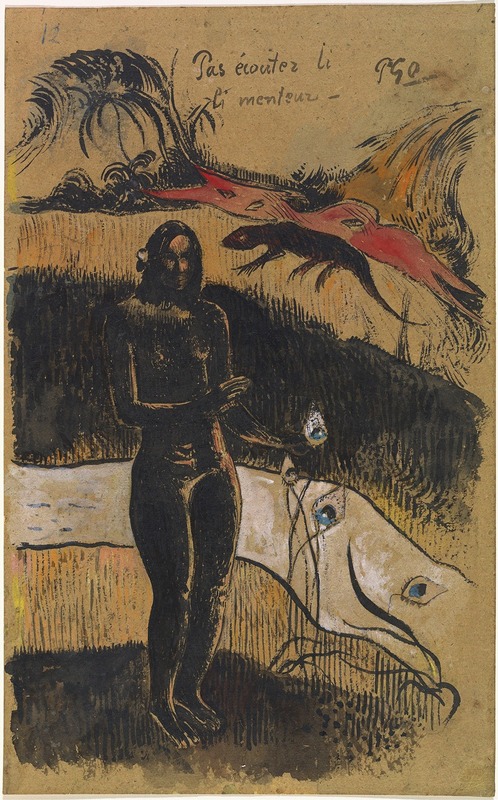
Nave Nave Fenua
Paul Gauguin
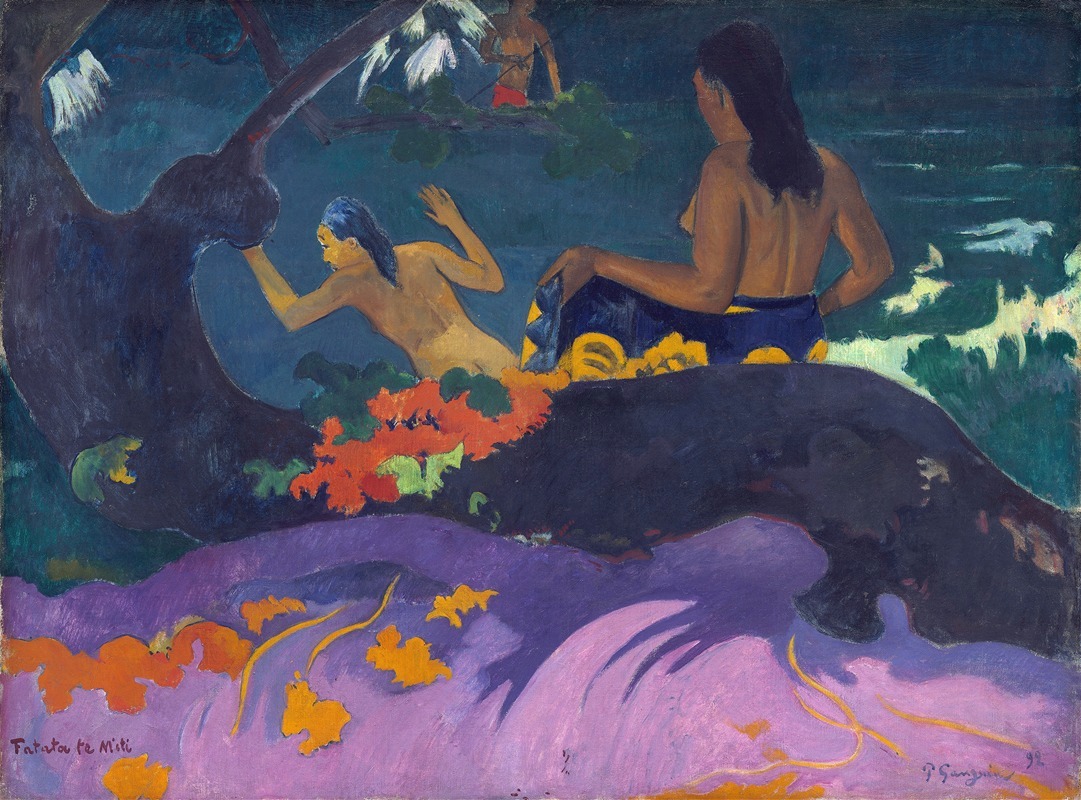
Fatata te Miti (By the Sea)
Paul Gauguin
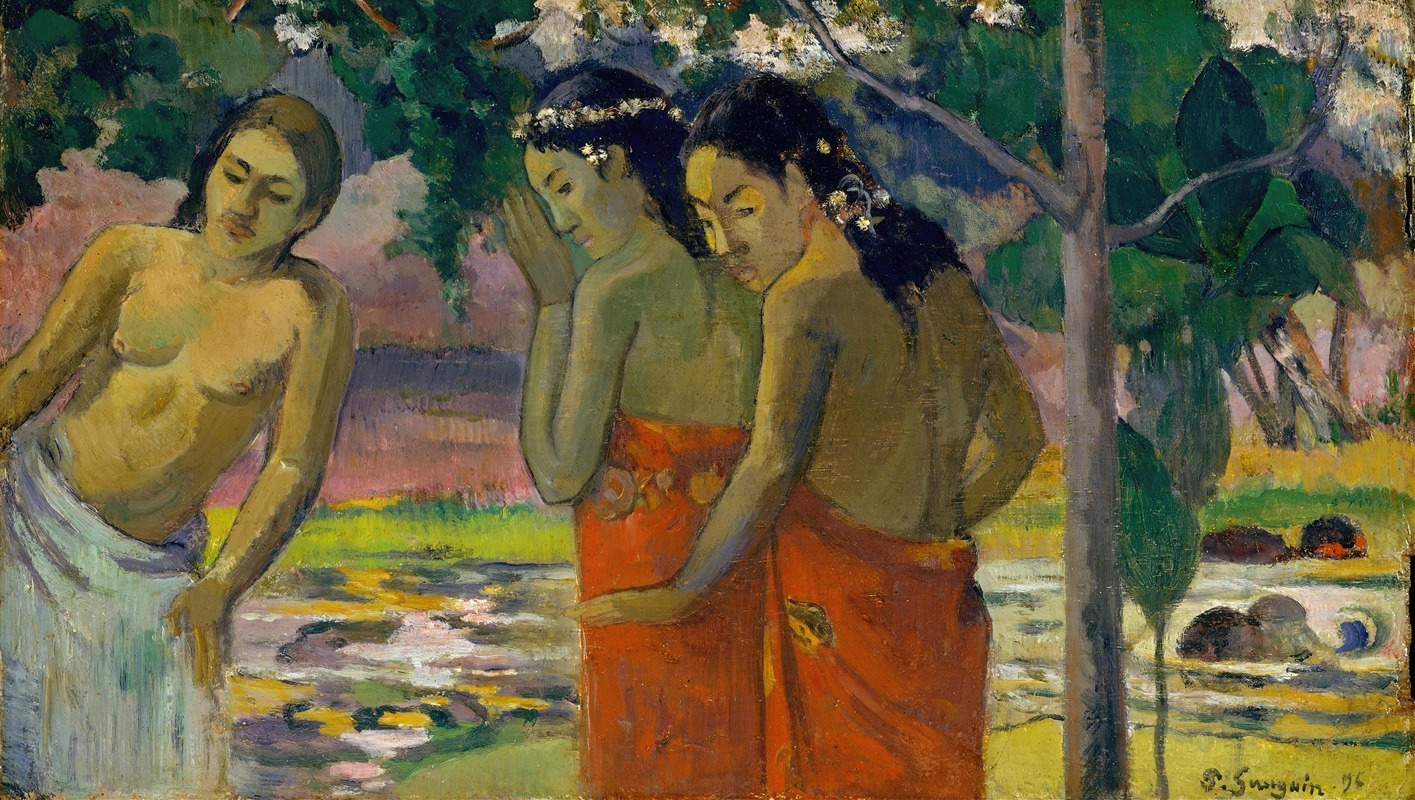
Three Tahitian Women
Paul Gauguin
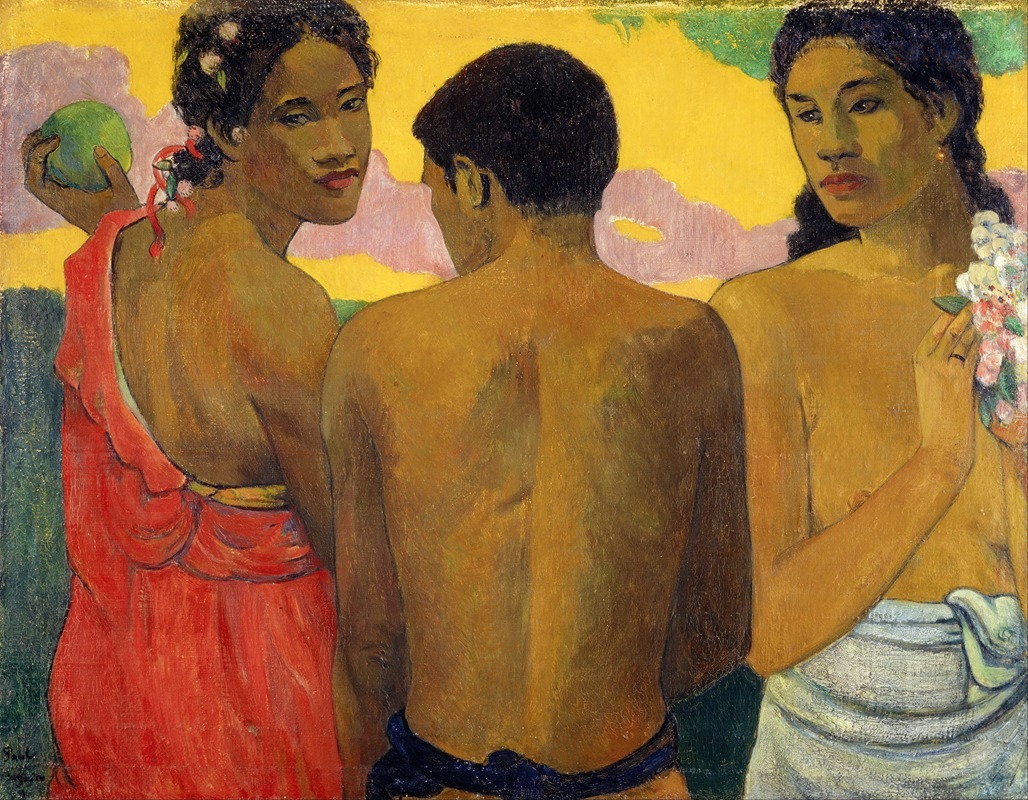
Three Tahitians
Paul Gauguin
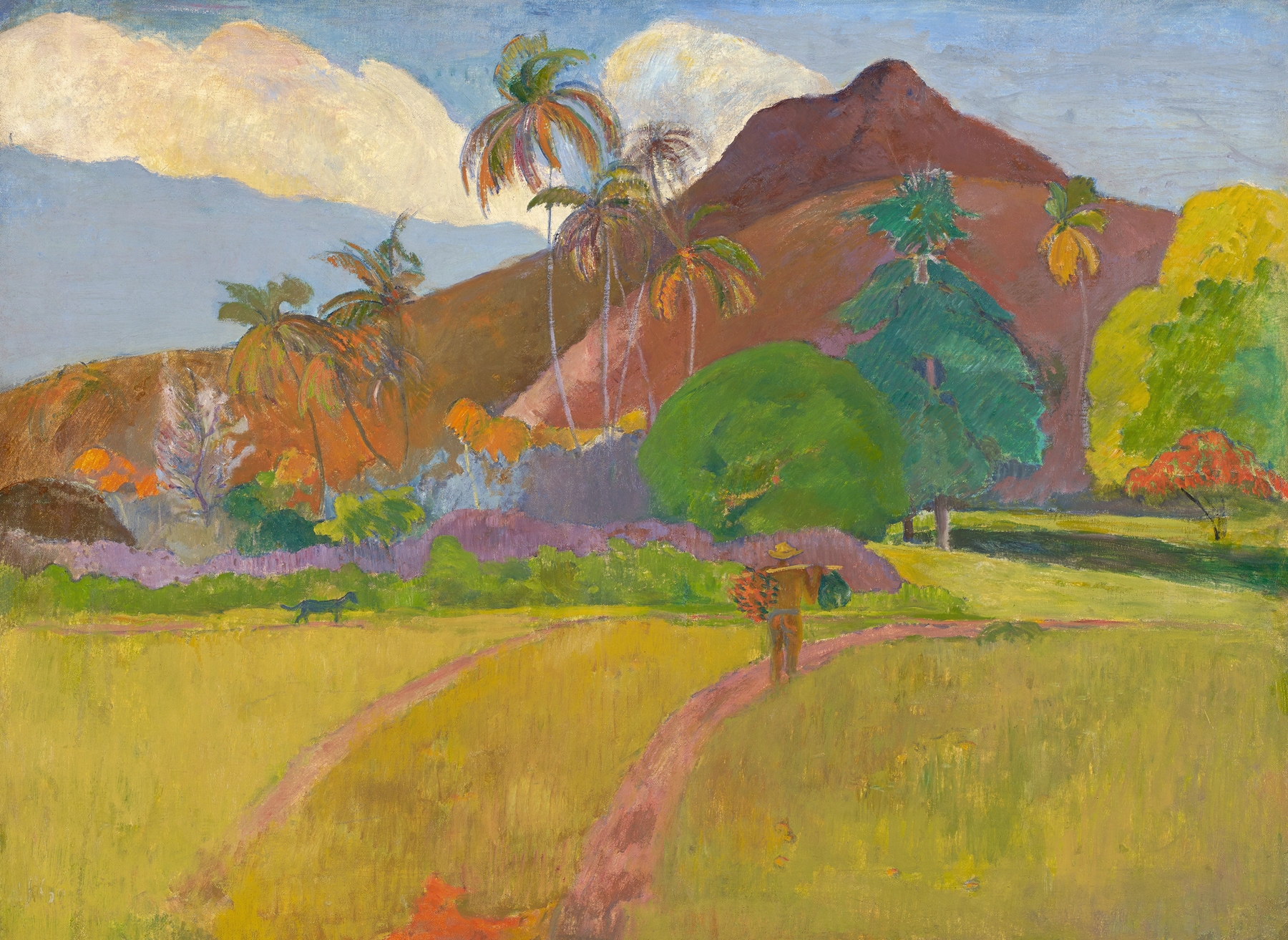
Tahitian Landscape
Paul Gauguin
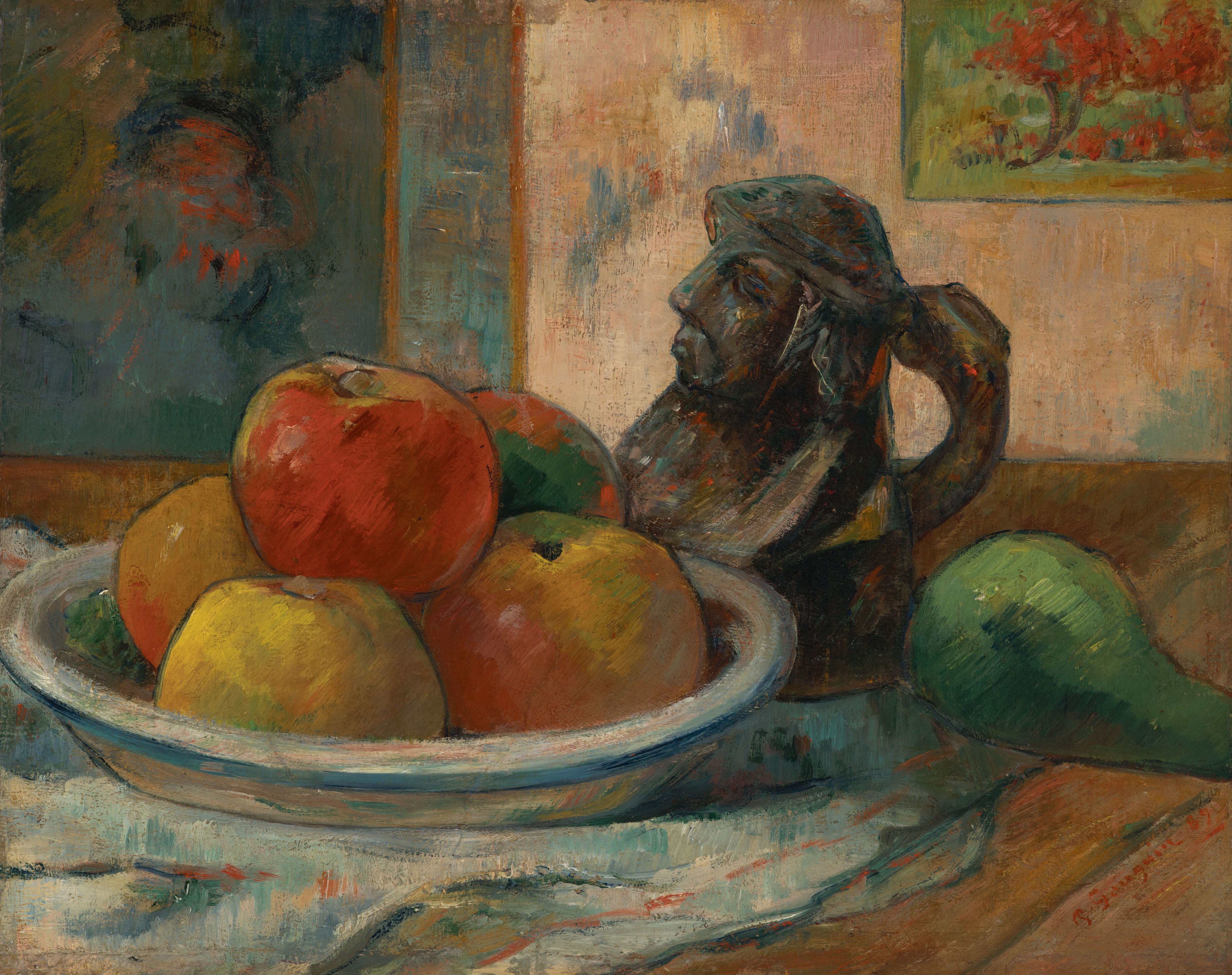
Still Life with Apples, a Pear, and a Ceramic Portrait Jug
Paul Gauguin
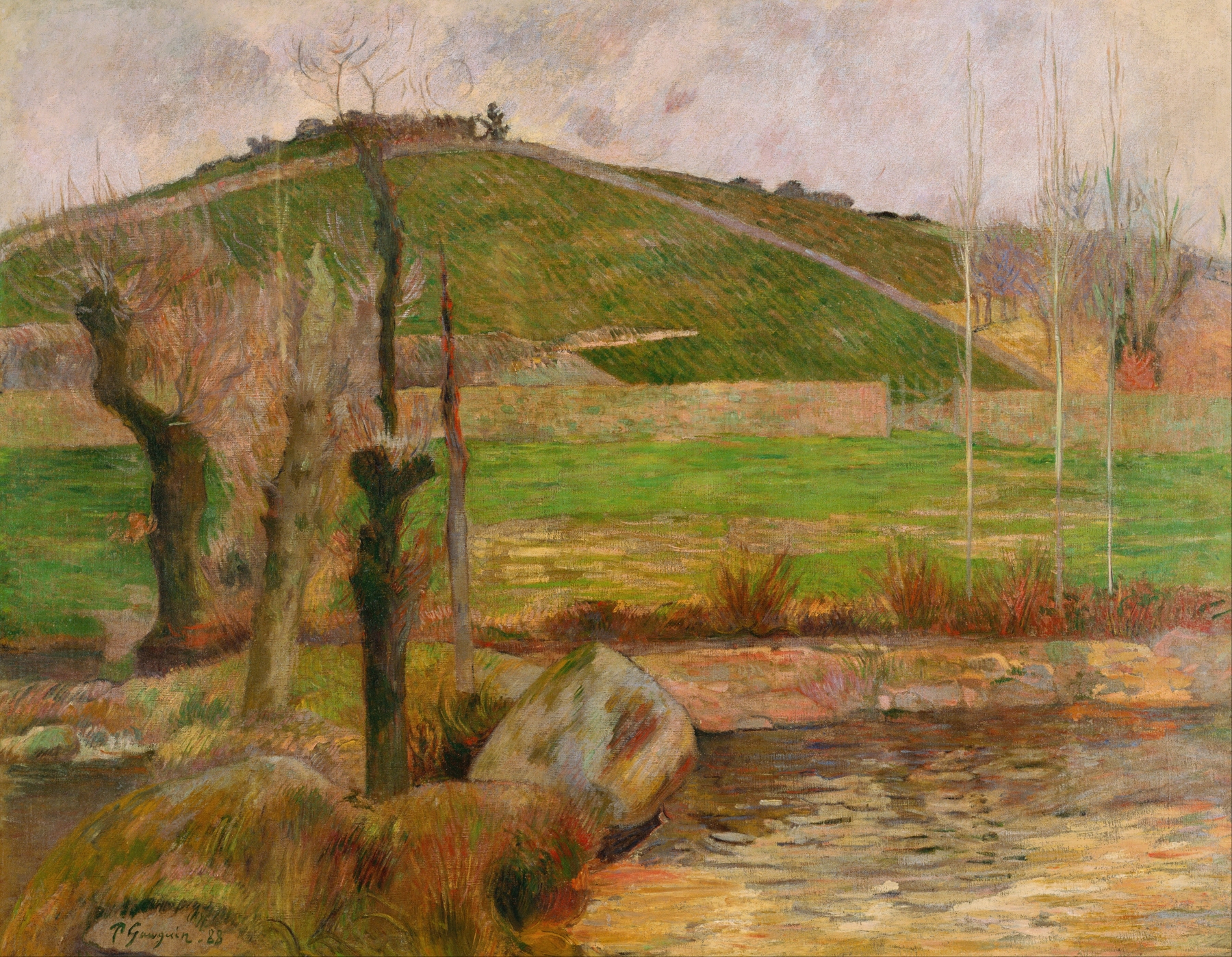
Landscape near Pont-Aven
Paul Gauguin

No te aha oe riri (Why Are You Angry?)
Paul Gauguin