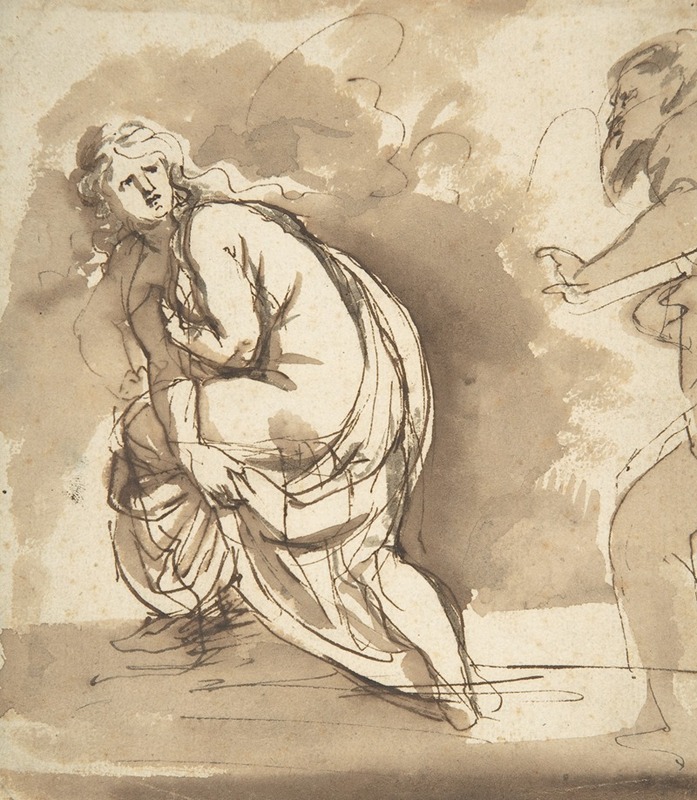
Discover insights about this artwork
Venus Rising from the Sea — History & Facts
In Venus Rising from the Sea, Peter Paul Rubens presents a vibrant scene filled with rich colors. The goddess Venus emerges from the waves, surrounded by foamy water and soft clouds. Her skin glows with a warm, inviting hue, contrasting beautifully with the cool blues of the sea.
The overall composition is dynamic, capturing the moment of her arrival with grace and movement. The painting is executed in oil on canvas, a common medium for Rubens, allowing for deep color saturation and intricate detail. The use of light and shadow enhances the three-dimensionality of Venus and the surrounding elements. The brushwork is fluid, contributing to the sense of motion in the waves and the goddess's flowing hair.
Viewers can appreciate the skillful layering of paint that brings texture and life to the scene. Peter Paul Rubens was a prominent figure of the Baroque period, known for his energetic compositions and vivid colors. This painting, created around c. 1610, reflects his fascination with mythology and the female form.
An interesting fact about this work is that it was inspired by classical themes, showcasing Rubens' ability to blend classical ideals with his own artistic style. The painting remains a significant example of Baroque art, celebrated for its emotional intensity and visual splendor.
More Artworks by Peter Paul Rubens

Ecce homo
Peter Paul Rubens

Marchesa Brigida Spinola Doria
Peter Paul Rubens
The Assumption of the Virgin
Peter Paul Rubens

Saint Teresa of Ávila Interceding for Souls in Purgatory
Peter Paul Rubens

The Garden of Eden with the Fall of Man
Peter Paul Rubens
The Return From War,Mars Disarmed By Venus
Peter Paul Rubens

Venus and Adonis
Peter Paul Rubens

The Martyrdom Of Saint Paul
Peter Paul Rubens

The Adoration Of The Magi
Peter Paul Rubens
The Ascent to Calvary. The Bearing of the Cross
Peter Paul Rubens