
Maison de Millet — History & Facts
What secret hides in the quiet of the canvas? In a world dominated by haste, the stillness captured here invites us to explore the layers of time intertwined with a single moment. Look to the heart of the painting, where the rustic structure stands resolute against a backdrop of serene fields. Notice how the light gently bathes the farmhouse, casting long shadows that stretch like whispers across the ground, blurring the boundaries of reality and memory. The muted palette, dominated by earthy greens and browns, evokes a sense of nostalgia, beckoning the viewer to linger in the tranquil embrace of this pastoral scene. Yet, beneath the surface, there are complex narratives at play.
The way the house seems to breathe with the landscape speaks to the passage of time, as if it holds the stories of generations within its walls. The distant horizon, where the sky kisses the land, suggests an eternity, reminding us of the transience of human existence. Each brushstroke resonates with both the permanence and fragility of life, reflecting the eternal dance between nature and mankind. Scott painted this work during a period when he sought to express the beauty of rural America, likely influenced by the post-Impressionist movement.
While the exact date remains uncertain, it is clear that his exploration of domestic spaces and their relation to time was a response to the changing dynamics of the American landscape in the early 20th century. As industrialization began to encroach upon the serene simplicity of country life, his art became a poignant commentary on the clash between progress and tradition.
More Artworks by Frank Edwin Scott
Browse all →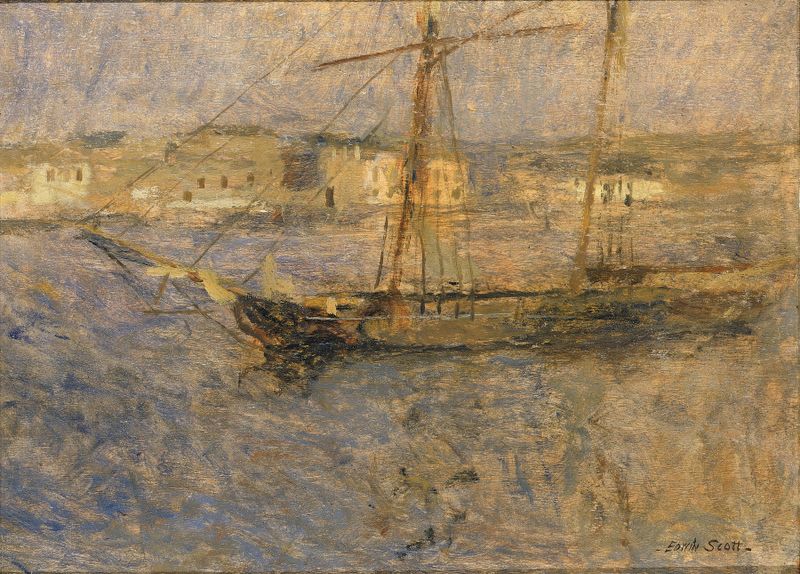
Ships at Anchor, Cherbourg no. I
Frank Edwin Scott
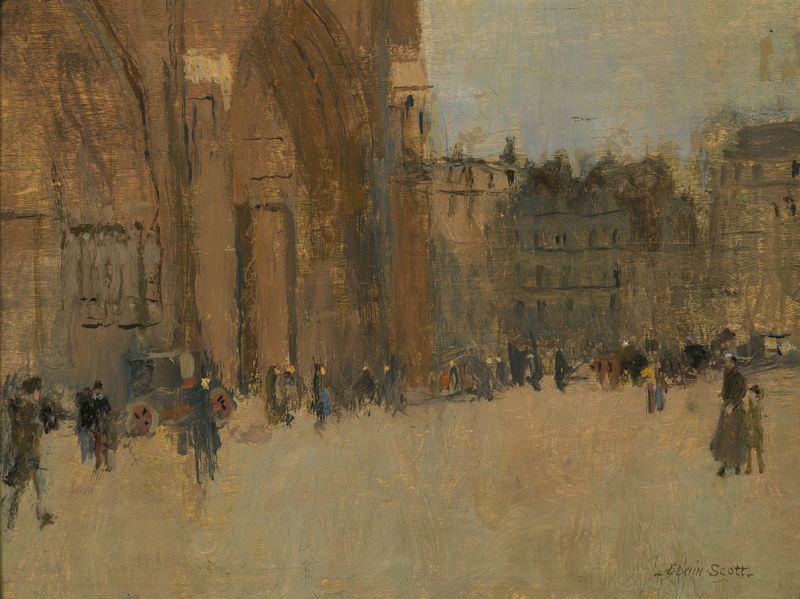
Notre Dame no. III
Frank Edwin Scott
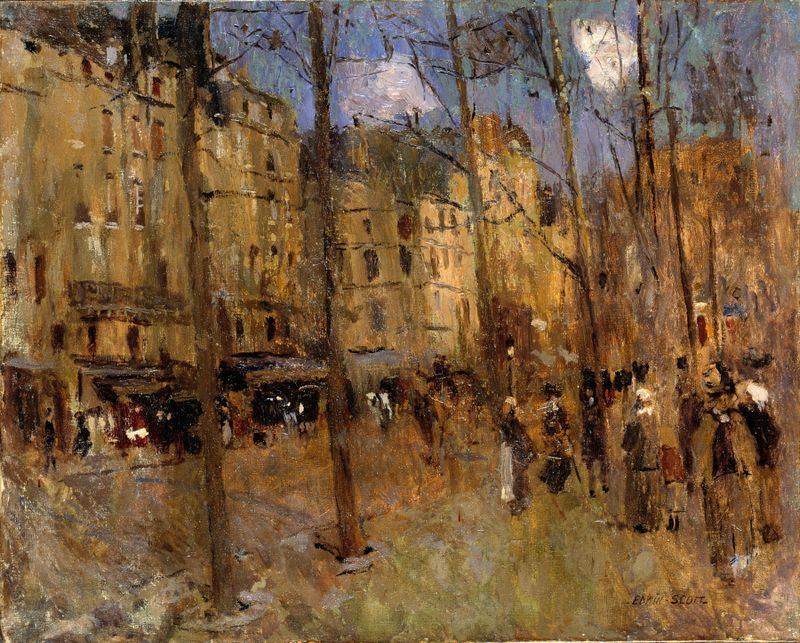
Boulevard St. Germain
Frank Edwin Scott
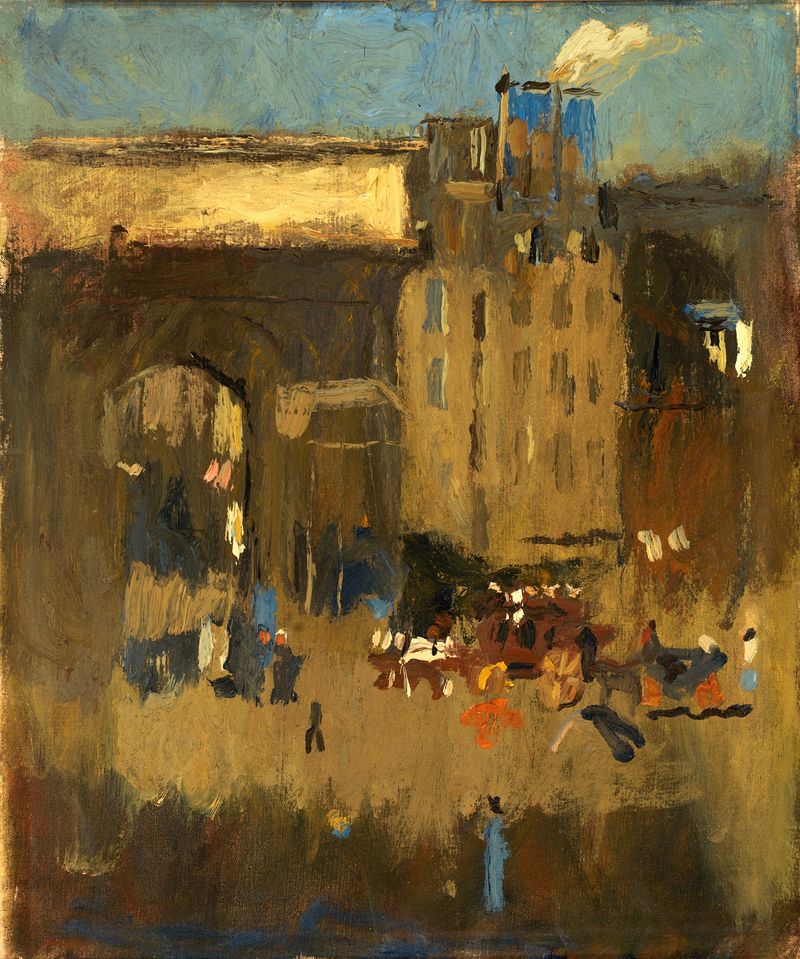
Porte St. Martin et Enterrement
Frank Edwin Scott
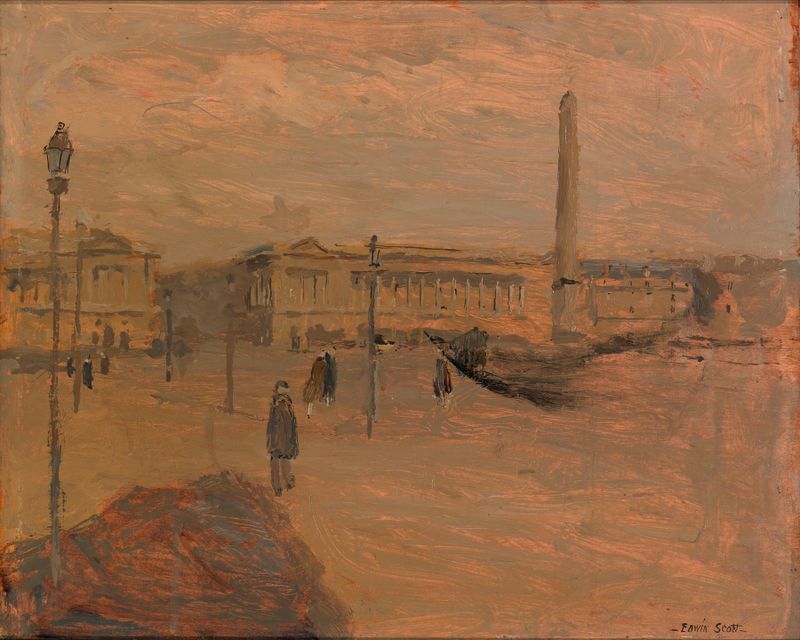
La Concorde
Frank Edwin Scott
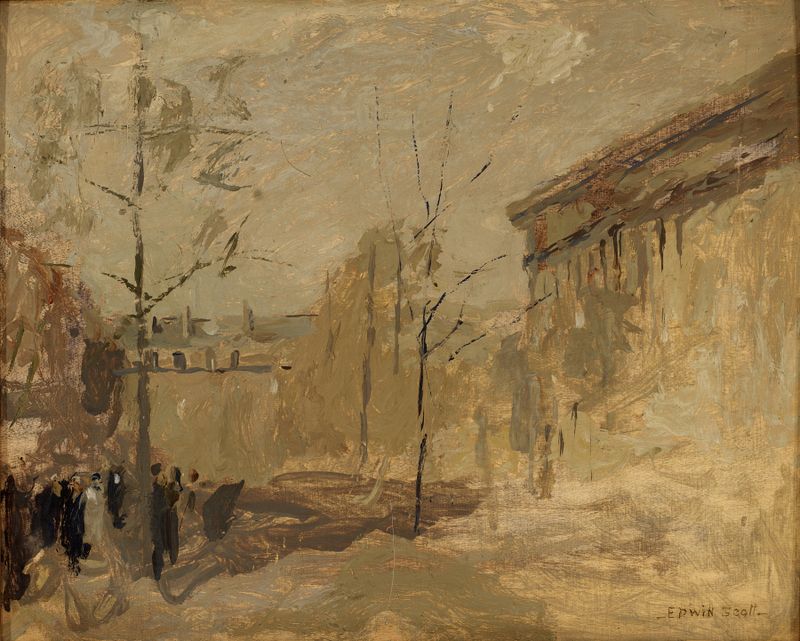
Place de la Madeleine no. II
Frank Edwin Scott
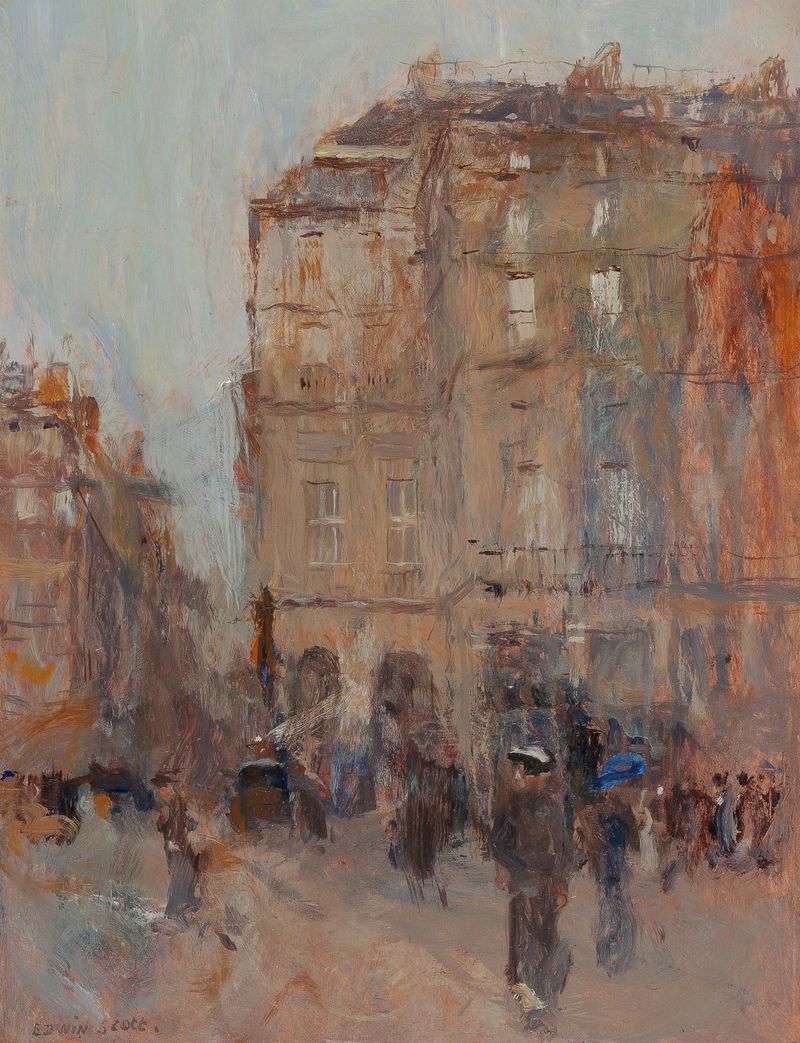
A Gray Day in Paris
Frank Edwin Scott
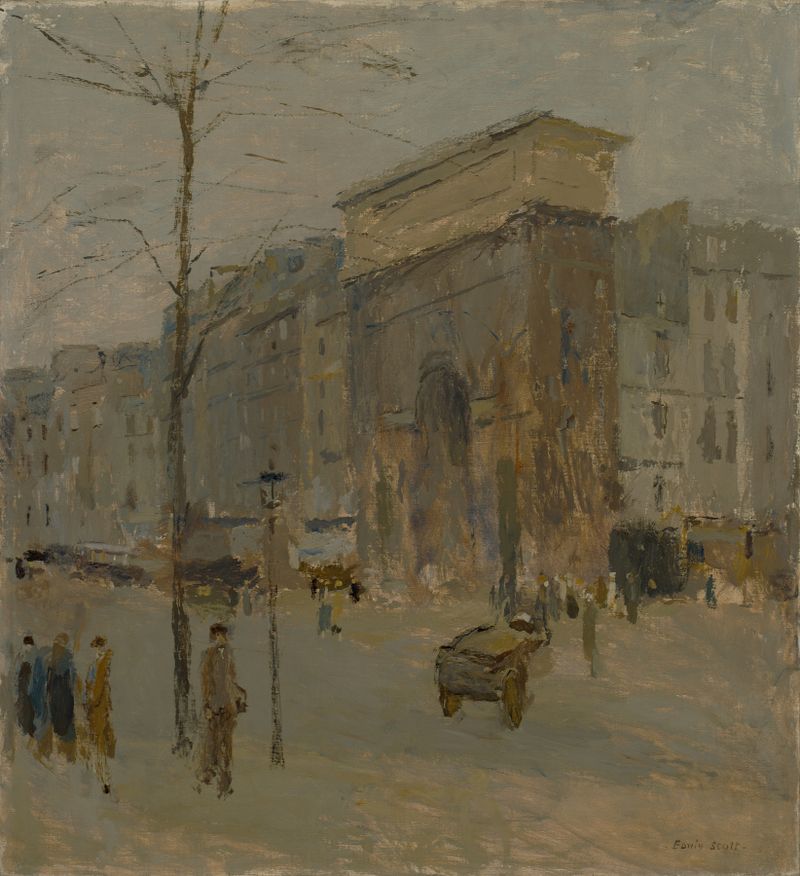
Porte St. Martin no. II
Frank Edwin Scott
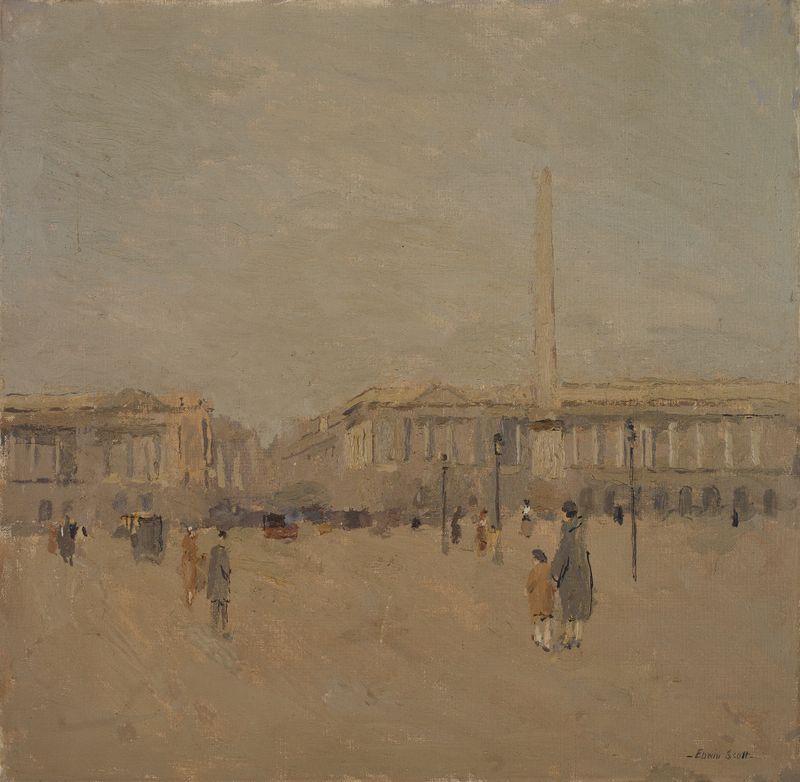
Place de la Concorde no. II
Frank Edwin Scott
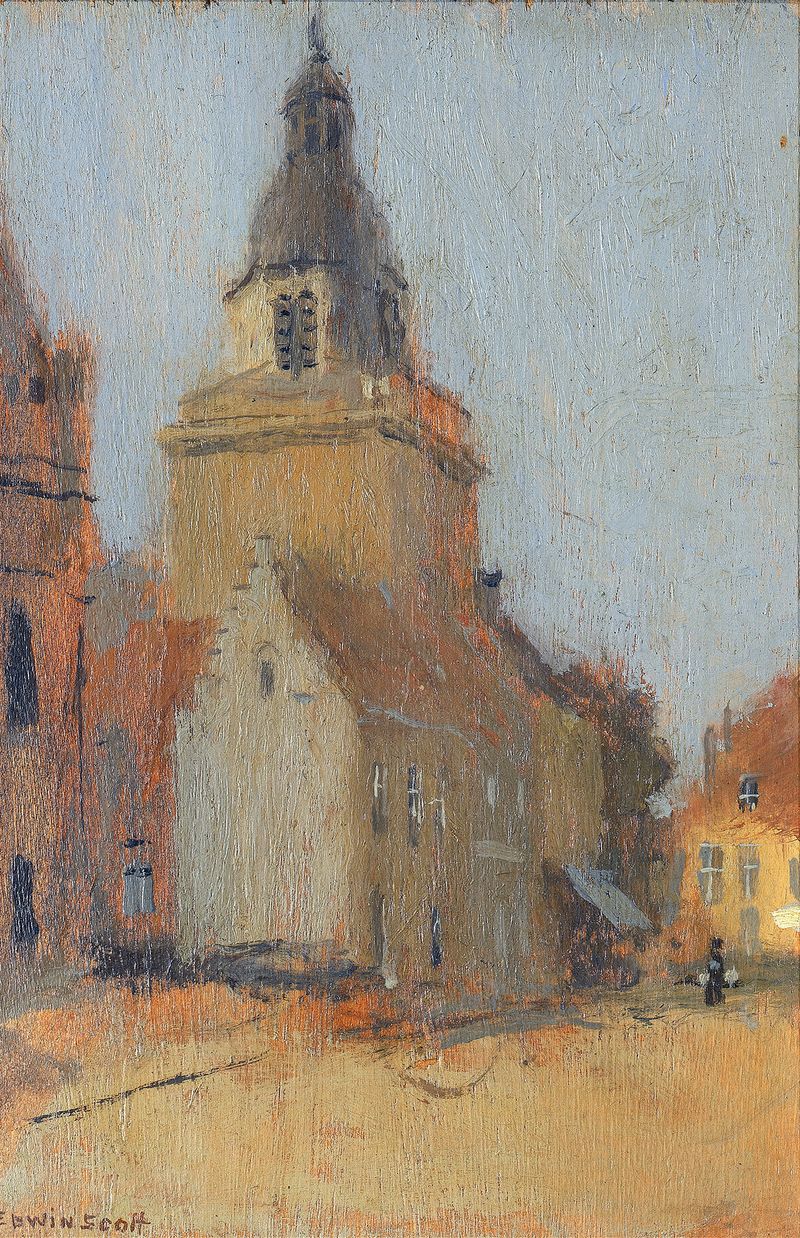
Eglise de Ville
Frank Edwin Scott





