
Maison en Bois a Bourbon-Lancy (Saone Et Loire) — History & Facts
When did color learn to lie? The stillness of the scene invites contemplation, as the wooden structure rests in tranquil defiance against the passage of time, lifting the veil on silence’s poignant eloquence. Look to the foreground where the delicate interplay of muted greens and browns forms a rustic tableau. The wooden façade of the house, rendered with meticulous brushwork, is alive with texture; every knot and grain tells a story. Notice how the light filters through the soft canopy of trees, casting gentle shadows that dance across the ground, creating a sense of depth and serenity.
The composition is harmoniously balanced, guiding the gaze from the house to its surroundings, where nature embraces the manmade with tender familiarity. Yet beneath this peaceful exterior lies an emotional tension. The stillness evokes solitude, as if the building itself is holding its breath, caught between memories and the passage of time. The muted color palette hints at a bygone era, reflecting both nostalgia and the silence that envelops it.
One can’t help but wonder about the lives once lived within its walls, the laughter and sorrow that echoed through its now-silent rooms, adding layers of meaning to this quiet moment. Victor Petit painted this work in 1860, during a period marked by the emergence of realism in France. Living in a world transitioning from the Romanticism of the past, Petit sought to capture the essence of everyday life. This painting stands as a testament to his commitment to portraying the beauty and simplicity of rural existence, a reflection of both personal introspection and the broader artistic movements shaping his time.
More Artworks by Victor Petit
Browse all →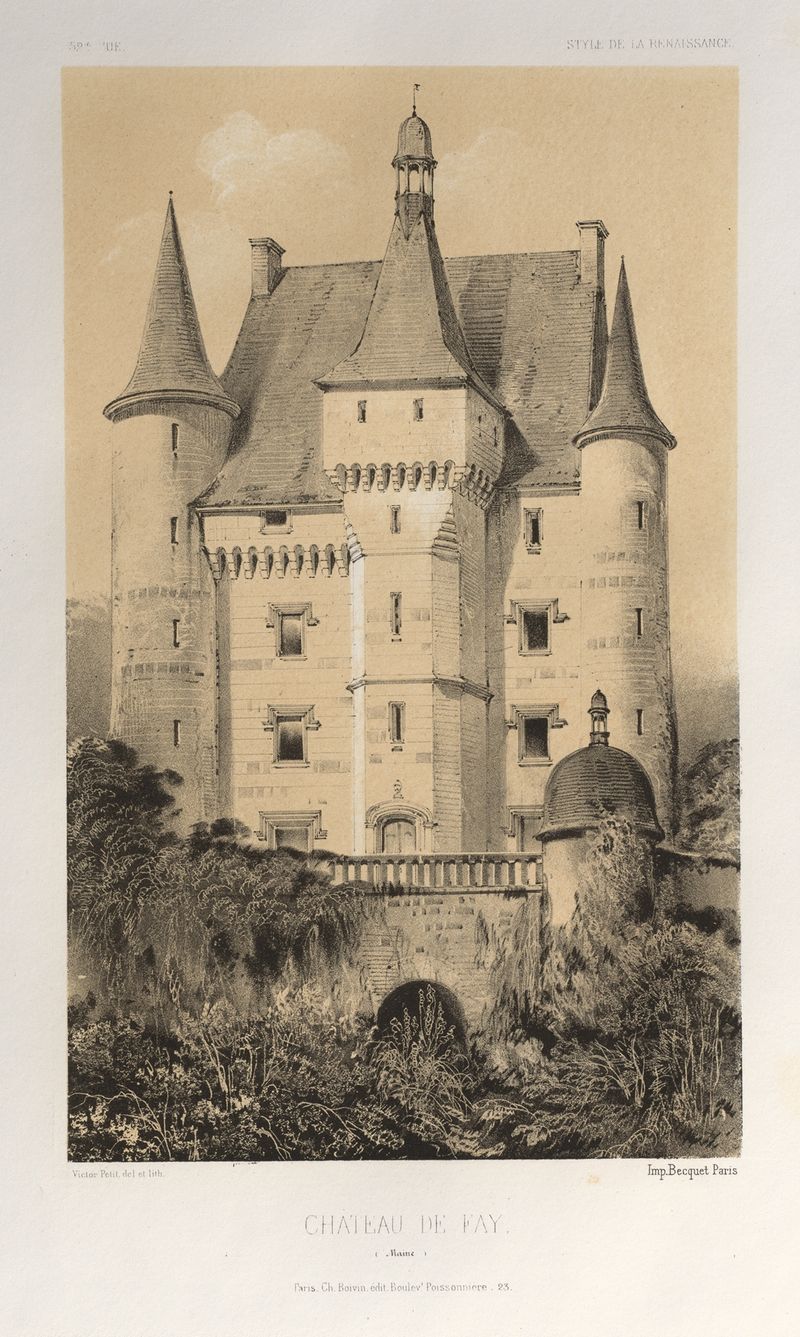
Château De Fay (Maine)
Victor Petit
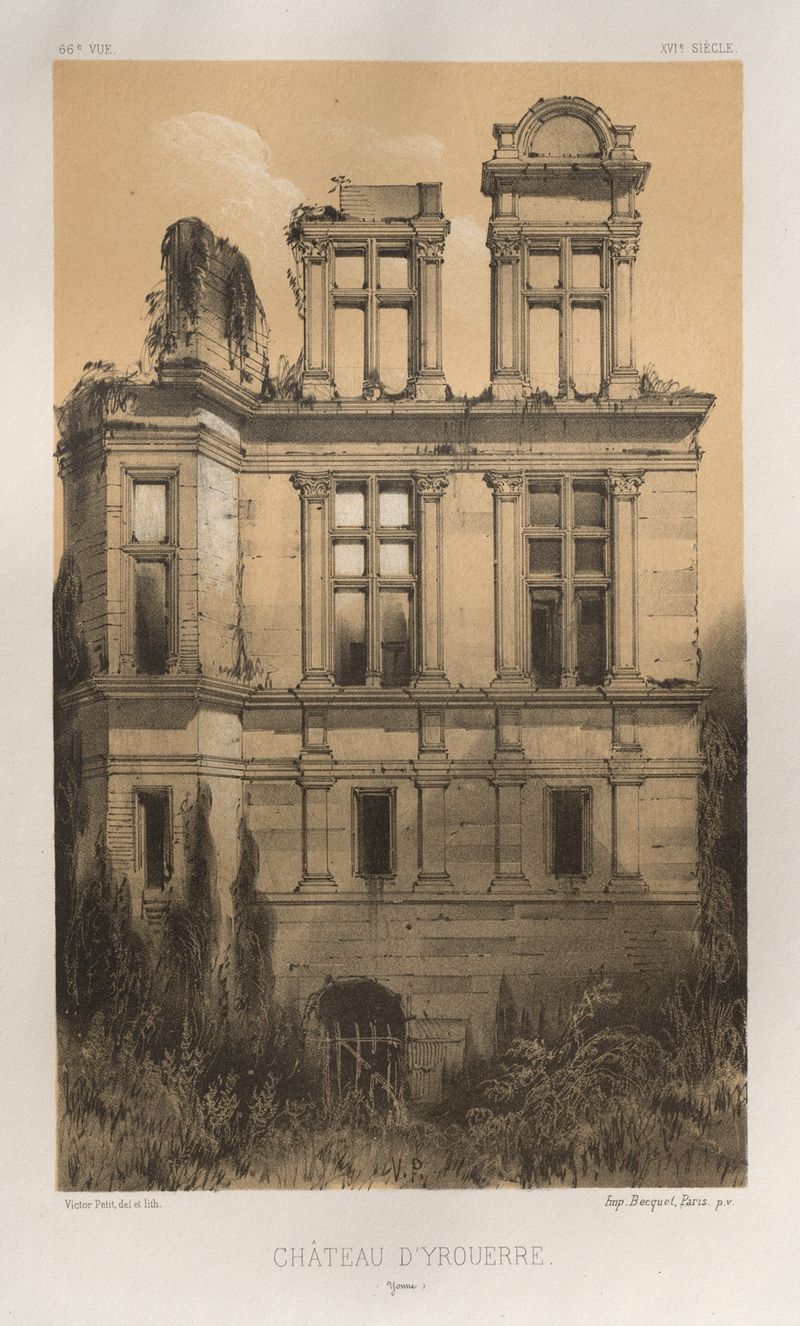
Château D’Yrouerre (Yonne)
Victor Petit
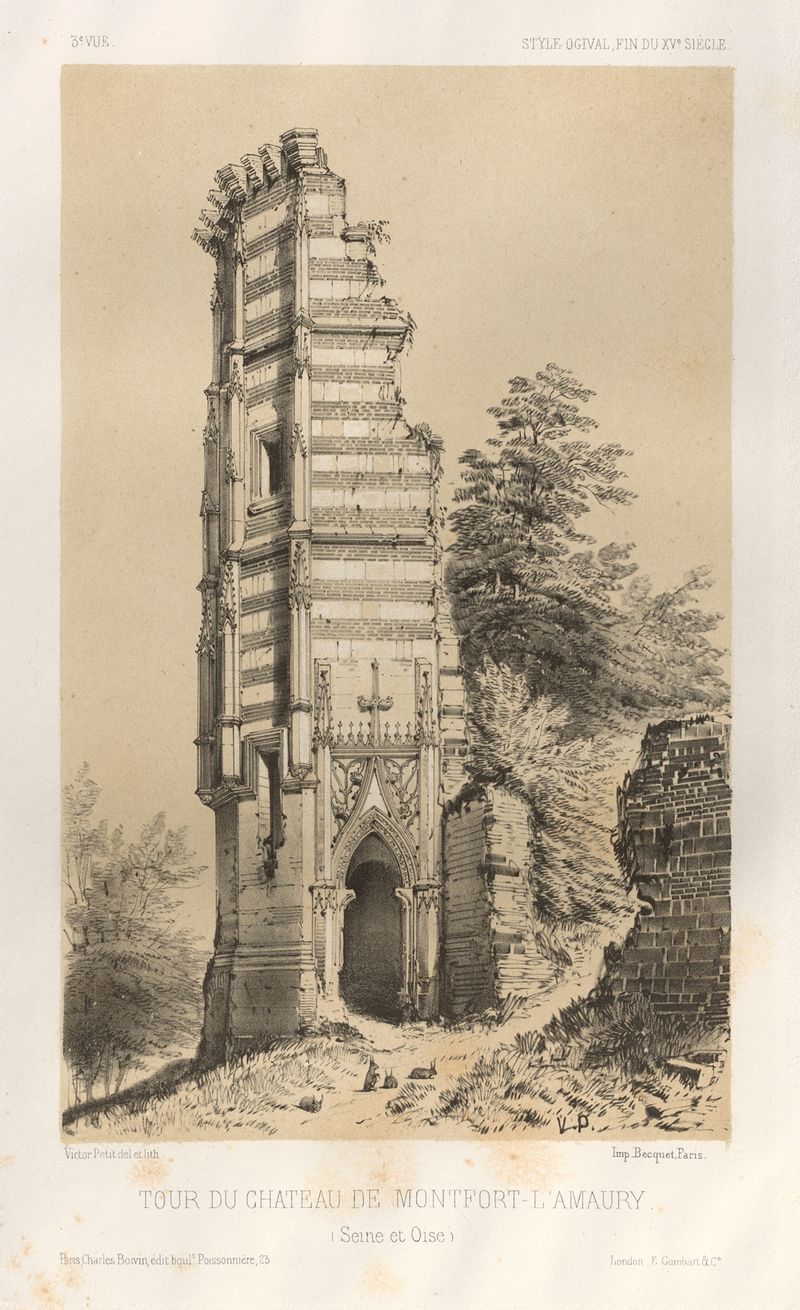
Tour du chateau de Montfort-l’Amaury (Seine-et-Oise)
Victor Petit

Tour Du Port De Marseille (Bouches Du Rhône)
Victor Petit
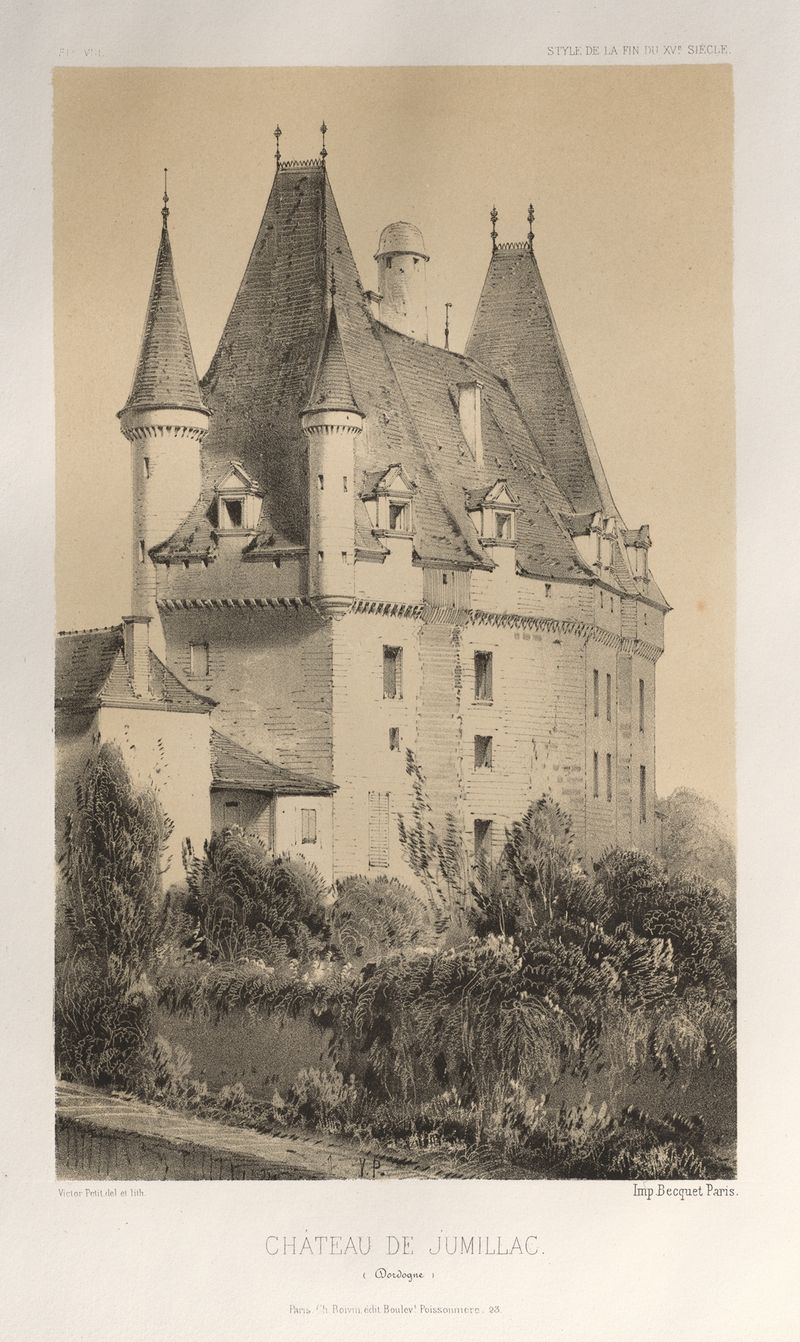
Château De Jumillac (Dordogne)
Victor Petit

Château de Tévray (Eure)
Victor Petit

Galerie Du Château De Jouancy (Saone et Loire)
Victor Petit

Château De Mello (Oise)
Victor Petit
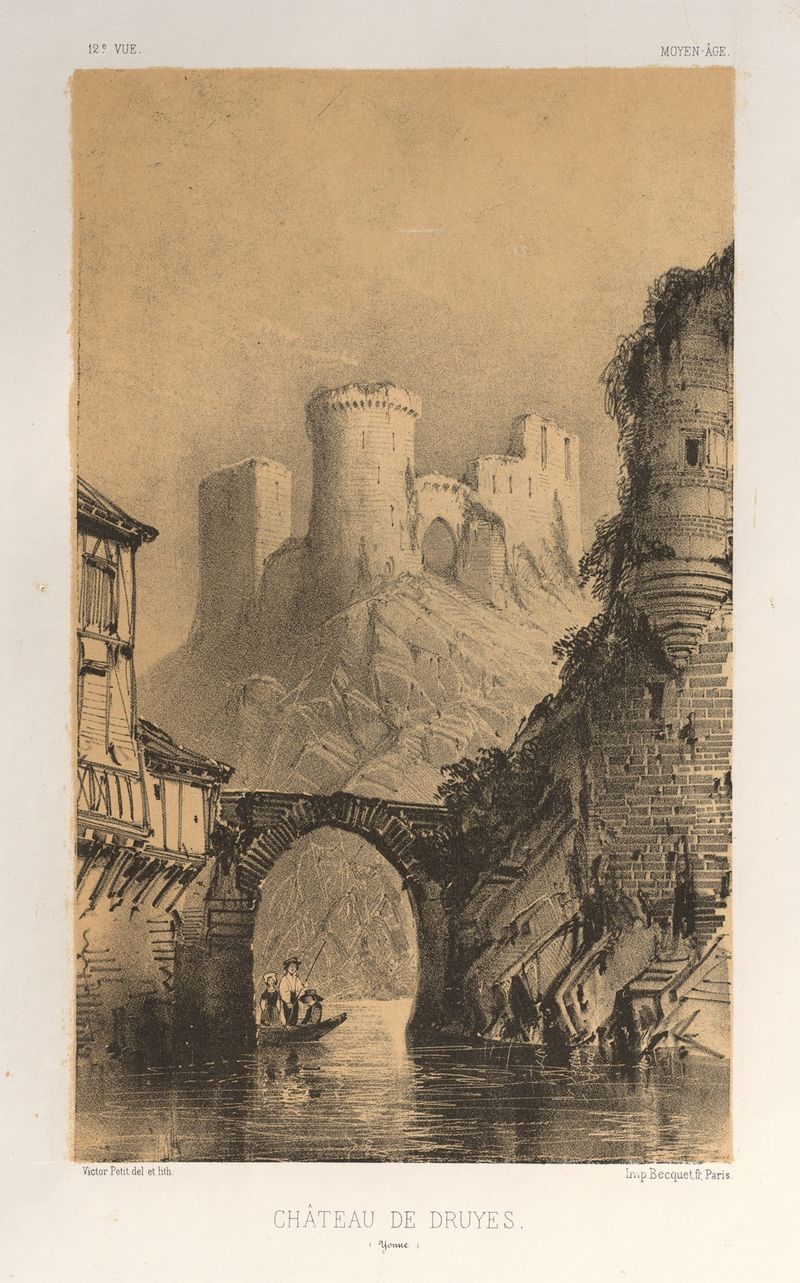
Chateau De Druyes (Yonne)
Victor Petit

Le ChasteLet-Neuf (Corrèze)
Victor Petit
More Architecture Art
Browse all →
The statue of Liberty
Frédéric Auguste Bartholdi

View of Houses in Delft, Known as ‘The Little Street’
Johannes Vermeer

View of Houses in Delft, Known as ‘The Little Street’
Johannes Vermeer

The Cathedral in Rouen. The portal, Grey Weather
Claude Monet

The yellow house
Vincent van Gogh

The Church in Auvers-sur-Oise, View from the Chevet
Vincent van Gogh