
Manor house façade in Talashkino — History & Facts
When did color learn to lie? The façade before us stands as a vivid testament to the duality of beauty and betrayal, concealing deeper secrets within its vibrant hues. Look to the left at the intricate detailing of the windows, where soft shadows articulate the artistry of the architecture. The warm palette of reds and golds is meticulously balanced with cool greens, creating a striking harmony that draws the eye yet hints at something unsettling beneath its allure. Notice how the light dances across the textured surface, illuminating the artistry while casting doubt on the stability of the structure itself—an embodiment of grandeur that may not withstand the test of time. Beneath this picturesque exterior lies a tension between the idyllic and the deceptive.
The opulent decoration speaks to a world of privilege, yet the weathered surfaces evoke the inevitable decay of time, suggesting a betrayal of both nature and human ambition. The elegant symmetry of the design contrasts sharply with the chaotic brushstrokes that hint at underlying discontent, making the façade a complex character in its own narrative—inviting admiration but whispering of vulnerability. In 1896, Jan Ciągliński captured this façade during a period of personal exploration while living in Russia, where he was influenced by the rich cultural heritage surrounding him. As the art world was burgeoning with new ideas and movements, his work reflected a blend of realism and romanticism, revealing a desire to connect with the past while grappling with the changing social landscape.
This piece stands as an exploration of beauty, a testament to both the allure and the fragility of human aspirations.
More Artworks by Jan Ciągliński
Browse all →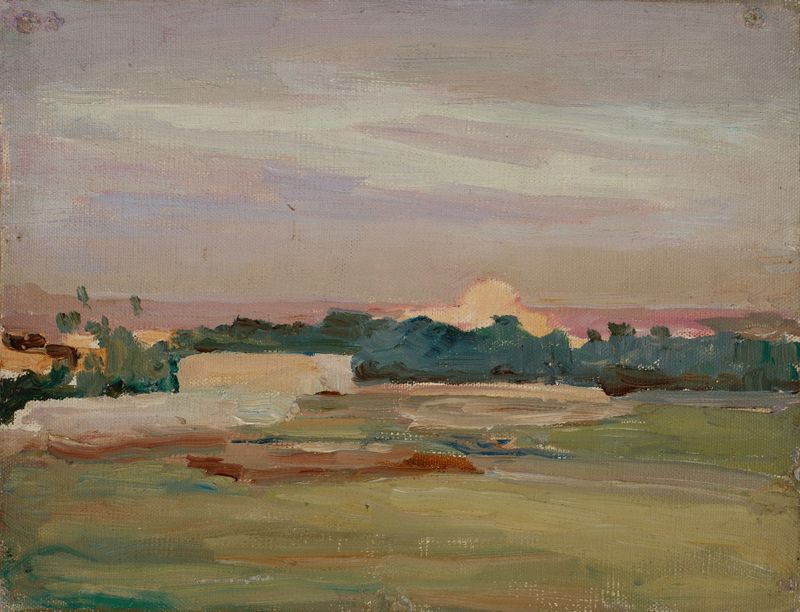
The Sirocco
Jan Ciągliński
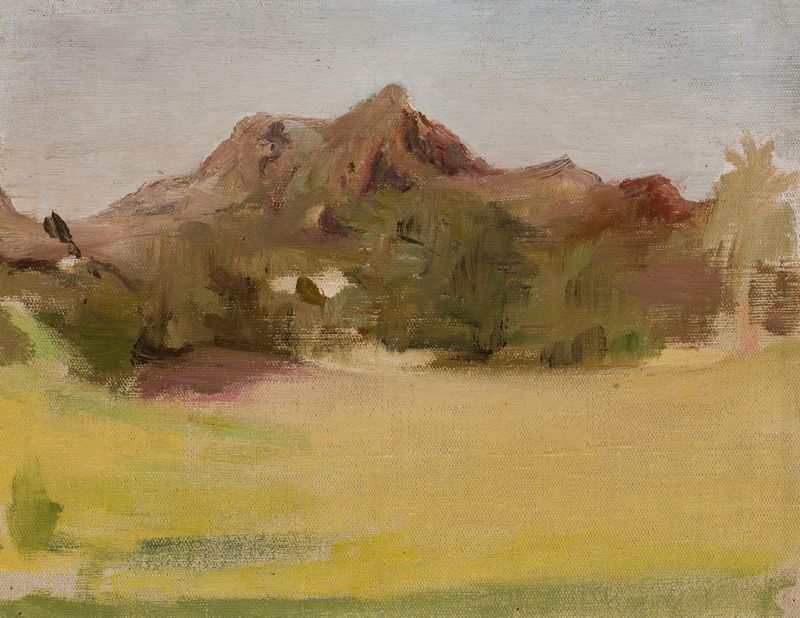
Mountain landscape. From the journey to India
Jan Ciągliński
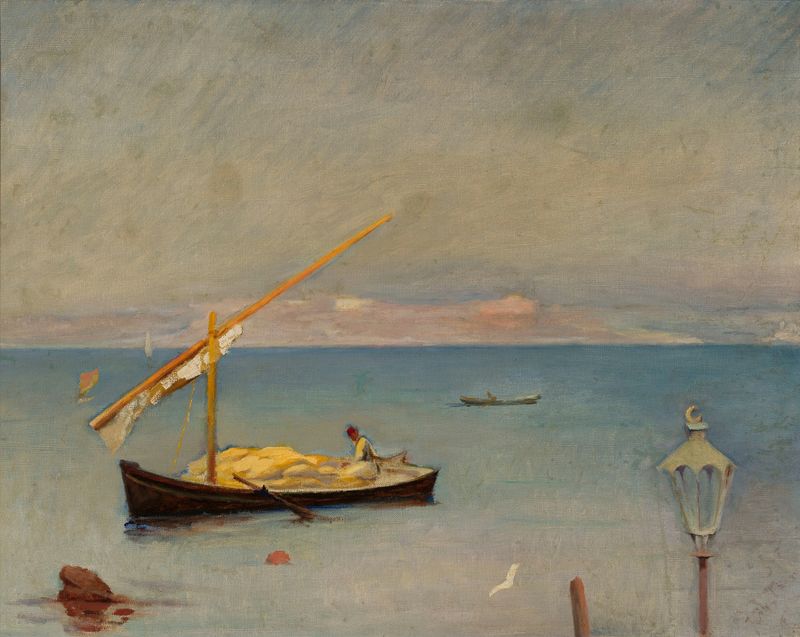
At Bosporus
Jan Ciągliński
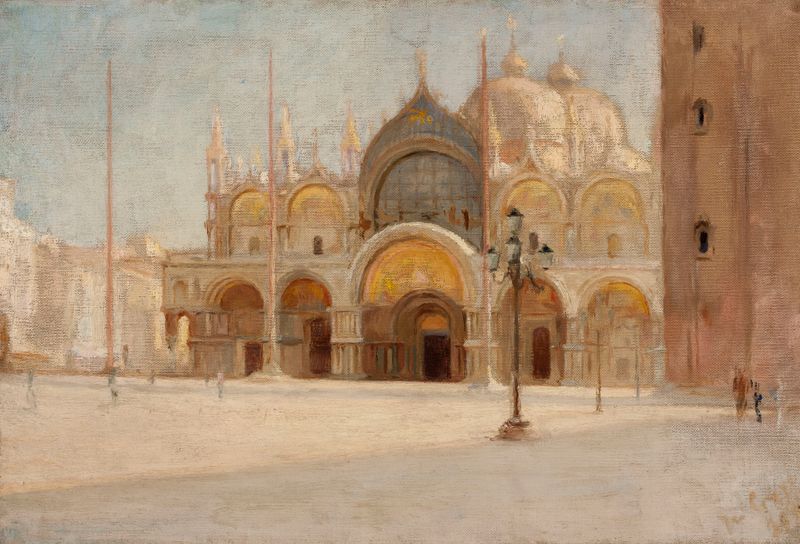
St Mark’s Square in Venice
Jan Ciągliński
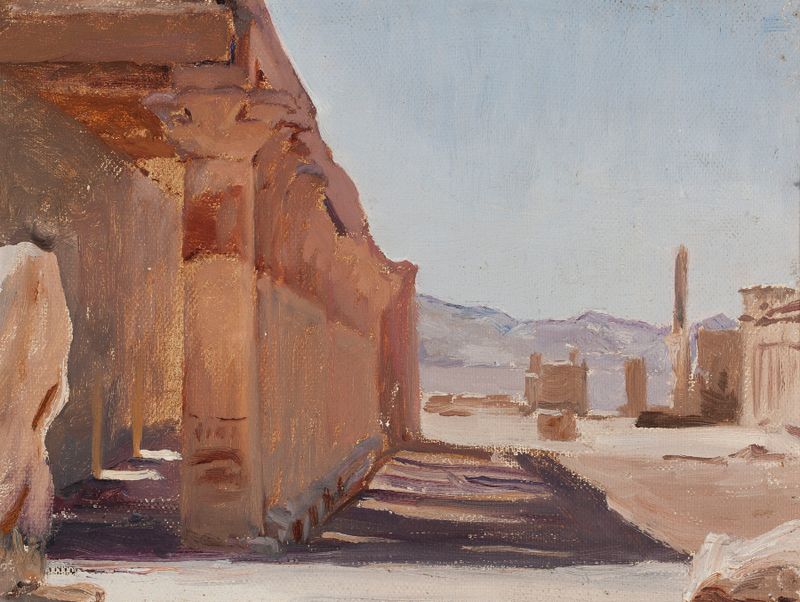
Temple. From the journey to Egypt
Jan Ciągliński
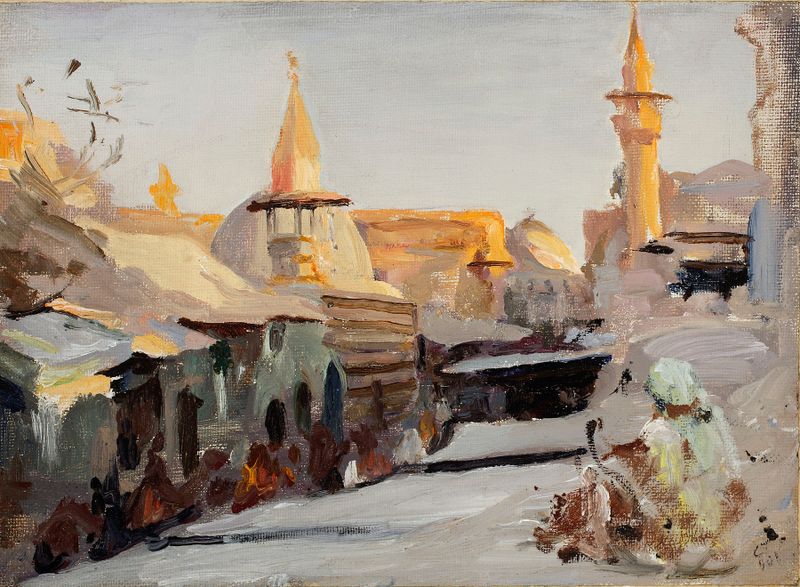
Street in Damascus. From the journey to Palestine
Jan Ciągliński
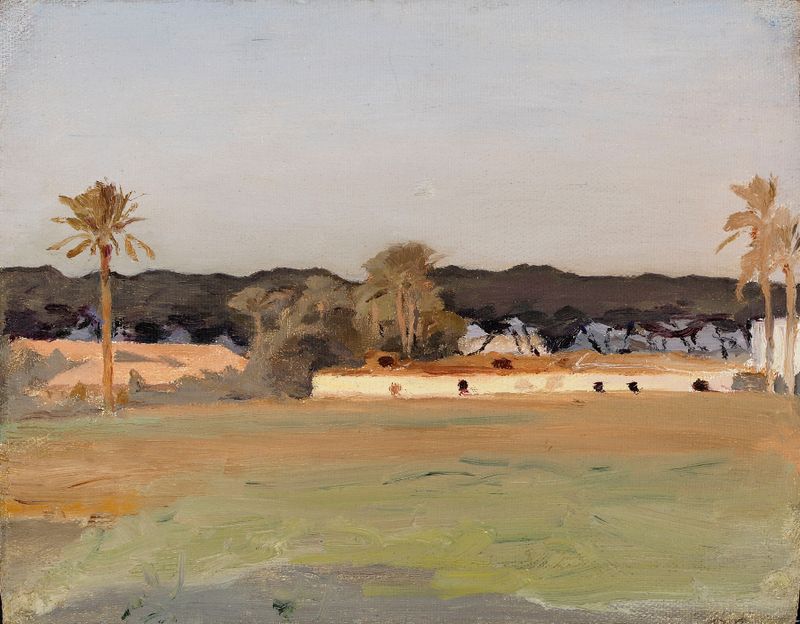
Evening. From the journey to Egypt
Jan Ciągliński
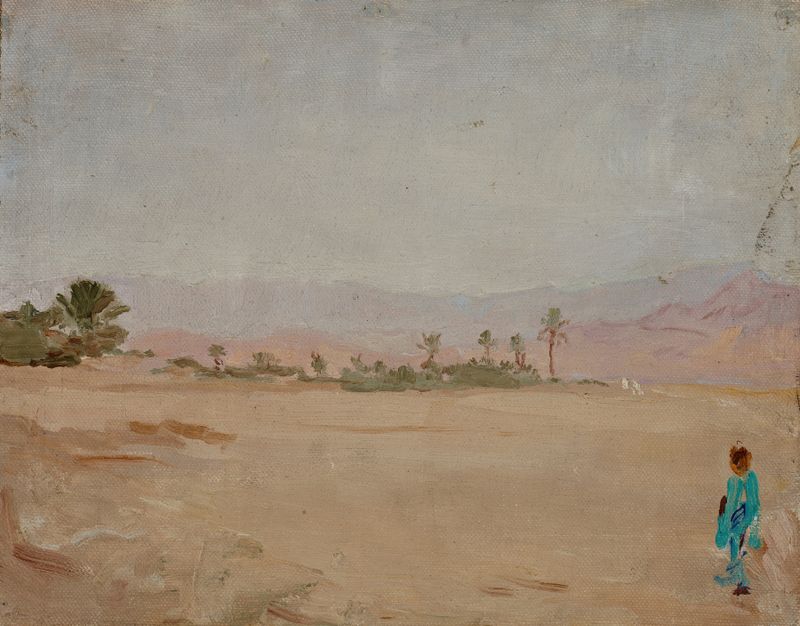
Sahara (Desert)
Jan Ciągliński
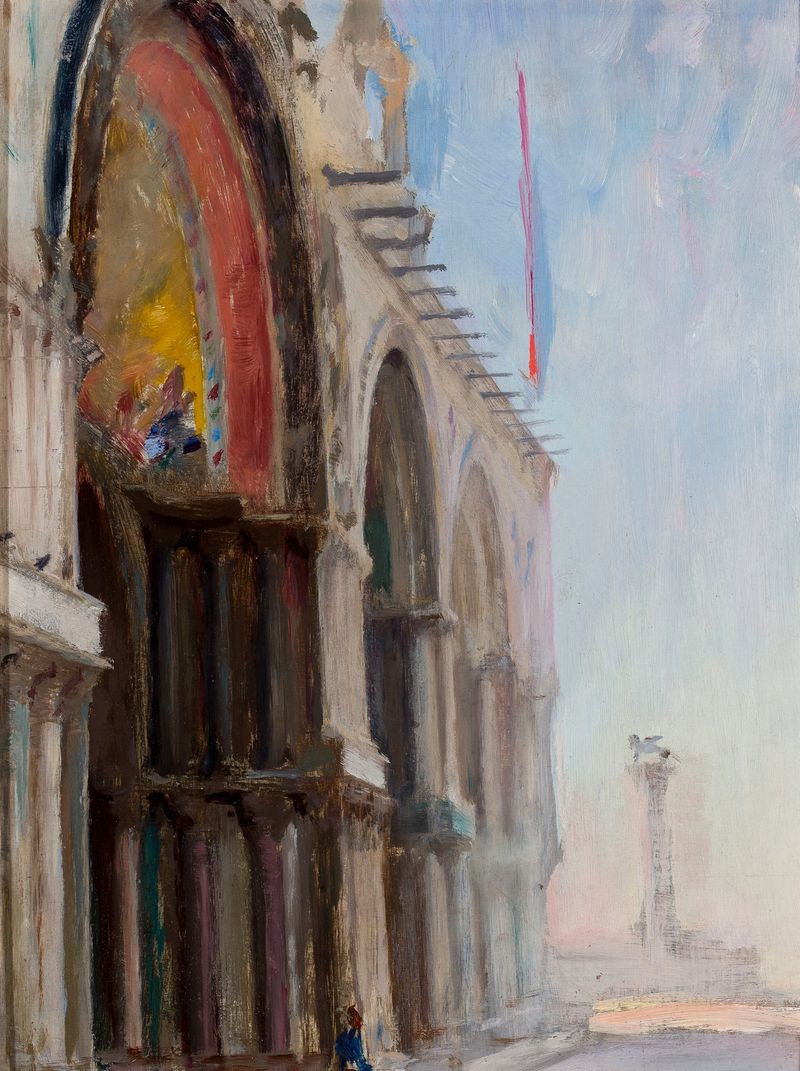
Venice – San Marco. From the journey to Italy
Jan Ciągliński
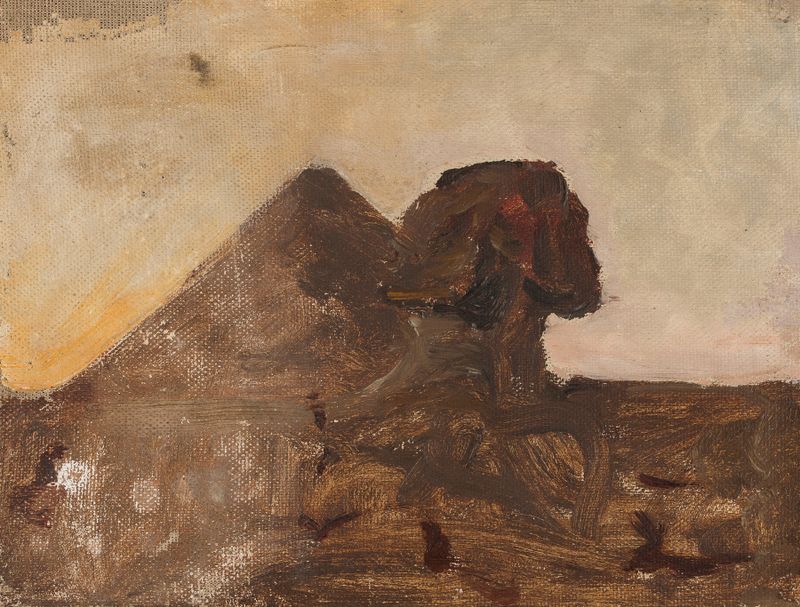
Evening in the desert – Sphinx and pyramid. From the journey to Egypt
Jan Ciągliński
More Architecture Art
Browse all →
The statue of Liberty
Frédéric Auguste Bartholdi

View of Houses in Delft, Known as ‘The Little Street’
Johannes Vermeer

View of Houses in Delft, Known as ‘The Little Street’
Johannes Vermeer

The Cathedral in Rouen. The portal, Grey Weather
Claude Monet

The yellow house
Vincent van Gogh

The Church in Auvers-sur-Oise, View from the Chevet
Vincent van Gogh