Mariakerke — History & Facts
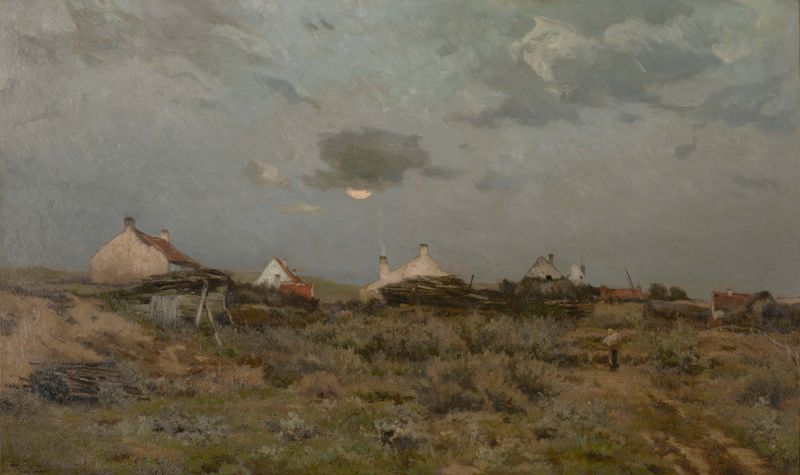
What if silence could speak through light? In Mariakerke, emptiness becomes a voice, resonating with an unsettling clarity that invites reflection and introspection. Look to the center of the canvas, where the stark horizon meets an expansive sky, a delicate blend of muted blues and grays. The horizon line feels infinite, drawing your gaze outward as if searching for something just beyond reach. Notice how the soft light filters through the atmosphere, illuminating wisps of cloud that hang like whispers, embodying the essence of tranquility yet hinting at a profound solitude. Here, the contrast between the vastness of the sky and the emptiness of the land creates an emotional tension that evokes a sense of longing.
The gentle brushstrokes suggest a fleeting moment—one that balances on the edge of tranquility and melancholy. Each element, from the sparse landscape to the subtle variations in color, contributes to a narrative of absence, urging the viewer to confront their own feelings of isolation and the beauty contained within it. The artist created this work during a period of introspection, likely influenced by personal experiences and the broader movement towards abstraction in the mid-20th century. Working in Belgium, Rosseels explored themes of emptiness and stillness, reflecting the post-war sentiments of a society grappling with loss and identity.
In Mariakerke, he captures a universal feeling, transforming what might be dismissed as mere space into a profound meditation on existence itself.