Landscape near Waasmunster — History & Facts
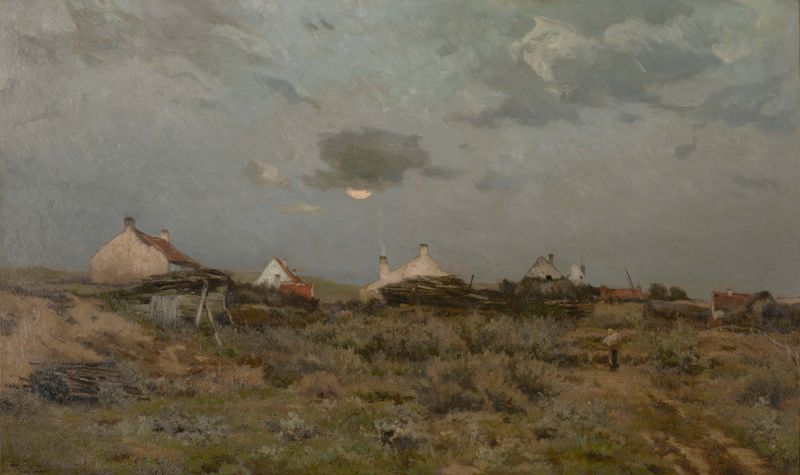
In the quiet spaces of art, the echoes of revolution linger, poised between the brushstrokes and the viewer’s gaze. This winding landscape invites contemplation, a moment suspended in time where nature reigns, yet the undercurrents of change pulse beneath the surface. Focus first on the horizon, where the gentle undulation of hills meets a sky splashed with soft, ethereal hues. Notice how the light dances across the canvas, illuminating patches of vibrant green and ochre that breathe life into the scene.
The composition draws the eye outward, creating a sense of infinity, yet within that vastness lies an intimate connection to the earth and its cycles. Each stroke is deliberate, inviting you to feel each contour and shadow, prompting reflection on an existence both serene and charged. Amidst the tranquility, there’s a slight tension—the juxtaposition of vibrant life against a backdrop that hints at change. The sweeping clouds suggest a brewing storm, while the verdant fields cradle whispers of past upheavals.
It’s as though the landscape itself holds secrets of revolution, reminding us that beauty often coexists with the promise of transformation. Each element, from the rustling grasses to the distant trees, seems to breathe in unison, reflecting both comfort and unpredictability. Jacques Rosseels painted this work during a time of significant societal transformation, likely in the 20th century, amidst the shifting artistic landscapes of Belgium. The era was marked by the emergence of new movements and ideas that sought to explore the relationship between nature and humanity.
While the exact date remains unknown, the piece embodies a moment captured in the artist's search for meaning amid change, illustrating the subtle yet powerful interplay between stillness and revolution.