
Marine landscape — History & Facts
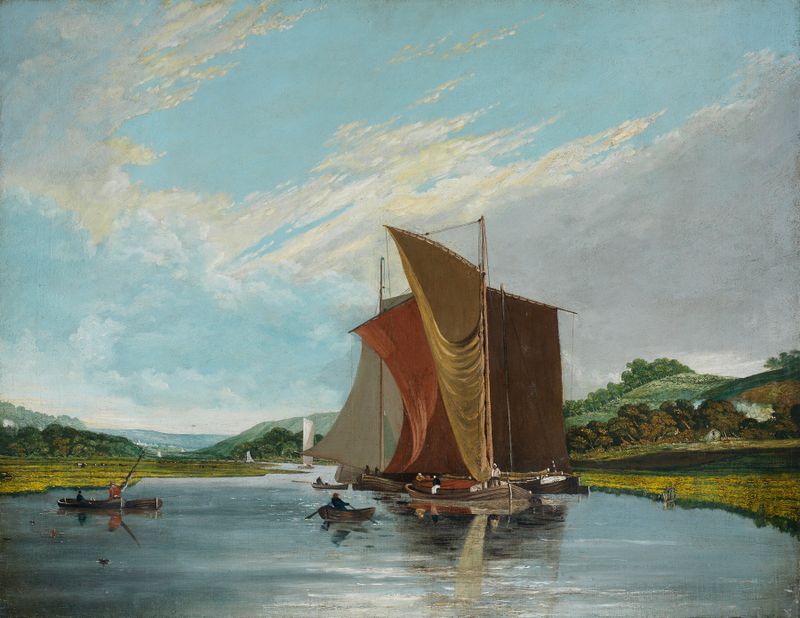
When did color learn to lie? In the realm of obsession, hues can deceive, wrapping the viewer in an illusion of tranquility that masks an underlying turbulence. The interplay of water and sky, a dance of blues and greens, suggests serenity while concealing the restless nature of the sea. Look to the horizon, where gentle waves meet a soft, cloud-streaked sky. Notice how the artist employs subtle brushstrokes to create the textured surface of the water, reflecting light in a way that evokes continuity and change.
The delicate balance between the cool, calming palette and the vibrant accents beckons the eye deeper into the composition, drawing attention to the interplay of shadow and light that defines the scene. Beneath this surface lies a tension between reality and imagination. The lush color choices hint at an obsession with the beauty of nature, yet also suggest an escape from more turbulent emotions. The solitary sailboat, barely discernible amidst the expanse, symbolizes the human desire for freedom while simultaneously representing isolation, a duality captured in the artist's careful attention to detail. James Baker Pyne painted this work in the mid-19th century, during a period marked by a burgeoning interest in landscape art within the British Romantic movement.
As cities expanded and industrialization took root, artists sought solace in nature, reflecting their inner struggles and societal transformations. In this context, the piece resonates with a yearning for connection to the natural world, offering a glimpse into both the artist's personal journey and the larger artistic currents of his time.
More Artworks by James Baker Pyne
Browse all →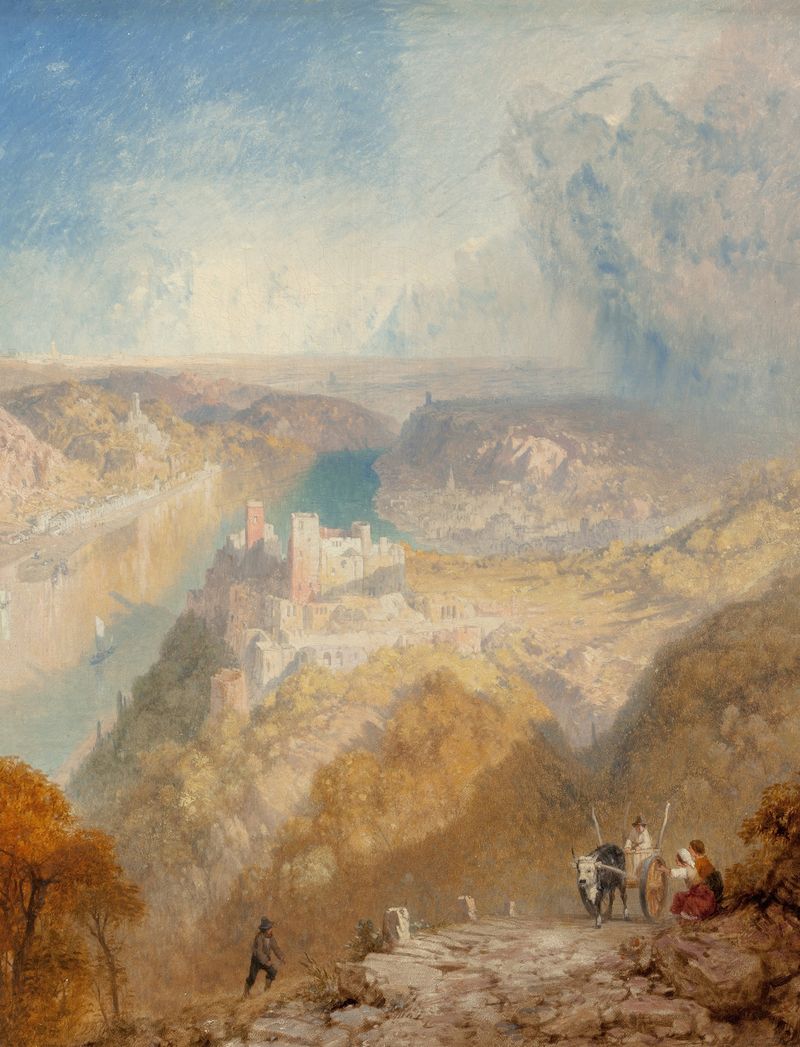
The Castle of Rheinstein
James Baker Pyne
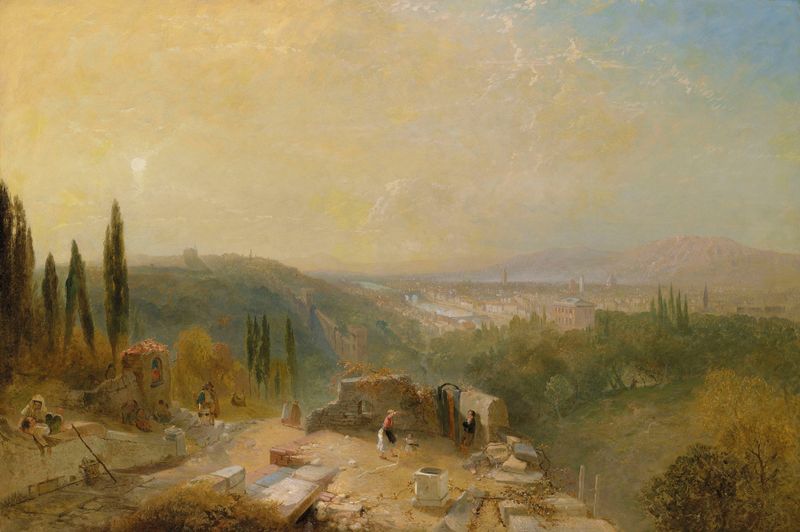
A view of Florence, from San Miniato
James Baker Pyne
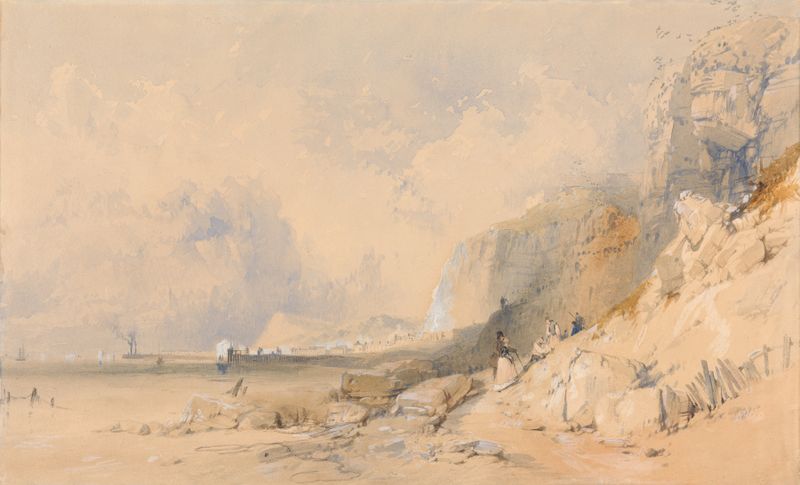
Figures on a Cliff Path near Dover
James Baker Pyne
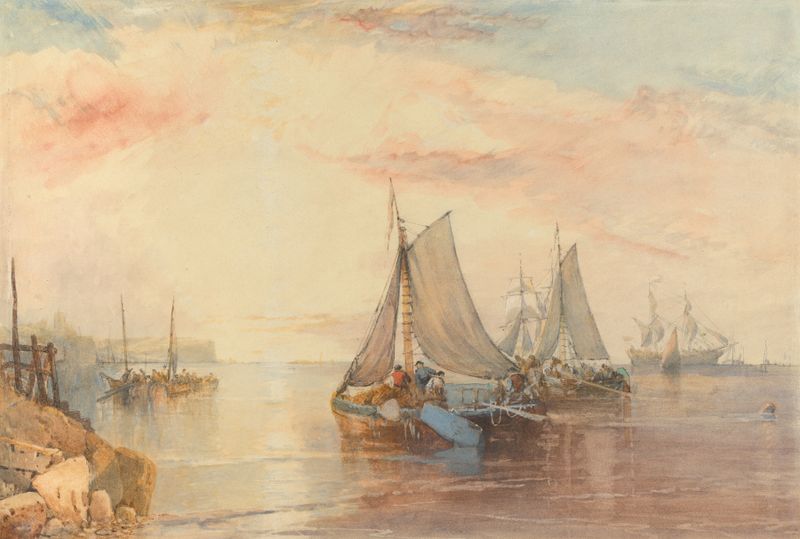
Shipping in a Calm
James Baker Pyne
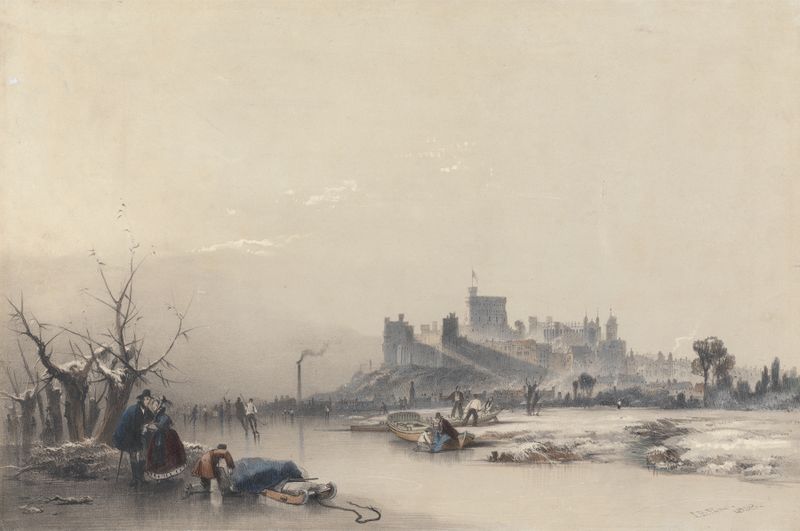
Windsor Castle from the Frozen River during the Great Frost
James Baker Pyne
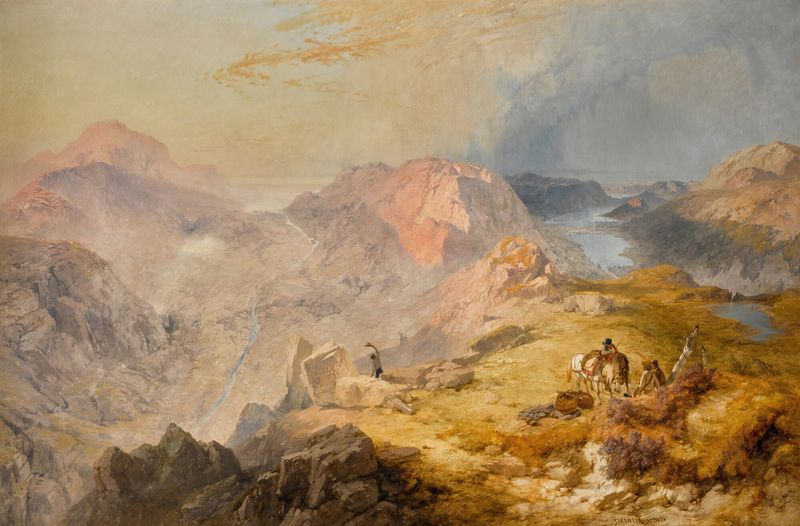
The Vales Of Ennerdale And Buttermere With Their Lakes And Those Of Crummock And Loweswater
James Baker Pyne
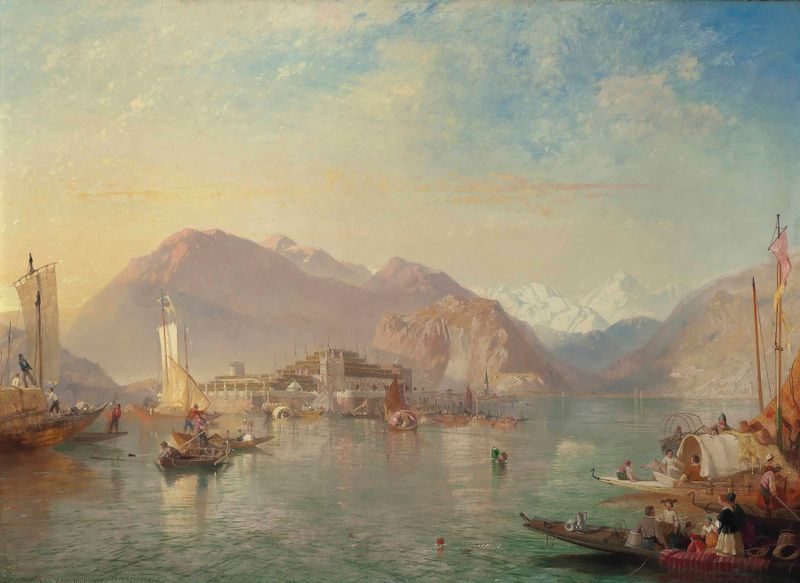
Isola Bella, Lake Maggiore, Italy
James Baker Pyne
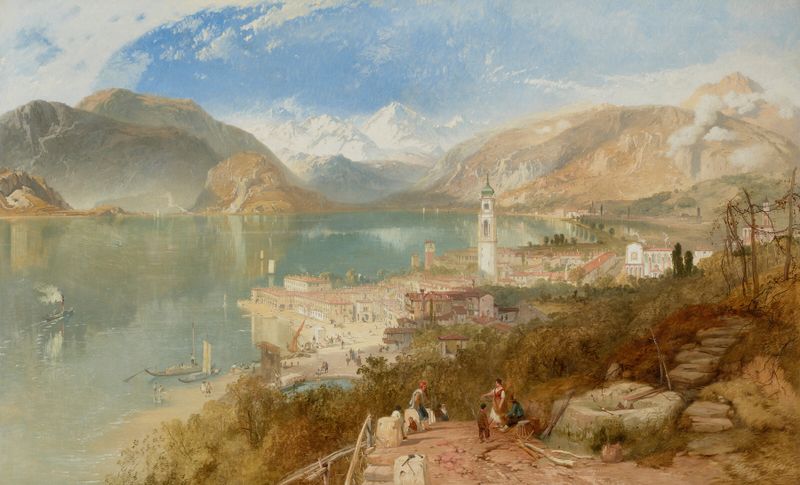
Pallanza on Lake Maggiore
James Baker Pyne
Barges on a river
James Baker Pyne
The Bay of Palermo
James Baker Pyne





