Meadow in Bloom — History & Facts
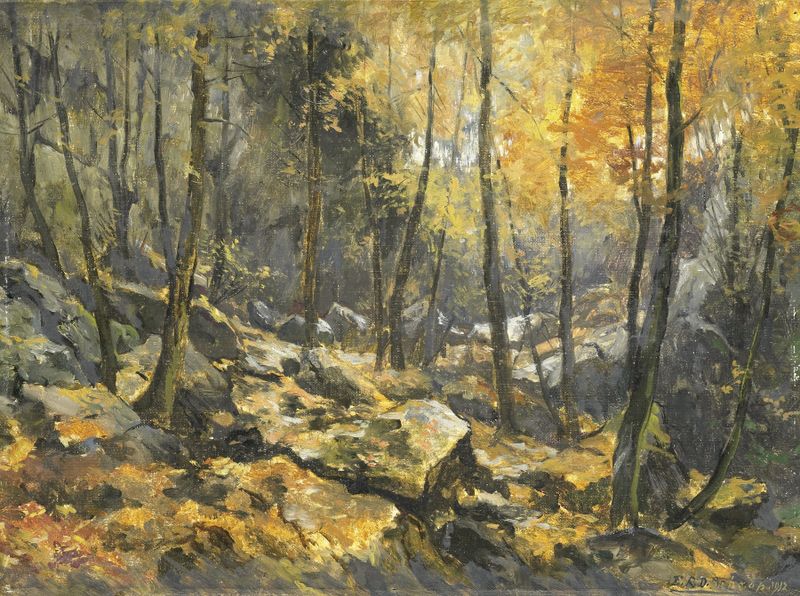
Could a single brushstroke hold eternity? In Meadow in Bloom, the vivid canvas reveals not just the transient beauty of nature, but also the fear of its impermanence. The vibrant colors pulse with life, evoking a sense of urgency as if the viewer might grasp the scene before it fades away. Look to the foreground, where a rich tapestry of wildflowers spills across the canvas, their hues intermingling in a riot of reds, yellows, and blues. Notice how the light dances through the petals, enhancing their vibrancy while casting deep shadows that suggest the encroachment of dusk.
The painter’s expert layering of paint creates texture, inviting your gaze to linger on the delicate interplay between light and shadow, an allegory of fleeting moments captured in time. Delve deeper into the work, and you'll find an emotional tension woven throughout. The vibrant palette contrasts starkly with the darker, shadowy corners, hinting at the lurking anxiety of change. This duality of beauty and fear becomes especially poignant when considering the strokes that seem to reach toward the edges, as if eager to escape yet also mourning what is lost.
Each element encapsulates both the joy of existence and the inevitability of its end. Created in 1913, this piece emerged during a transformative period for its creator, who was exploring new techniques amid the burgeoning modernist movement. Schaap, influenced by both impressionism and post-impressionism, sought to convey not just landscapes, but the underlying human emotions they stir. The canvas reflects a yearning for permanence in a rapidly changing world, a theme resonant both in his life and in the art of the time.