Melken der Kühe — History & Facts
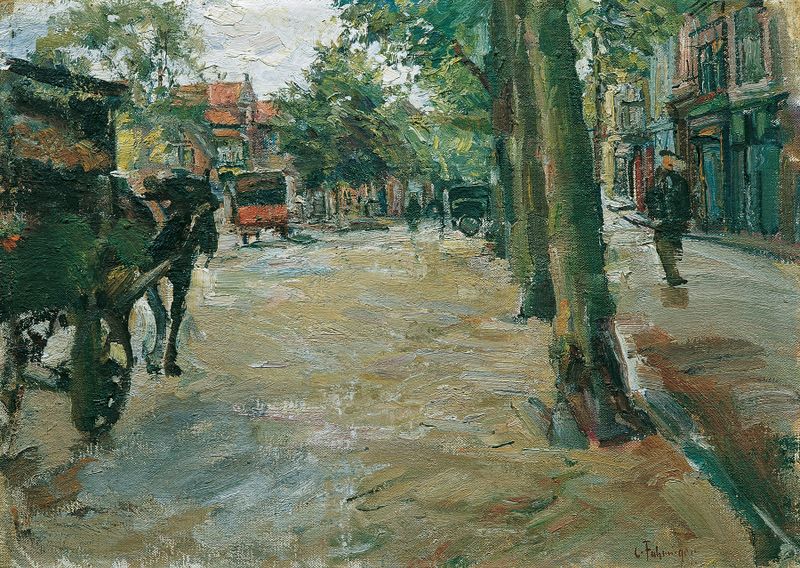
What if silence could speak through light? In Melken der Kühe, a tranquil moment unfolds, where the pastoral yet poignant essence of farm life emerges gently from the canvas. Look to the left at the soft glow filtering through the barn door, illuminating a serene farmer tenderly engaged in milking a cow. The warm, earthy tones evoke a sense of calm, while the precise brushwork captures the textures of the cow's fur and the farmer's weathered hands, showcasing their connection. Focus on the subtle play of light and shadow across the figures, creating a harmonious balance between humanity and nature, inviting you into this intimate exchange of care. The painting resonates with themes of labor and sustenance, highlighting the quiet dignity of rural work.
The stillness of the scene contrasts with the underlying rhythms of life—nature, dependency, and the cyclical passage of time. The almost reverent expression on the farmer's face reveals a profound respect for the animal and the land, suggesting that in these simple acts, there exists a deeper communion with the world around us. Carl Fahringer painted this work during a time when agrarian life was increasingly overshadowed by industrialization. Though the exact date remains unrecorded, his art reflects a dedication to preserving the beauty of rural existence in a shifting cultural landscape, spotlighting the quieter aspects of farm life that often go unnoticed amidst the noise of the modern era.