
Memorial to James, First Earl of Stanhope — History & Facts
When Canaletto unveiled his Memorial to James, First Earl of Stanhope in 1726, it marked a rare foray by the Venetian master into the world of British political commemoration. The Earl of Stanhope, a prominent Whig statesman and close ally of King George I, had died suddenly in 1721 after a heated parliamentary debate, his passing sending shockwaves through British society. The commission of this memorial by Stanhope’s family was not only a personal tribute but also a public statement, celebrating a man who had navigated the turbulent waters of early eighteenth-century politics and foreign wars. At the heart of the composition, Canaletto captures the solemnity of remembrance.
The Earl’s likeness, rendered with a dignity befitting his station, is surrounded by allegorical figures—perhaps Britannia mourning, or Fame bearing a laurel wreath—set against a backdrop of classical architecture that hints at both the transience and grandeur of political life. The play of light draws the viewer’s gaze to the central effigy, while the careful arrangement of mourners and symbols—such as the broken column and extinguished torch—speak to the suddenness of Stanhope’s death and the legacy he left behind. Unlike Roubiliac’s later memorials, which revel in theatrical gestures, Canaletto opts for restraint, inviting contemplation rather than spectacle. The exact medium of the work remains uncertain, and its journey through history is not fully documented.
It is likely that the memorial was intended for a private British collection, possibly displayed in the Stanhope family estate before passing into other hands. While Canaletto is best known for his luminous Venetian cityscapes, this commission demonstrates his versatility and the international reach of his reputation by the mid-1720s. Today, Memorial to James, First Earl of Stanhope stands as an intriguing testament to a brief but significant intersection between Venetian artistry and British political memory, and it offers a rare glimpse into the commemorative practices of the early Georgian era.
More Artworks by Canaletto

The Grand Canal, Venice, looking north-west from the Ca' Corner to the Ca' Contarini degli Scrigni, with the campanile of Santa Maria della Carità
Canaletto

Venice, Bacino di San Marco on Ascension Day
Canaletto

Windsor Castle
Canaletto

The Grand Canal looking North-East from the Palazzo Dolfin-Manin to the Rialto Bridge
Canaletto

Venice: The Campo SS. Giovanni e Paolo
Canaletto

Venice: The Grand Canal from the Rialto to the Palazzo Foscari
Canaletto
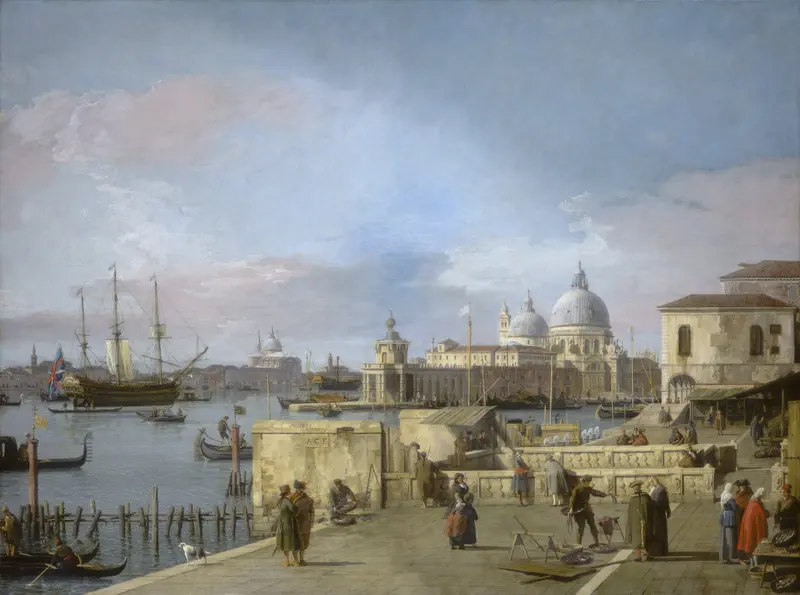
Venice: The Molo towards the Dogana and Santa Maria della Salute
Canaletto

Venice: The Piazzetta
Canaletto
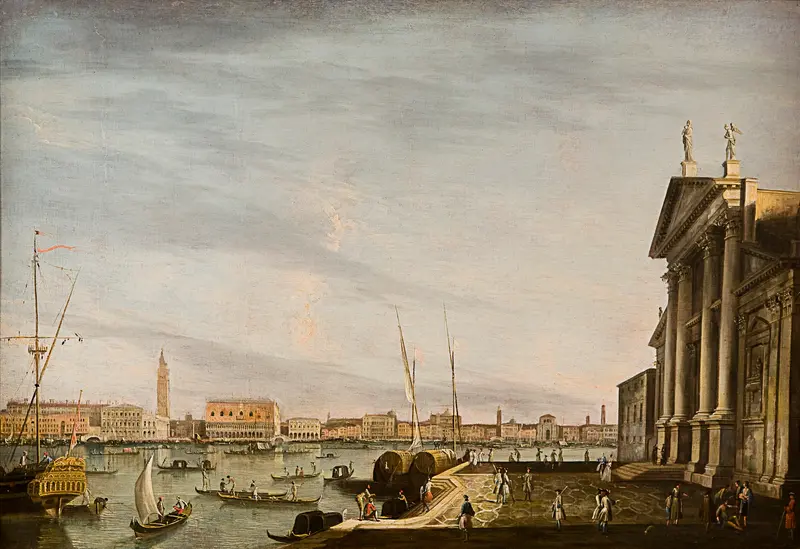
Venice, View of San Giorgio Maggiore
Canaletto

London: The Thames from Somerset House Terrace towards Westminster
Canaletto





