
Menino na ladeira — History & Facts
Did the painter know this moment would outlive them? In Menino na ladeira, the essence of childhood innocence is captured amid the whispers of impending change, a testament to a fleeting experience in a world on the brink of transformation. Focus on the boy at the center, perched on the edge of the stairway, his gaze fixed on something beyond the canvas. Notice how the warm ochres and deep blues intertwine, enveloping him in the golden light of a late afternoon. The composition draws your eye toward the figure, his posture radiating a blend of curiosity and contemplation, while the textured strokes of the surrounding architecture evoke the rough beauty of everyday life.
The gentle play of shadows and light conveys a moment of quiet reflection, allowing the viewer to feel the weight of the world beyond the boy's immediate surroundings. Hidden within this seemingly simple scene are contrasts that reveal deeper emotional layers. The boy's innocence basks in the glow of the sun, yet the surrounding walls hint at a looming societal shift, the shadows whispering of impending revolution. The juxtaposition of his youthful wonder against the starkness of the urban environment creates a tension that invites introspection, prompting viewers to consider the broader implications of a world in transition. In 1889, during a time of political upheaval in Brazil marked by the abolition of slavery and the dawn of the Republic, the artist created this piece while living in Rio de Janeiro.
It was a period where traditional narratives were being challenged, and Visconti found inspiration in the converging realms of life and art. This painting reflects not only the ethos of a young nation but also the universal experience of childhood against the backdrop of change.
More Artworks by Eliseu Visconti
Browse all →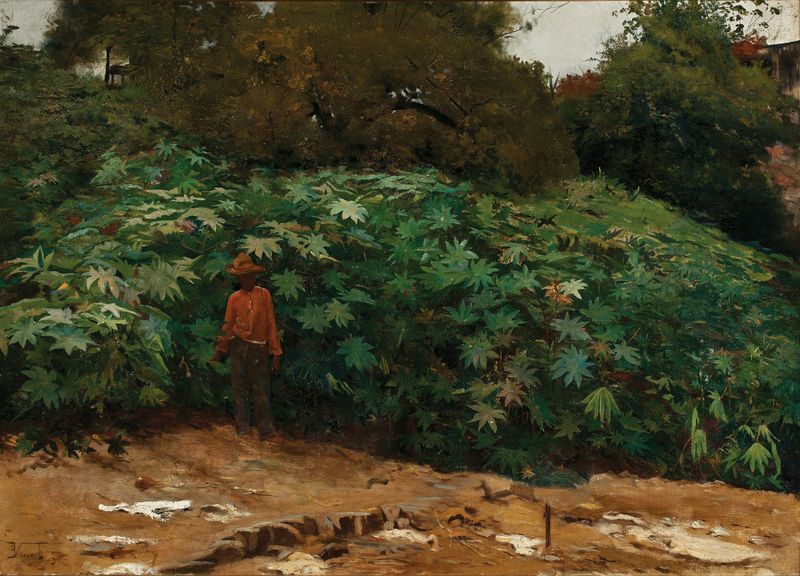
Mamoneiras – Morro de São Bento
Eliseu Visconti
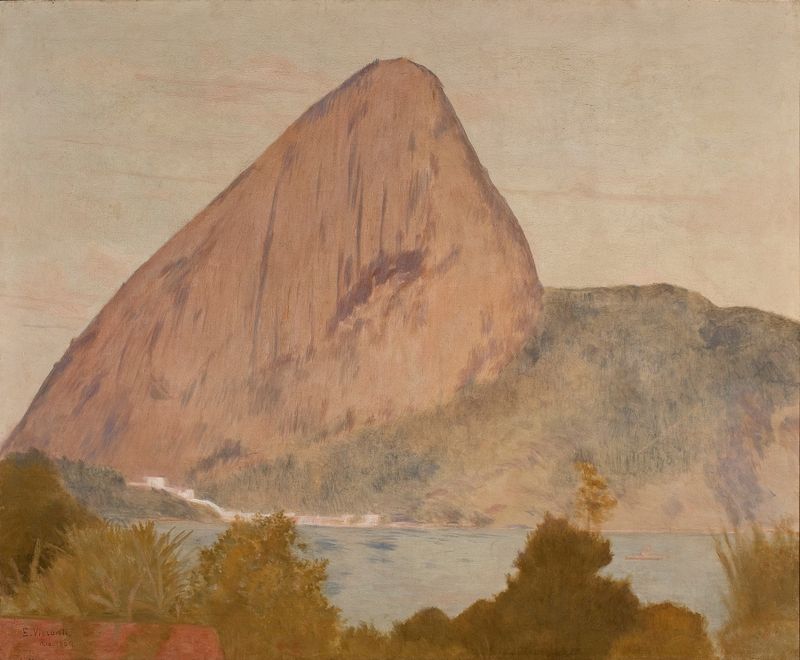
Marina com Pão de Açúcar
Eliseu Visconti

O batismo da boneca
Eliseu Visconti
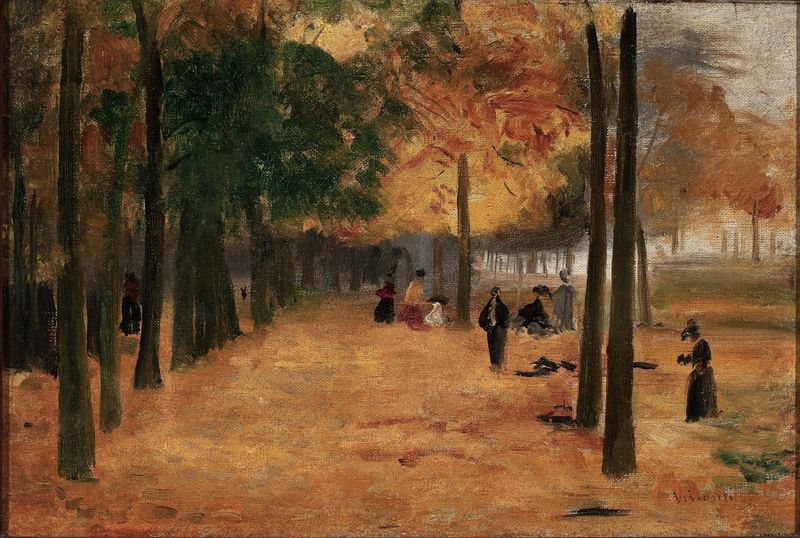
Canto de Luxemburgo (Outono)
Eliseu Visconti
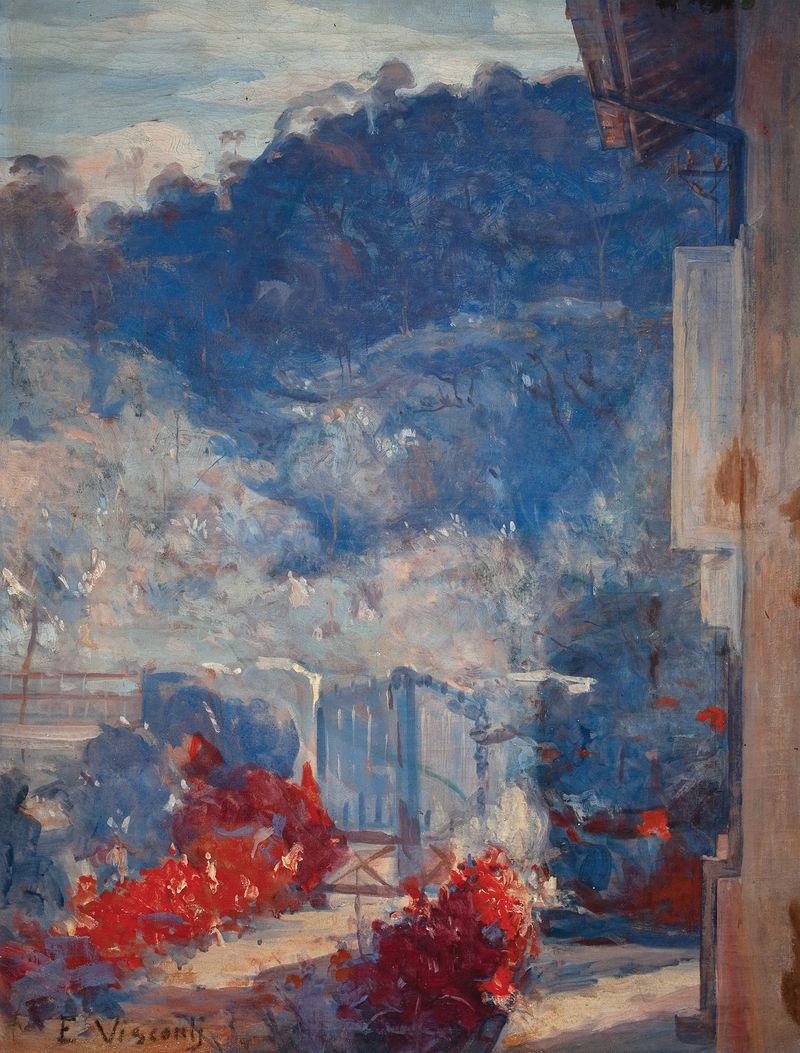
Raios de sol
Eliseu Visconti
Tarde em Saint Hubert
Eliseu Visconti

Efeito matinal
Eliseu Visconti
A Igrejinha (Copacabana)
Eliseu Visconti

A caminho da escola
Eliseu Visconti

Flores da rua
Eliseu Visconti





