
Midsummer Twilight — History & Facts
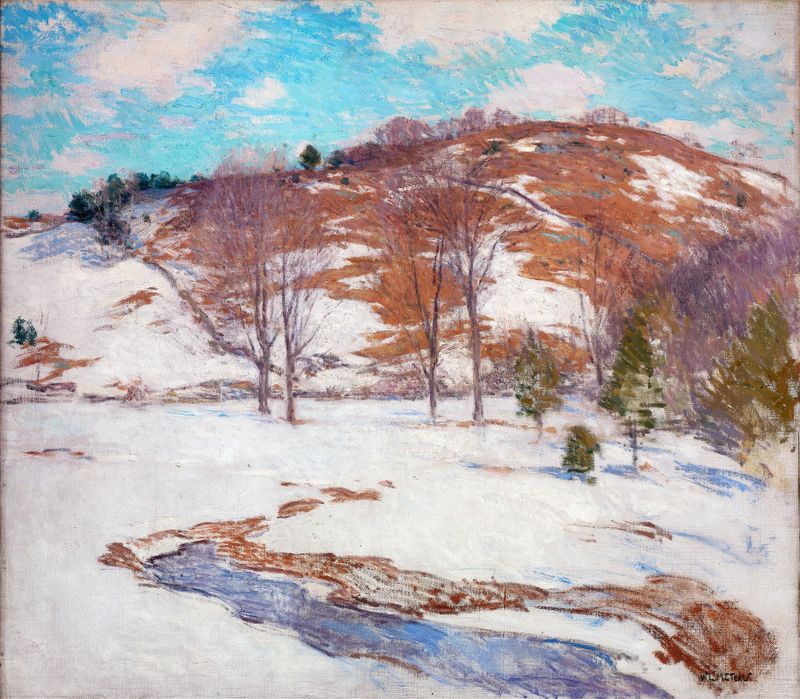
Where does light end, and longing begin? In this work, the interplay of dusk and desire suggests a seamless frontier between day and night, urging us to confront the mysteries of destiny. Look to the left at the delicate interplay of burnt orange and fading lavender hues, as they merge along the horizon. The brushstrokes, soft yet deliberate, invite you to trace the outlines of the trees, their silhouettes standing resolute against the twilight. Notice the way the light gently dapples the ground, casting fleeting shadows that hint at the passage of time—an invitation to pause and reflect amidst the chaos of existence. As the colors blend, a subtle tension emerges between the warmth of the summer evening and the impending coolness of night.
This interplay evokes feelings of nostalgia and anticipation, suggesting a fleeting moment before change arrives. The distant horizon, kissed by the last rays of sun, embodies hope and uncertainty—the duality that accompanies any transition, echoing the human experience of yearning for what lies just beyond reach. Created around 1890, this piece emerged during a time of artistic exploration in America, as artists sought to capture the profound beauty of the natural world. Willard Leroy Metcalf painted this during his time in Massachusetts, a period marked by both personal development and an evolving appreciation for Impressionist techniques.
The era was ripe with a fascination for light and color, positioning Metcalf at a pivotal moment in the shift from traditional landscapes to a more emotive and intimate representation of nature’s transient beauty.
More Artworks by Willard Leroy Metcalf
Browse all →
Indian Summer, Vermont
Willard Leroy Metcalf
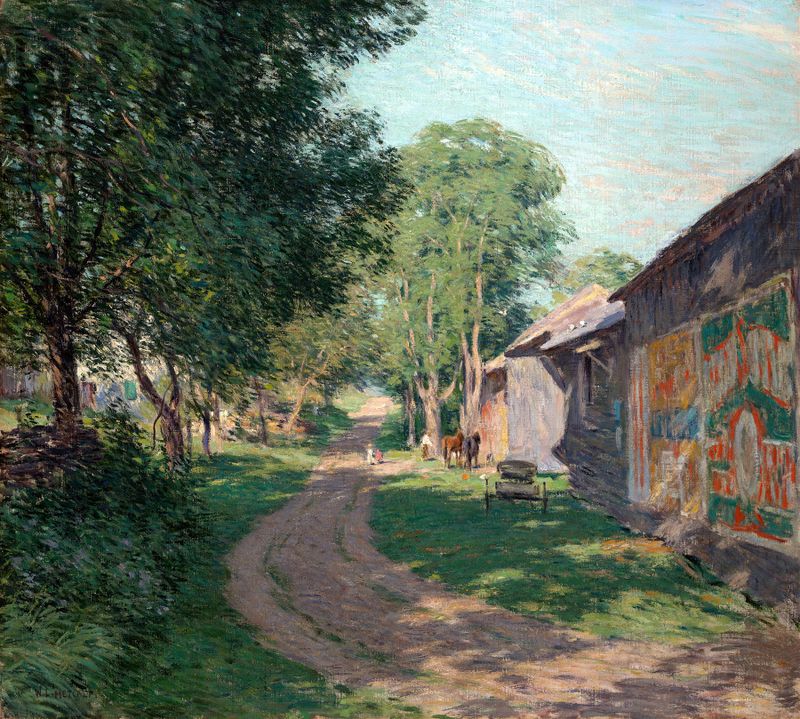
Midsummer Shadows
Willard Leroy Metcalf
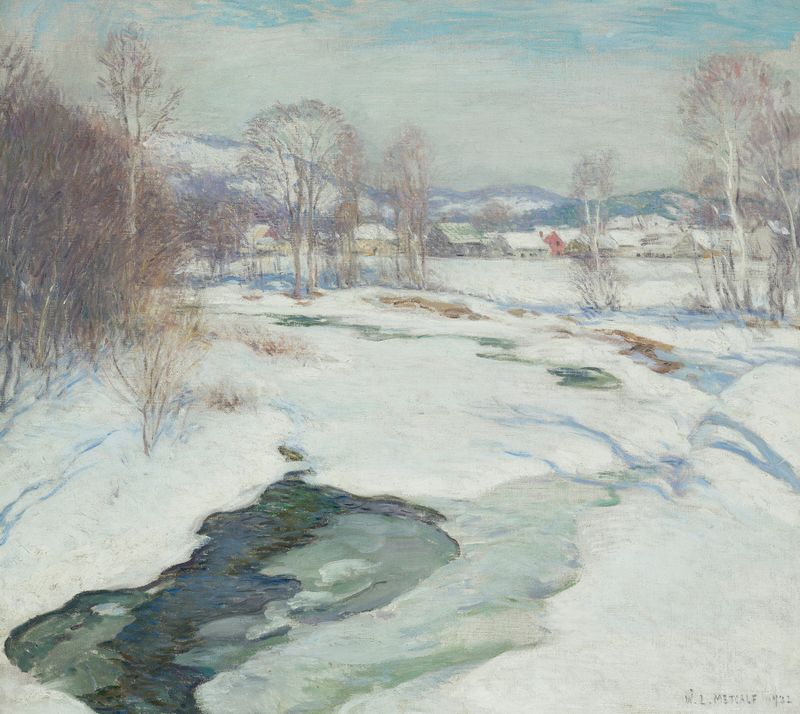
Icebound Brook
Willard Leroy Metcalf
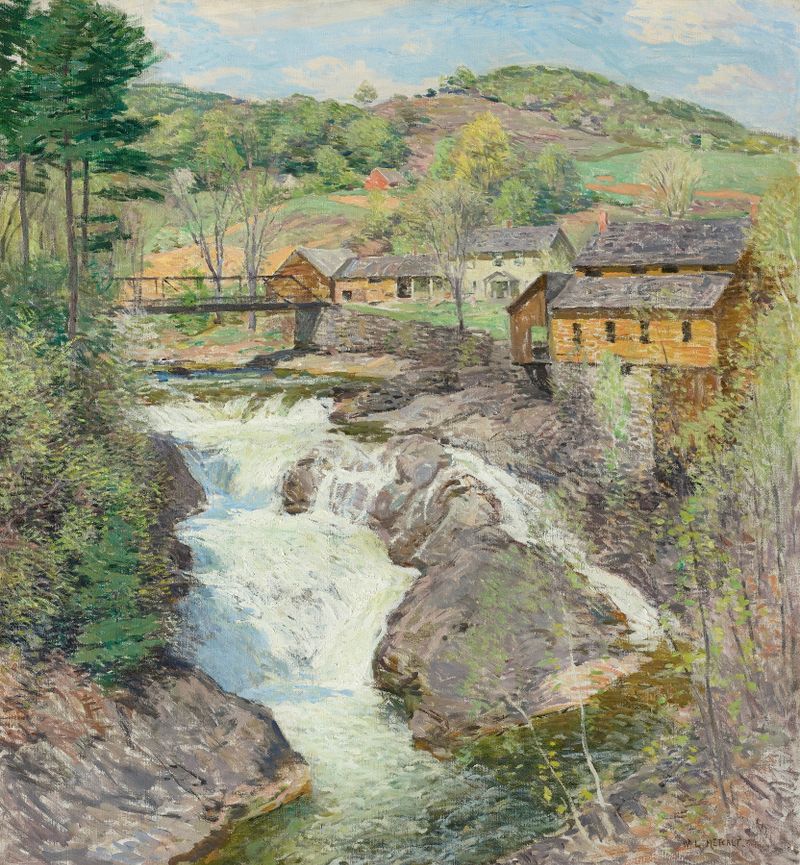
The Falls
Willard Leroy Metcalf
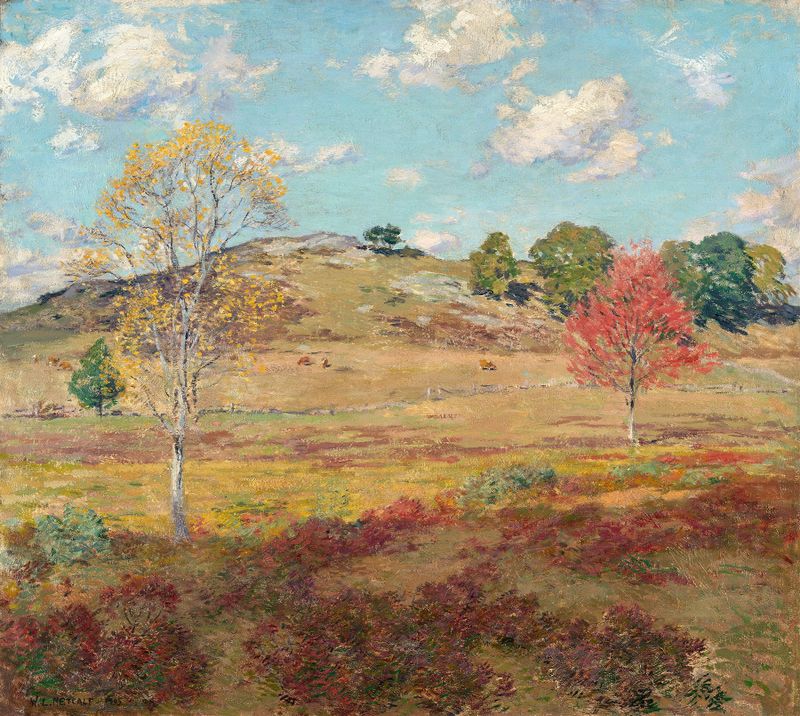
Early Autumn
Willard Leroy Metcalf
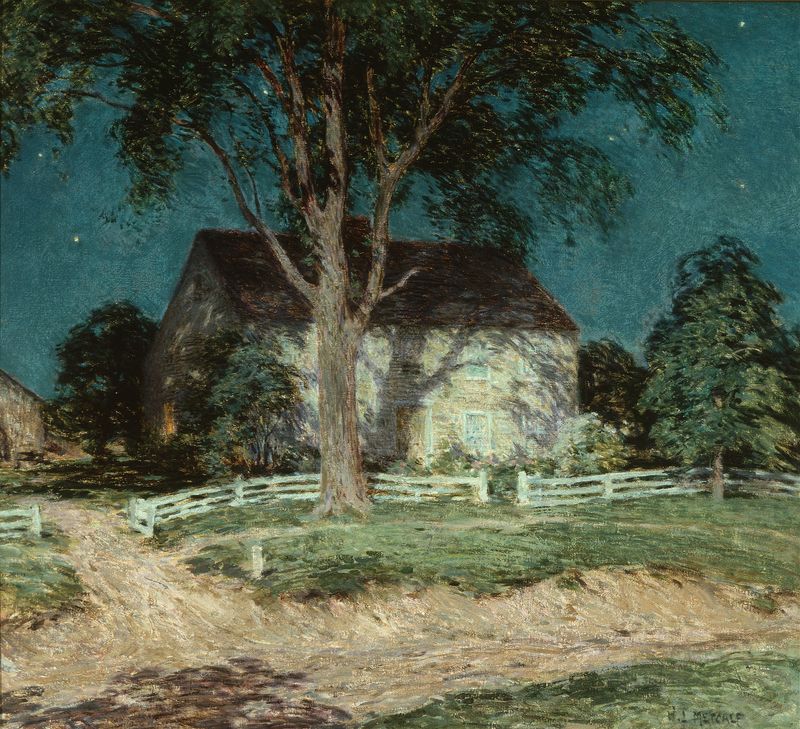
Old Homestead Connecticut
Willard Leroy Metcalf
Landscape with Church Steeple
Willard Leroy Metcalf
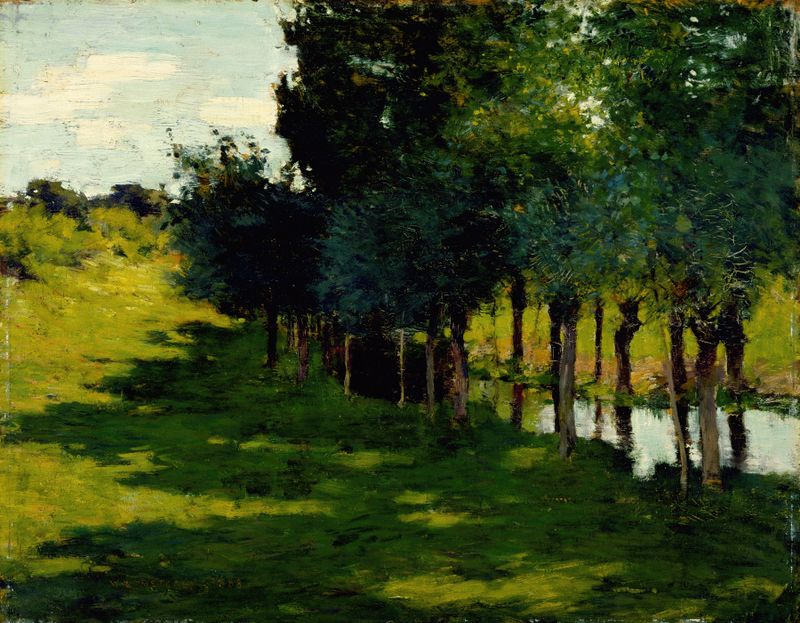
Sunlight and Shadow
Willard Leroy Metcalf
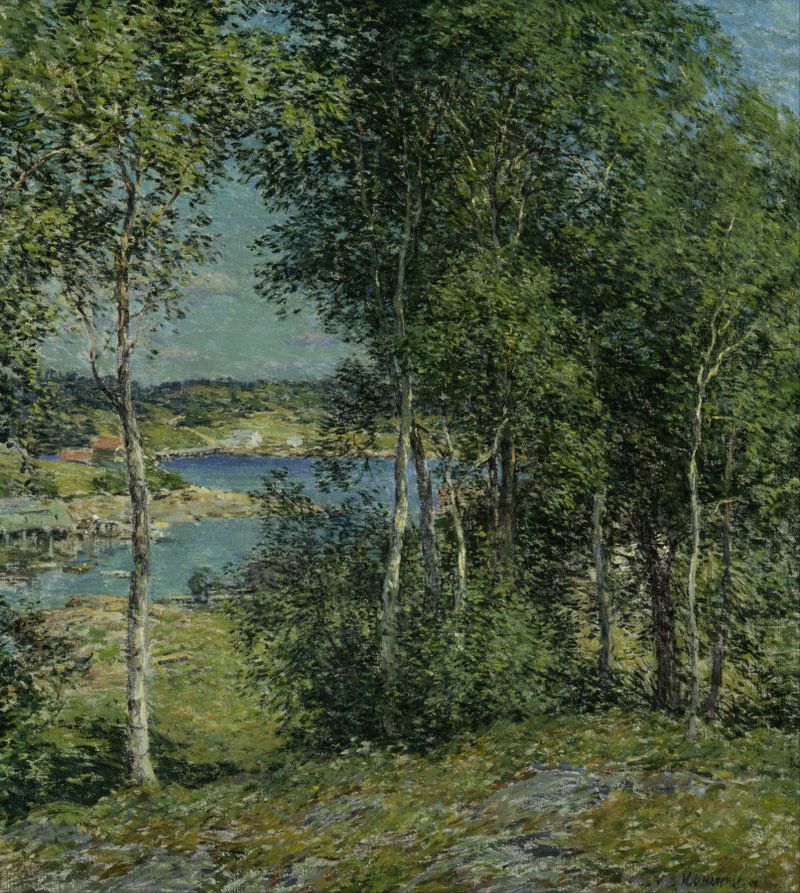
A Family of Birches
Willard Leroy Metcalf
Snow in the Foothills
Willard Leroy Metcalf





