
Mill on the Avon, Pershore, Worcestershire — History & Facts
When did color learn to lie? The vibrant greens and soft blues whisper of tranquility, yet the landscape holds a tension just beneath its surface, hinting at a hidden discord. Look to the left at the mill, its sturdy structure juxtaposed against the delicate ripples of the river. Notice how the light glimmers upon the water, casting a shimmering veil that masks the underlying turmoil of nature. The brushwork conveys an almost palpable texture, drawing your eye not only to the scene but into the very heart of this pastoral moment, where calmness threatens to unravel. Delve deeper into the painting and you'll find the subtle duality of existence.
The idyllic setting is underpinned by the relentless flow of the river, a metaphor for change and the passage of time, while the mill stands as a witness to that relentless march. The vibrant colors, at first inviting, evoke a sense of unease when viewed in this context, suggesting that beneath the beauty lies an irrepressible truth about life's violent currents. Samuel Hieronymus Grimm created this work during a time when the Romantic movement was gaining momentum, likely in the late 18th century. As he painted, he was influenced by the growing fascination with nature and its sublime qualities, reflecting a broader trend in European art.
Grimm's own observations of the landscapes around him captured both the serene and the tumultuous, mirroring the emotional complexity of a world on the brink of industrial change.
More Artworks by Samuel Hieronymus Grimm
Browse all →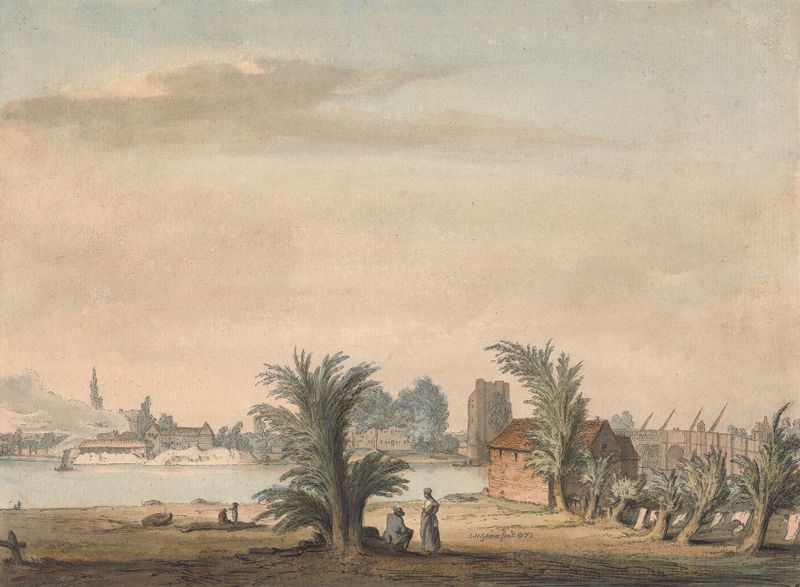
Putney Church and Bridge
Samuel Hieronymus Grimm

Between Chiswick and Brentford
Samuel Hieronymus Grimm
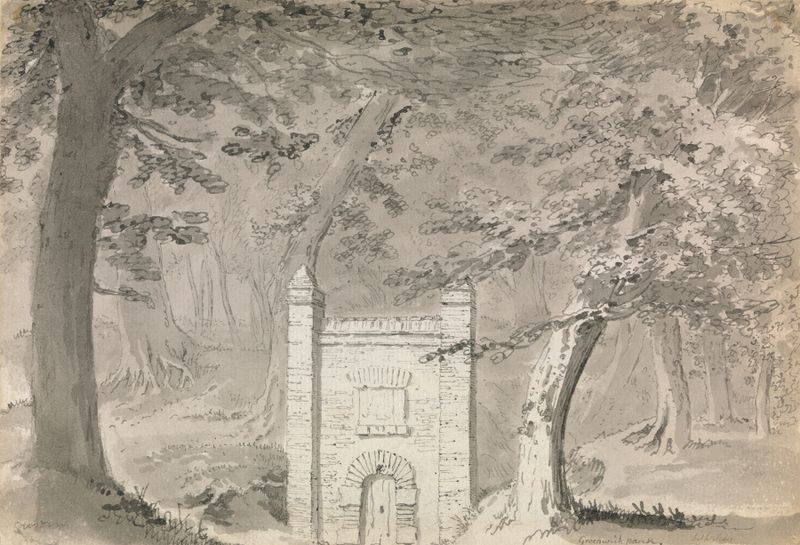
Greenwich Park
Samuel Hieronymus Grimm
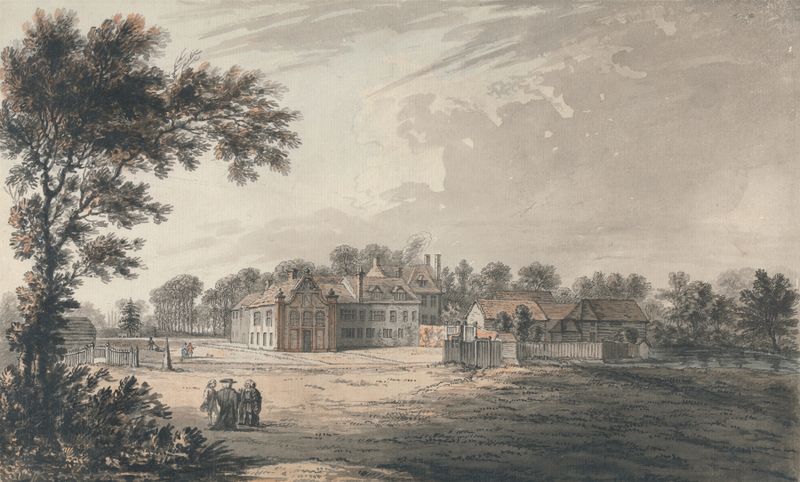
The Bishop’s Palace, Bromley
Samuel Hieronymus Grimm
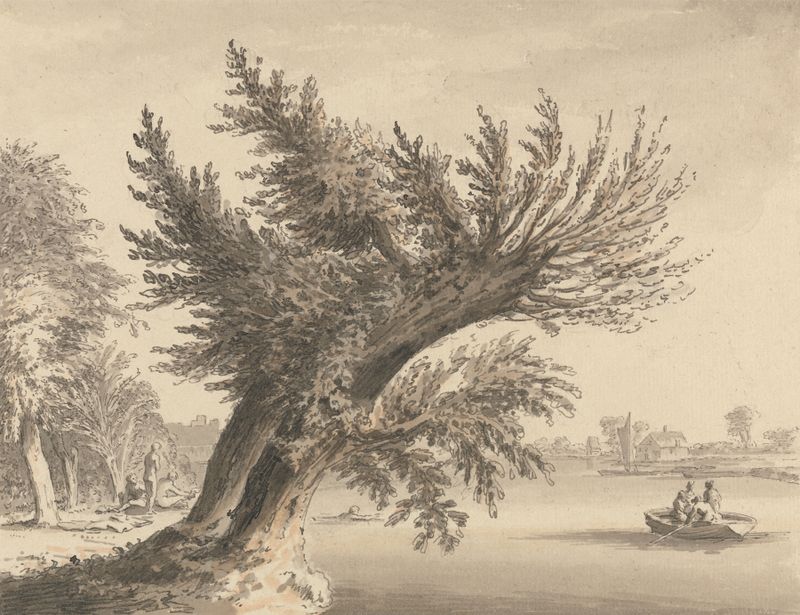
On the Thames at Barnes
Samuel Hieronymus Grimm

View of a Village alongside a River
Samuel Hieronymus Grimm
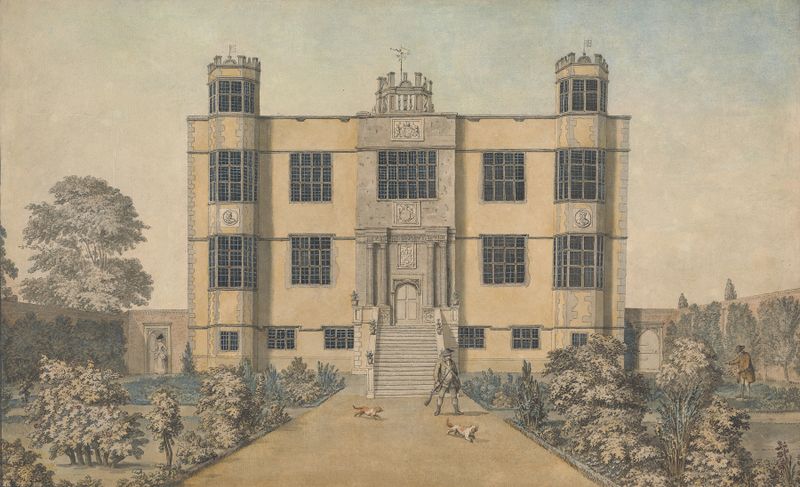
Barlborough Hall, near Chesterfield, Derbyshire; the Main Front of the Hall
Samuel Hieronymus Grimm

Haverfordwest, Pembrokeshire
Samuel Hieronymus Grimm
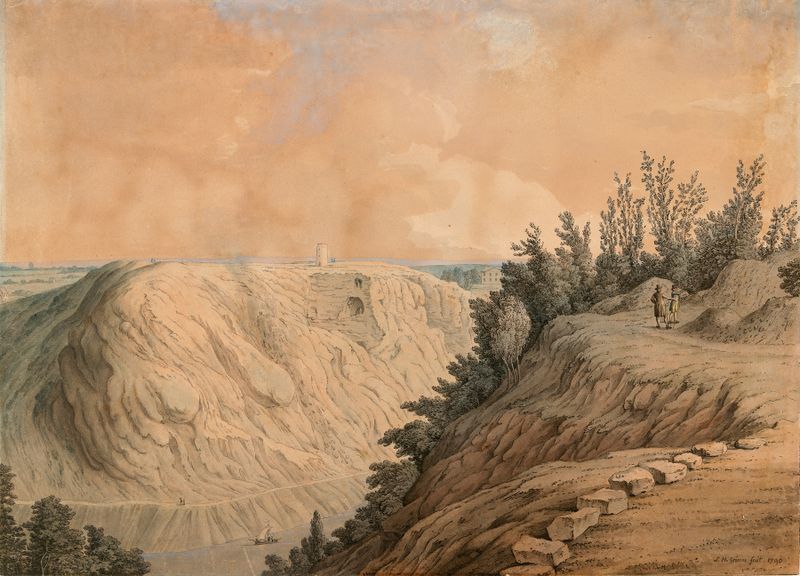
Saint Vincent’s Rock and Cave (The Giant’s Hole) on the River Avon, Somerset
Samuel Hieronymus Grimm

The Gatehouse, Reading Abbey
Samuel Hieronymus Grimm





