Miono-Matsubara — History & Facts
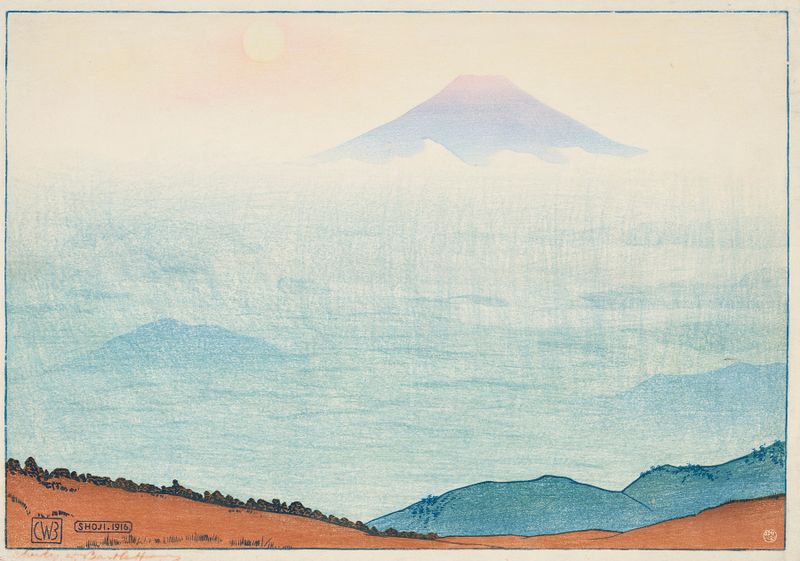
In a world painted with chaos, the essence of serenity can often seem elusive, yet Miono-Matsubara captures this delicate balance. Look to the foreground, where vibrant hues of green and blue converge harmoniously, evoking the lush landscape of Japan’s Miono-Matsubara. Notice how the trees, rendered with expressive brushstrokes, sway gently in a breeze that feels almost palpable. The delicate interplay of light and shadow creates a rhythmic dance, drawing your eye across the canvas and inviting you to lose yourself within its tranquil depths. Yet beneath this calm facade lies a tension, a reminder of nature’s unpredictable spirit.
The bold strokes and the swirling patterns suggest a chaos that belies the serene beauty; it speaks of the tumultuous relationship between man and nature. The subtle juxtaposition of the vibrant colors against the softer, almost ghostly background hints at the transient nature of existence, where moments of clarity are often fleeting amidst the turmoil. In 1916, amidst the shadows of World War I, Charles Bartlett turned his gaze to the landscapes of Japan while residing in the UK. This was a time when artists were seeking solace in nature to escape the harsh realities of their lives.
Influenced by the Japanese aesthetic, Bartlett's work represented a bridge between Eastern tranquility and Western tumult, allowing him to express a longing for peace against a backdrop of chaos.