
Taj Mahal, Twilight — History & Facts
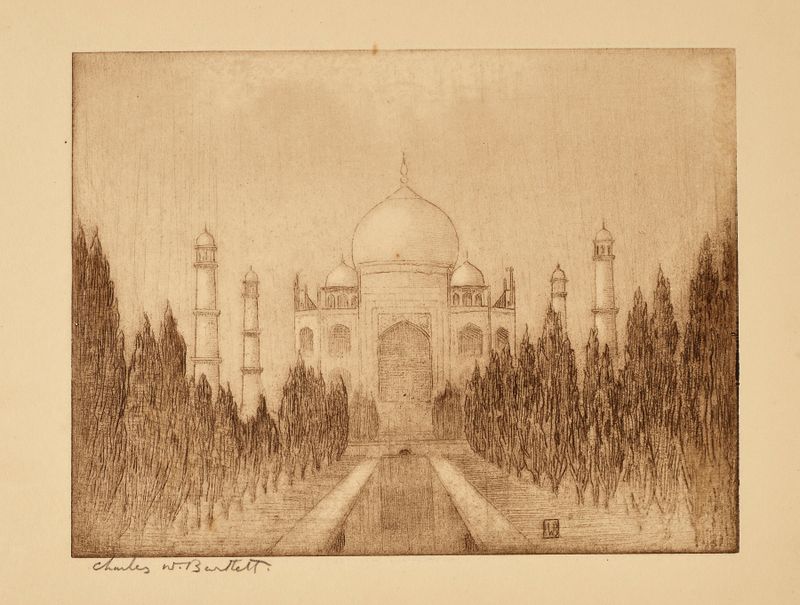
What if silence could speak through light? In Taj Mahal, Twilight, the luminous glow of dusk becomes a poignant elegy, capturing the essence of profound loss and longing. Look to the foreground where the intricate reflections of the Taj Mahal shimmer in the still waters, inviting your gaze to linger. The majestic dome rises softly against the deepening blues and purples of the evening sky, its marble brilliance almost ethereal. Notice how the light plays upon the water, creating a gentle ripple that distorts the reflection, suggesting the transient nature of beauty and memory.
Each stroke reveals Bartlett's masterful blending of colors, where cool tones contrast with warm, inviting hints of gold, evoking a sense of warmth amidst the underlying sorrow. In the depths of the composition lies a subtle tension between light and shadow, embodying grief and remembrance. The rising mausoleum, shrouded in twilight, becomes a symbol not only of architectural grandeur but also of the impermanence of love. The stillness of the scene evokes whispers of the past, prompting the viewer to reflect on the stories held within the monument's walls.
This interplay between illumination and obscurity invites contemplation of loss, capturing the heartache that often accompanies beauty. Charles Bartlett painted this piece in 1916 during a time when the world was grappling with the devastation of World War I. The artist found inspiration in the serene beauty of the Taj Mahal, an enduring symbol of love and mourning, while navigating his own personal experiences and the cultural shifts of the early 20th century. This period marked a transition in art, as traditional forms began to blend with modern expressions, creating a rich tapestry of emotional depth that resonates in this poignant work.
More Artworks by Charles Bartlett
Browse all →

More Architecture Art
Browse all →
The statue of Liberty
Frédéric Auguste Bartholdi

View of Houses in Delft, Known as ‘The Little Street’
Johannes Vermeer

View of Houses in Delft, Known as ‘The Little Street’
Johannes Vermeer

The Cathedral in Rouen. The portal, Grey Weather
Claude Monet

The yellow house
Vincent van Gogh

The Church in Auvers-sur-Oise, View from the Chevet
Vincent van Gogh