
Taj Mahal — History & Facts
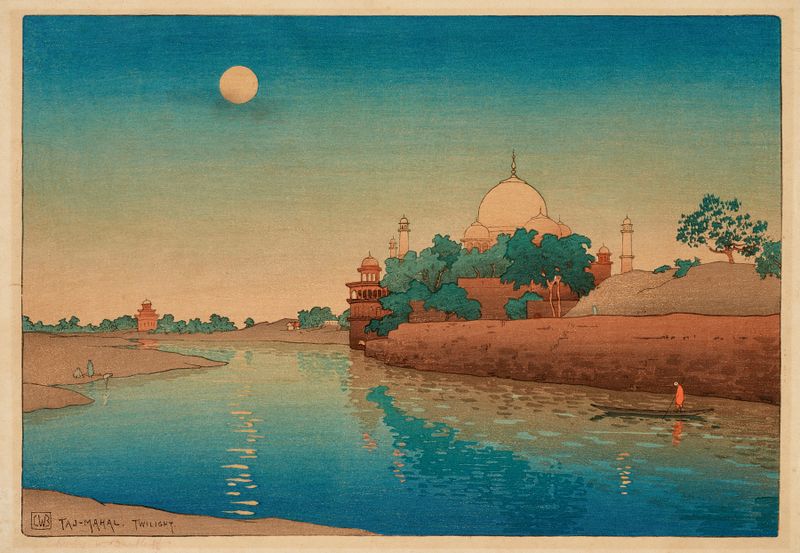
When did color learn to lie? The vibrant hues of a masterful landscape can deceive us, pulling us into a realm where the divine and earthly intertwine in a delicate dance. Look to the soft pinks and rich blues that dominate the canvas, inviting you to explore the majestic edifice at the center. The Taj Mahal rises elegantly, framed by flowering trees that seem to whisper secrets of love and loss. Notice how the light plays across the marble dome, casting soft shadows that blur the line between reality and dream.
Each brushstroke reveals a commitment to detail, with intricate patterns that breathe life into the structure, suggesting an ethereal quality that transcends time. Beneath the surface, the emotional tension between nature and architecture is palpable. The grandeur of the Taj Mahal represents eternal love, yet the surrounding flora reminds us of the fleeting nature of life. There is an interplay of permanence and transience—while the monument stands as an enduring tribute, the blossoms betray a reminder that beauty fades.
This contrast evokes a sense of longing, a bittersweet acknowledgment of the divine amidst earthly existence. In 1916, Bartlett painted this piece during a time when the world was grappling with the aftermath of war and the shifts of modernity. Living in England, amidst a period of intense artistic exploration, he sought to capture not just the physical splendor of the Taj Mahal but also its spiritual resonance. This work reflects not only his journey as an artist but also the collective yearning for beauty and solace in turbulent times.
More Artworks by Charles Bartlett
Browse all →

More Architecture Art
Browse all →
The statue of Liberty
Frédéric Auguste Bartholdi

View of Houses in Delft, Known as ‘The Little Street’
Johannes Vermeer

View of Houses in Delft, Known as ‘The Little Street’
Johannes Vermeer

The Cathedral in Rouen. The portal, Grey Weather
Claude Monet

The yellow house
Vincent van Gogh

The Church in Auvers-sur-Oise, View from the Chevet
Vincent van Gogh