
Taj Mahal, Sunset — History & Facts
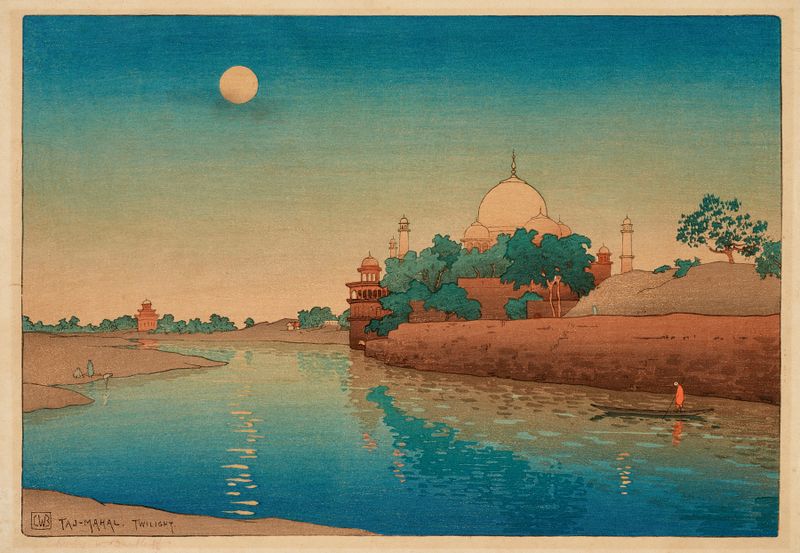
Is this a mirror — or a memory? The reflection of the Taj Mahal upon the still waters evokes a sense of legacy that transcends time itself. Focus on the serene symmetry of the iconic monument, which stands majestically at the center, its white marble glowing softly in the warm embrace of sunset. Notice how the vibrant oranges and pinks of the sky blend seamlessly into the water’s surface, creating a harmonious dialogue between earth and sky. The artist’s delicate brushwork captures both the grandeur of the structure and the tranquility of the moment, inviting the viewer to linger in this ephemeral beauty. Delve deeper into the subtle contrasts within the piece: the solid permanence of the mausoleum set against the fleeting colors of dusk.
The cool reflections in the water suggest a fleeting nature, reminding us that even the most enduring legacies can fade. The meticulous detailing of the floral motifs around the base amplifies the sacredness of the scene, reflecting both love and loss, as the structure was built as a testament to the enduring bond between a ruler and his beloved. In 1919, Charles Bartlett painted this work while living in Japan, influenced by the aesthetics of Japanese art. The world was emerging from the chaos of World War I, and his choice to portray the Taj Mahal reflects a fascination with the themes of beauty and remembrance.
This period marked a significant moment in his career, as he sought to bridge cultural divides through his art, infusing it with an appreciation for legacy and the stories that linger through time.
More Artworks by Charles Bartlett
Browse all →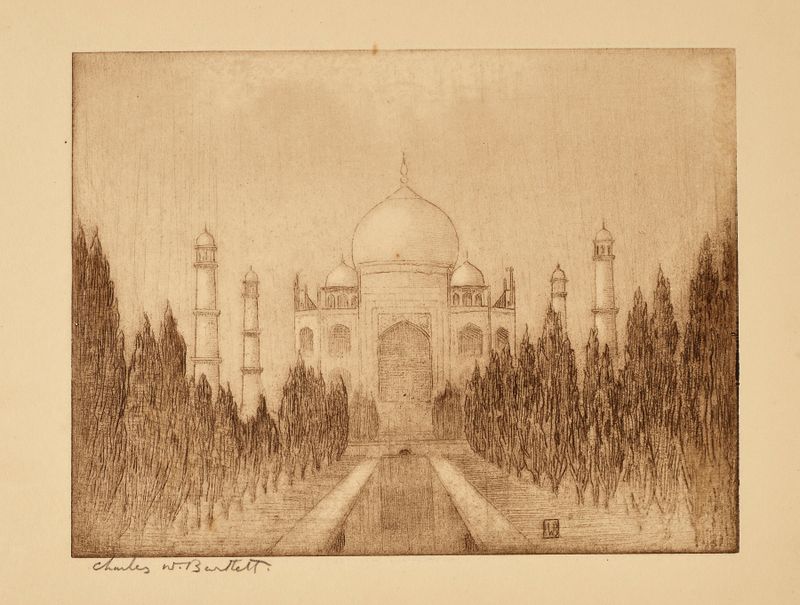

More Architecture Art
Browse all →
The statue of Liberty
Frédéric Auguste Bartholdi

View of Houses in Delft, Known as ‘The Little Street’
Johannes Vermeer

View of Houses in Delft, Known as ‘The Little Street’
Johannes Vermeer

The Cathedral in Rouen. The portal, Grey Weather
Claude Monet

The yellow house
Vincent van Gogh

The Church in Auvers-sur-Oise, View from the Chevet
Vincent van Gogh