Mondschein an der Küste — History & Facts
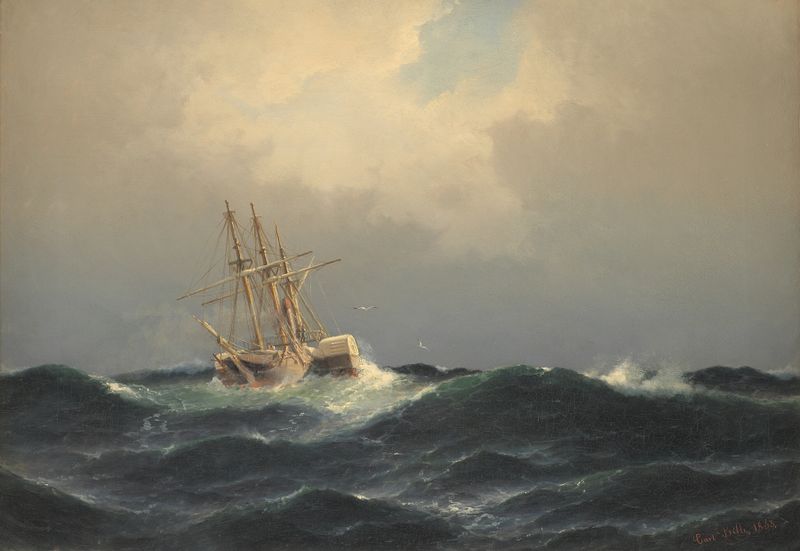
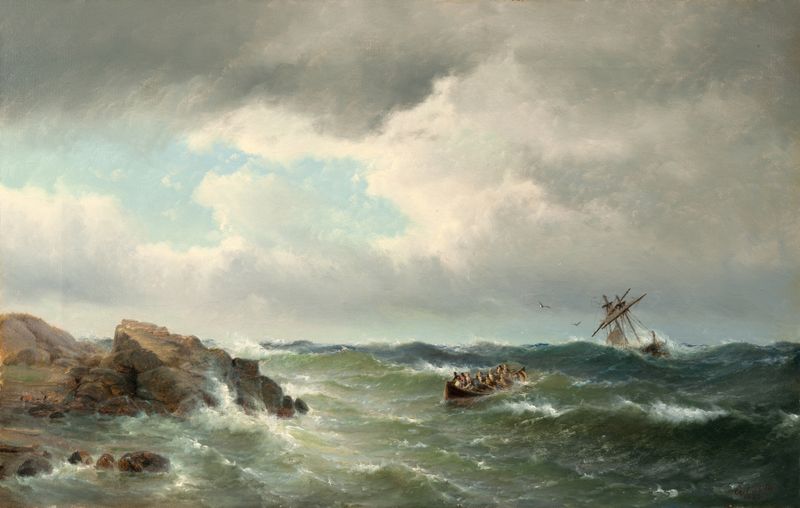
Can beauty exist without sorrow? In Mondschein an der Küste, the delicate interplay of moonlight and shadow suggests a fragility that lingers at the edge of perception. Focus on the soft glow that spills over the water, illuminating the gentle waves in hues of silver and deep indigo. To the right, the silhouettes of distant cliffs frame the scene, their ruggedness contrasting sharply with the tranquility of the sea. Notice how the light dances upon the surface, creating a pathway that seems to beckon toward the horizon, yet remains tantalizingly out of reach, symbolizing both beauty and longing. The stark juxtaposition of the smooth, reflective water against the jagged cliffs evokes a deep emotional tension.
The moonlight, though enchanting, also casts an eerie pallor that hints at isolation and vulnerability. Each brushstroke captures a fleeting moment, underscoring the ephemeral nature of beauty, as the tranquil scene masks an underlying sense of melancholy. Created in 1850, this painting emerged during a period of transformation within the art world, as Romanticism was giving way to a new focus on realism. Carl Bille, a prominent Danish marine painter, was deeply inspired by coastal landscapes and the majesty of nature.
His works often reflected a profound connection to the sea, while also conveying the complexities of human emotion, making this piece a striking embodiment of his artistic vision.