Seascape — History & Facts
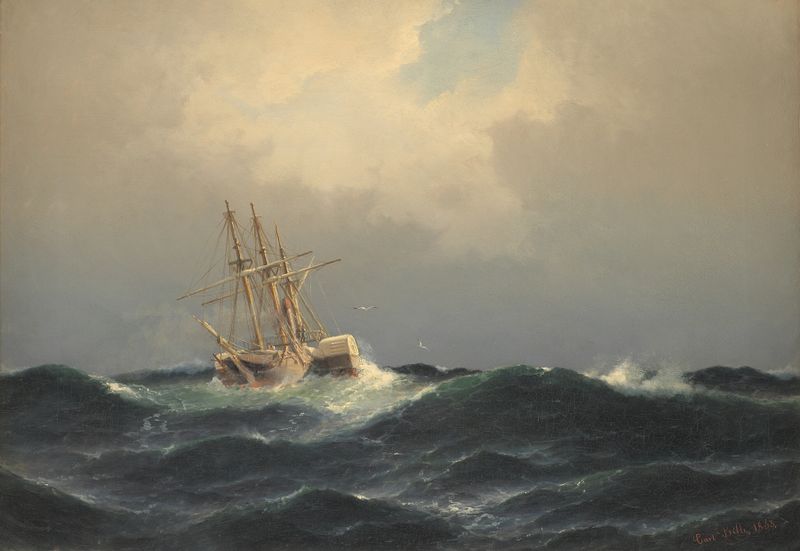
In Seascape, the tumult of waves captures the relentless passage of time, a dance between the ephemeral and the eternal. Look to the far right where frothy whitecaps break against a rugged shoreline, pulling your gaze toward the vast expanse of deep blue. Notice how the sunlight bathes the scene, casting a warm glow that juxtaposes the coolness of the ocean, creating a vibrant dialogue between color and light. The skillful brushwork conveys energy, with swirling strokes that reflect the movement of the water, inviting viewers to lose themselves in the rhythm of the sea. Bille subtly contrasts the delicate beauty of the moment with the raw power of nature.
The horizon, where sky meets sea, serves as a reminder of the infinite, while the jagged rocks symbolize the permanence of the earth against the transformative tides. The play of light and shadow enhances this tension, suggesting that beauty, like time, is both fleeting and boundless. In 1870, Carl Bille painted this work in Denmark, during a period marked by a growing interest in naturalism and impressionism. As he explored seascapes, Bille was influenced by the changing dynamics of light and movement, reflecting his desire to capture the essence of fleeting moments in nature amidst the broader artistic movements of his time.