Montmatre en hiver — History & Facts
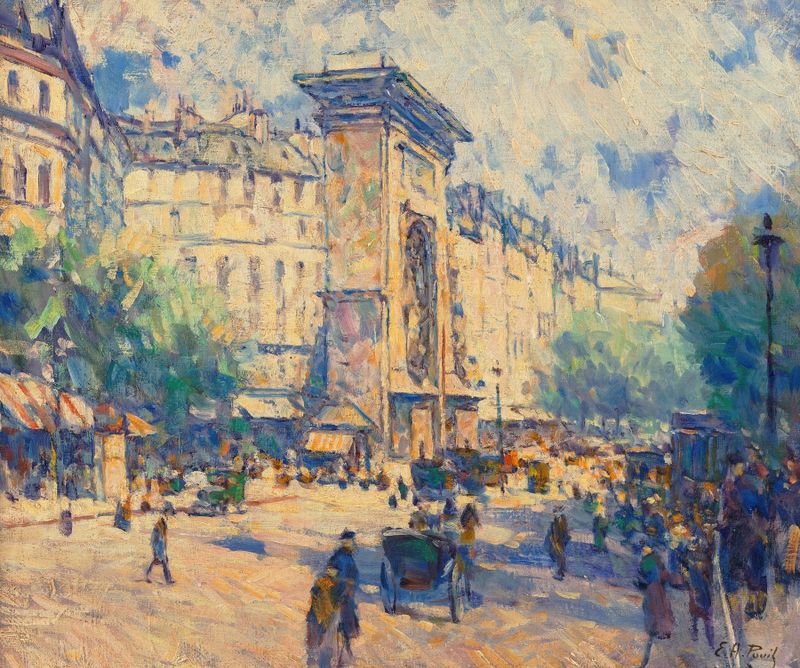
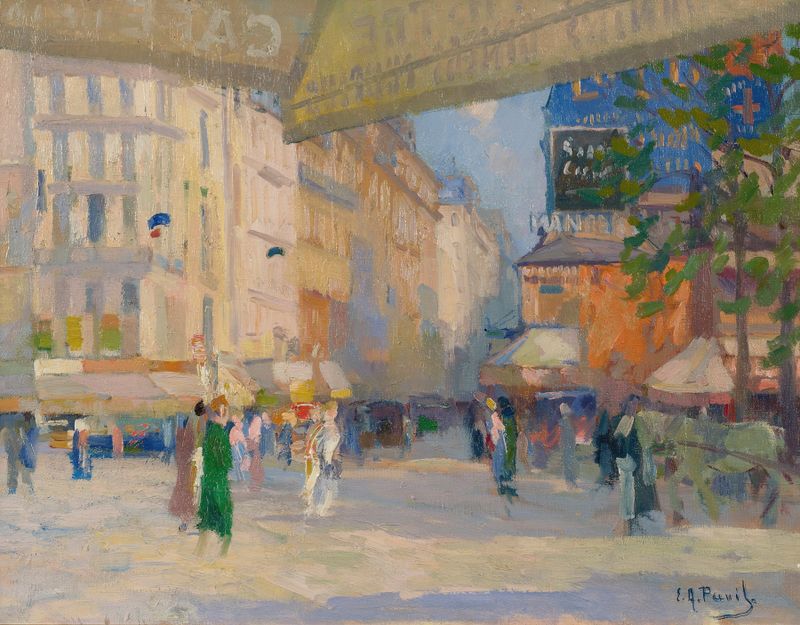
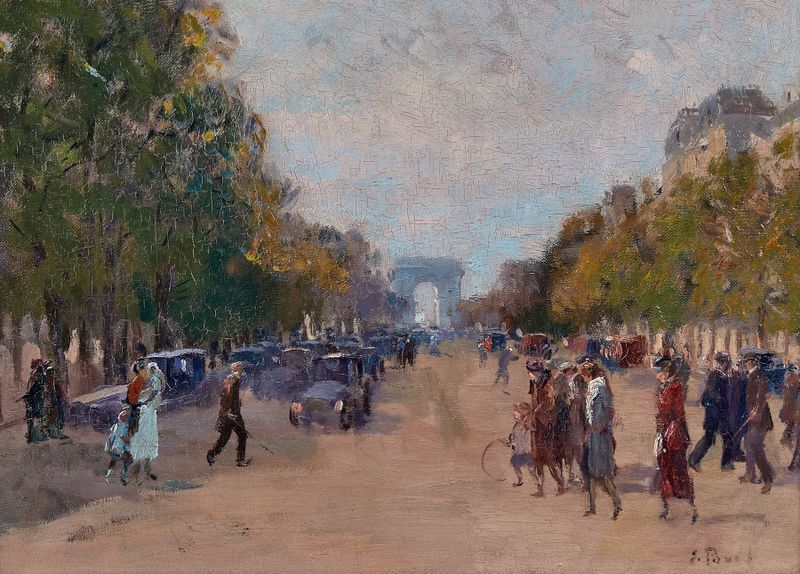
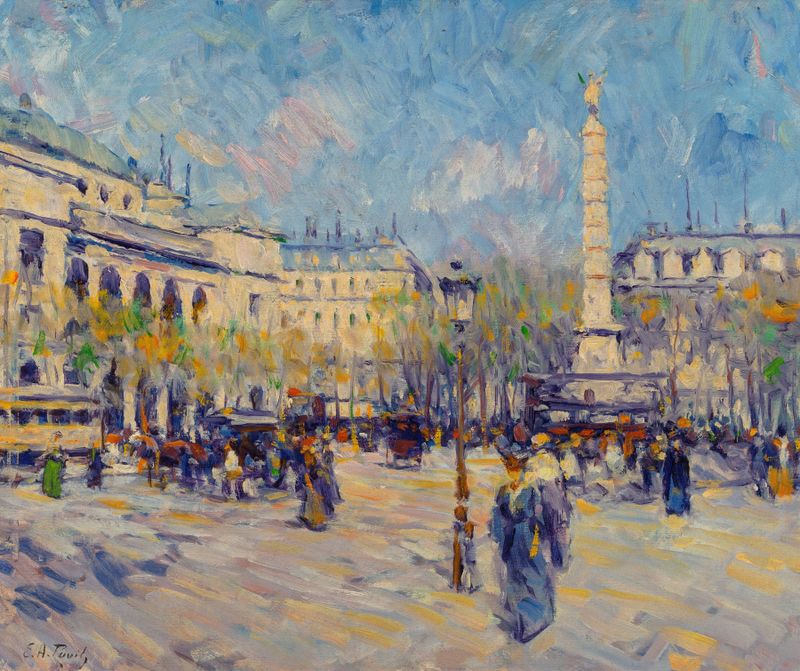
Could a single brushstroke hold eternity? In Montmatre en hiver, shadow dances across the canvas, whispering secrets of winter’s embrace and the fleeting nature of leisure. Look to the center where the figures stand, huddled against the chill, their silhouettes punctuating the snowy expanse. Notice how the soft blues and grays meld into creamy whites, creating a gentle contrast that evokes both calm and isolation. The light filters through the trees, casting intricate shadows that invite your gaze deeper into the scene, revealing layers of texture in the paint that mirror the frost on the ground. Beneath the serene surface lies a poignant tension—the juxtaposition of warmth and cold, community and solitude.
The figures, though grouped together, each seem lost in their thoughts, suggesting the burdens carried within. The subtle variations in shadow hint at the ephemeral nature of life, as if each figure is a moment suspended in time, reminding us of what is both shared and solitary in the human experience. During the years 1908 to 1912, the artist found himself in the heart of Montmartre, a burgeoning hub for creative minds. Immersed in a world of emerging modernism, Pavil captured the intimate rhythms of daily life, using this painting as a reflection of both personal and societal shifts.
This period marked a transition in his style, where he would hone his ability to convey emotion through light and shadow, solidifying his place in the narrative of early 20th-century art.