Le Moulin Rouge en hiver — History & Facts
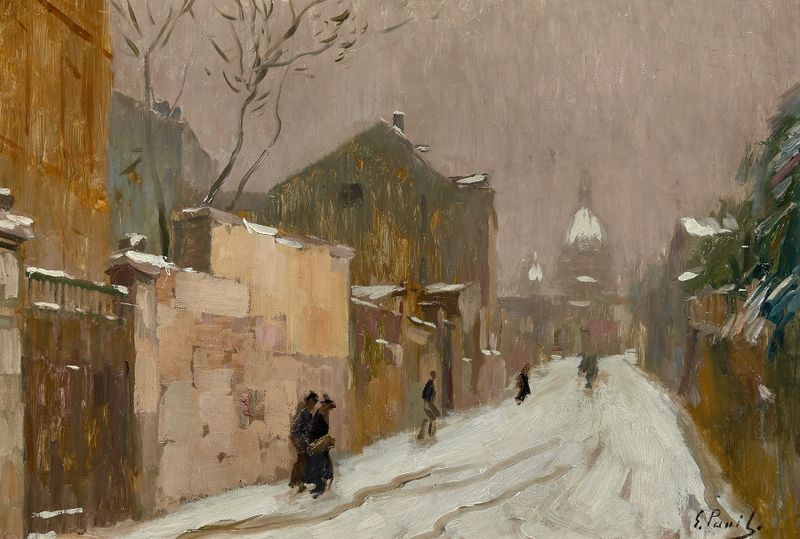
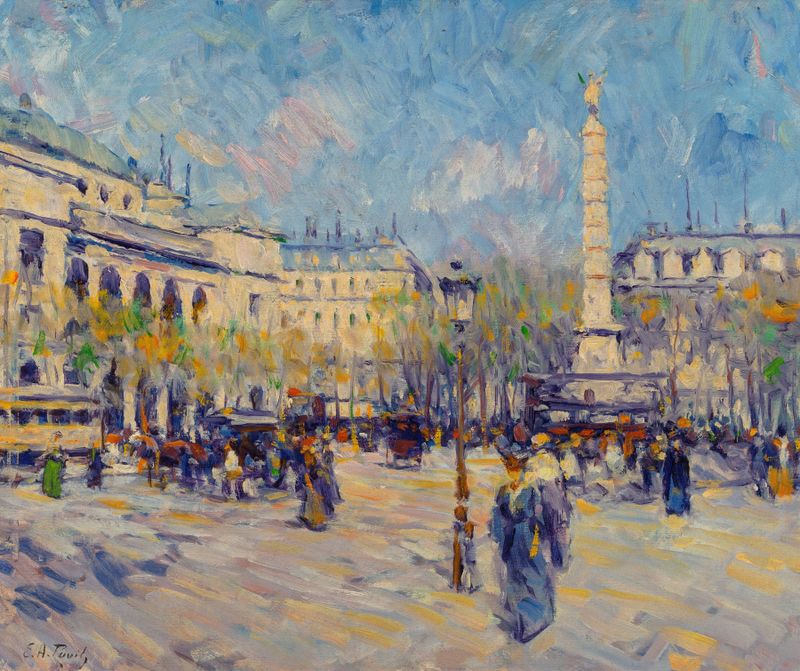
What if silence could speak through light? In Le Moulin Rouge en hiver, the stillness of a snowy Paris night resonates with an almost palpable innocence, inviting reflection on the transient nature of joy. Look to the left where the iconic silhouette of the Moulin Rouge emerges from the wintry haze, its vibrant red contrasting sharply against the soft whites and muted blues of the snow. The brushstrokes vary, the thick impasto of the windblown snow creating texture, while lighter strokes depict the laughter and music that seem to echo faintly from within the cabaret. Notice how the light falls upon the rooftops, illuminating the scene with an ethereal glow, as if capturing a moment just before dawn breaks. The painting juxtaposes the lively spirit of the Moulin Rouge with the serene quiet of winter, evoking a sense of nostalgia for celebrations long past.
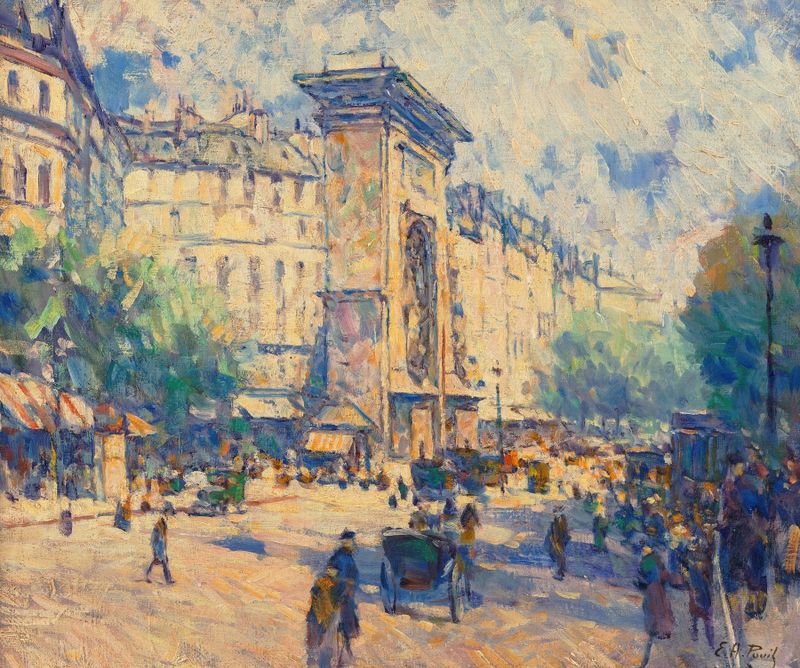
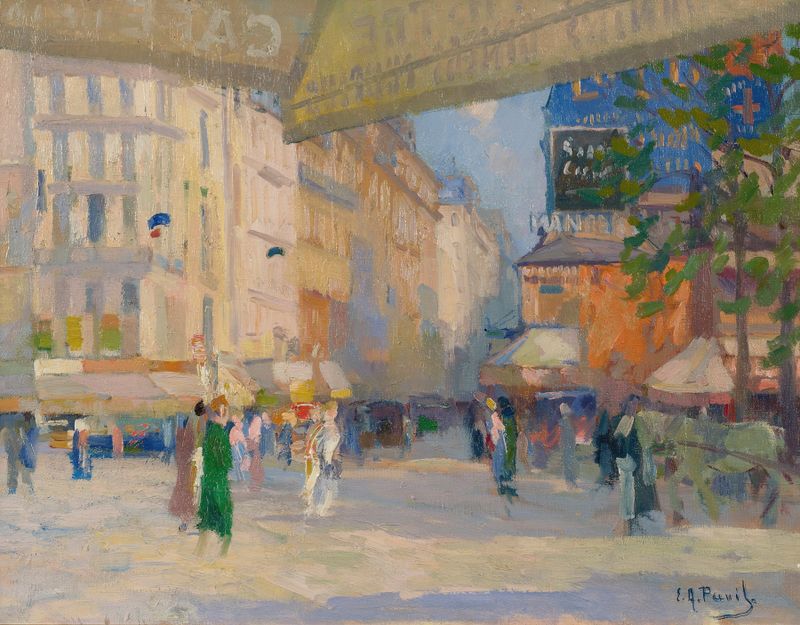
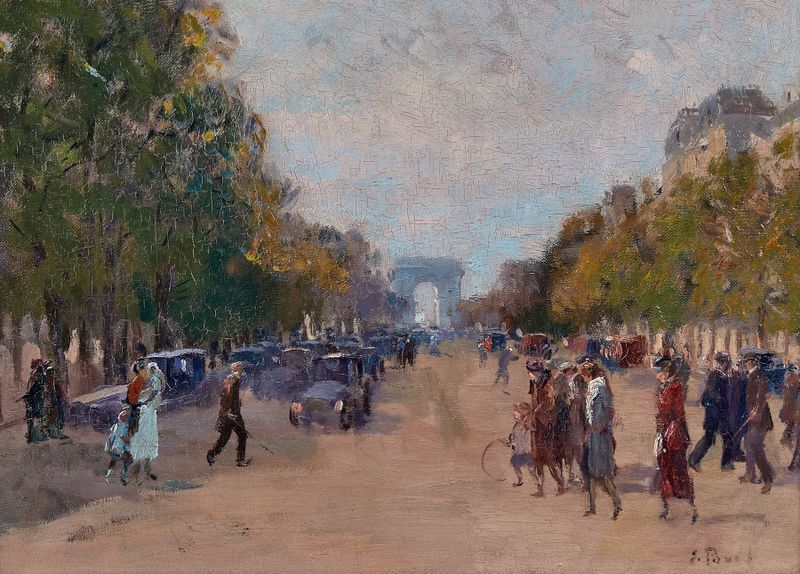
The soft, almost dreamlike quality of the snow envelops the scene, creating a cocoon of innocence, while the solitary figures in the distance hint at joyous gatherings that once animated the space. This contrast serves as a meditation on the fragility of happiness, a reminder of the fleeting moments that form the tapestry of life. Elie Anatole Pavil painted this work during a period when he was exploring the interplay of light and color in urban settings. Active in the early 20th century, Pavil was part of the vibrant art scene in Paris, influenced by both Impressionism and Post-Impressionism.
The movements of his time emphasized emotional experiences through color and light, reflecting the shifting sentiments of a rapidly changing world.