Rue De Paris — History & Facts
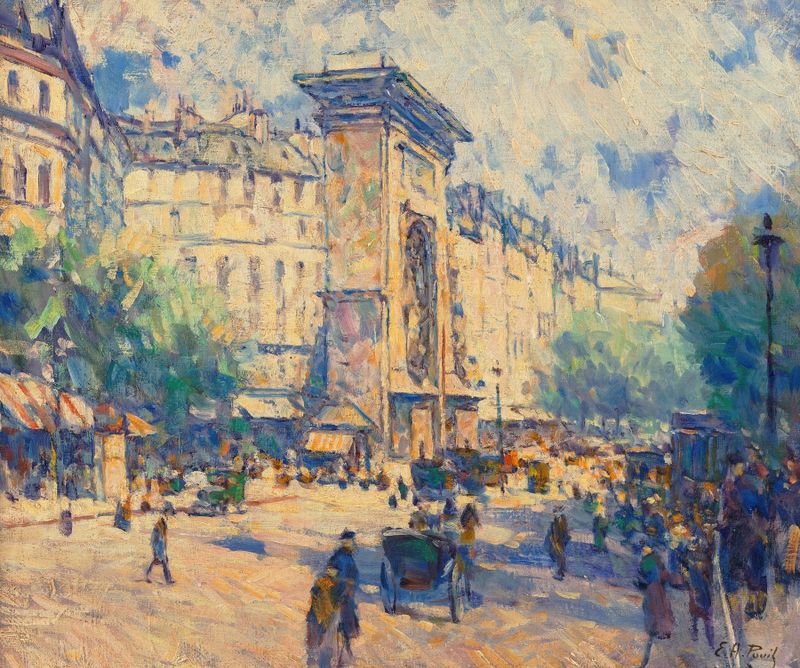
Where does light end, and longing begin? In the juxtaposition of shadow and brilliance, a transformation unfolds, beckoning us to explore the unseen depths of emotion. Look to the right at the soft, golden light spilling over cobblestones, its warm hues creating a gentle contrast against the cooler tones of the buildings. The meticulous brushwork captures the essence of a Parisian street, where each stroke breathes life into the architecture. Notice how the figures, caught in transient motion, evoke a sense of nostalgia — their silhouettes blur and blend with the atmosphere, suggesting both presence and absence.
The composition draws the eye along the pathway, inviting contemplation of the stories hidden within each corner. Delve deeper, and you'll find layers of meaning intertwined with the urban landscape. The play of light symbolizes hope and the passage of time, while the shadows hint at the bittersweet nature of memory. Each figure, seemingly absorbed in their own journey, reflects the isolation felt amid the crowd—a poignant reminder of the longing for connection in an ever-changing world.
The careful balance of color enhances this emotional tension, making the viewer acutely aware of the fleeting beauty of the moment. Elie Anatole Pavil created Rue De Paris during a time of artistic exploration and innovation, likely in the late 19th to early 20th century. Living in France, he was part of a vibrant art scene that embraced Impressionism's emphasis on light and atmosphere. This period marked a turning point in his career, as he sought to capture not just the essence of his surroundings, but the emotions they evoked within him.