Moon and Autumn Flowers — History & Facts
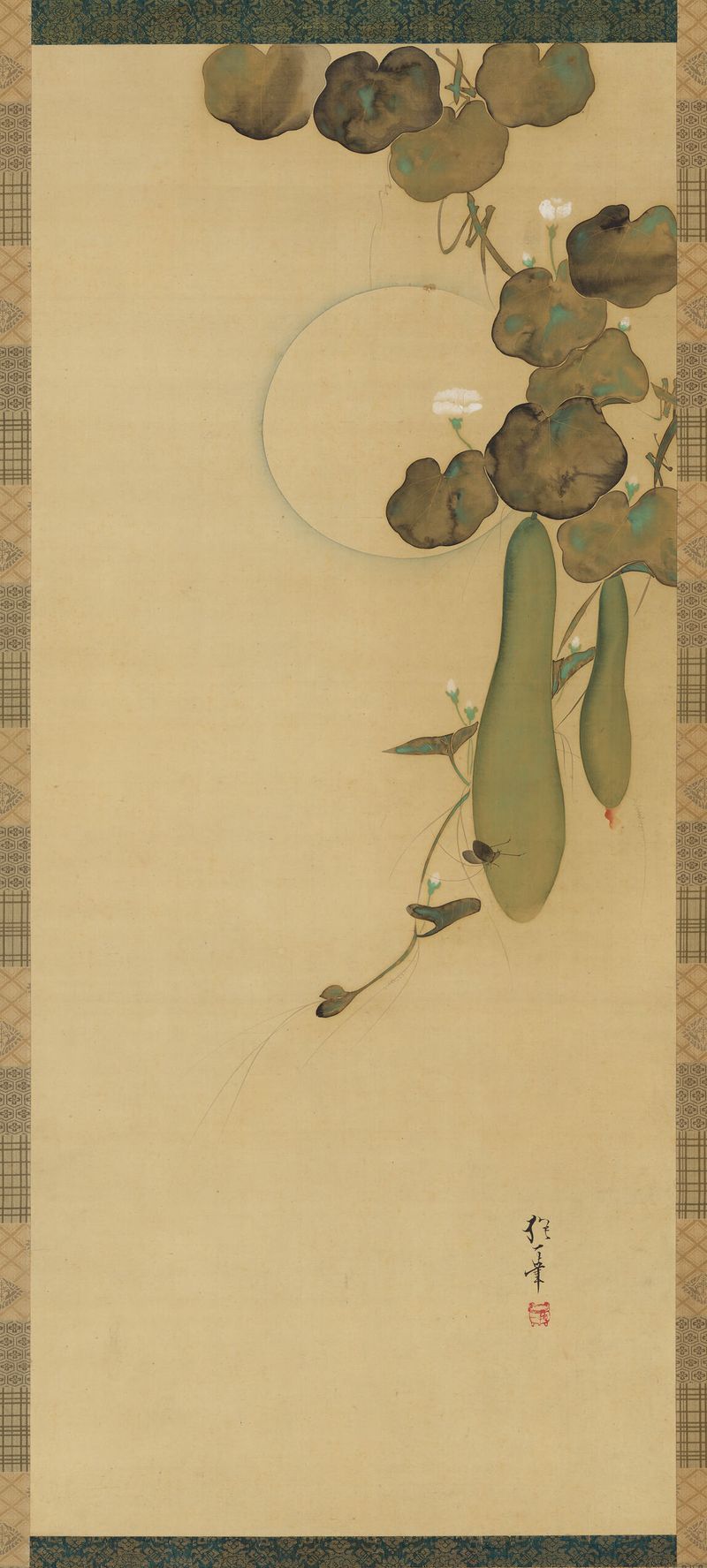
The canvas doesn’t lie — it simply waits. In an ethereal stillness, it cradles the whispers of longing, inviting the viewer to wander into the heart of its beauty. Look to the right at the delicate blossoms, each petal meticulously rendered as if they might flutter into the air at any moment. The harmony of muted pastels dances beneath a luminous moon, casting a gentle glow over the scene that evokes both tranquility and wistfulness.
The careful interplay of gold accents in the floral motifs hints at the transience of beauty, while the composition's simplicity draws the eye into a serene contemplation. Yet beneath the surface, contrasts emerge; the vibrant flowers teeter on the edge of fading beauty, symbolizing the ephemeral nature of life. The starkness of the darkened sky looms above, a reminder of the inevitable passage of time and the yearning for what has been lost. Each brushstroke reveals a depth of emotion, encapsulating both the splendor and fragility of existence as the moon observes the scene, embodying a silent witness to the bittersweet moments of fall. Created during the late 17th to early 19th century, this piece by Sakai Hōitsu reflects the aesthetic values of the Edo period, a time when artists drew inspiration from nature and sought to evoke emotional resonance through simplicity.
As Japan experienced political stability and cultural exchange, Hōitsu emerged as a key figure in the revival of traditional Japanese painting, blending ancient techniques with personal reflections on beauty and longing that resonate deeply in this artwork.