Moonlight in Winter — History & Facts
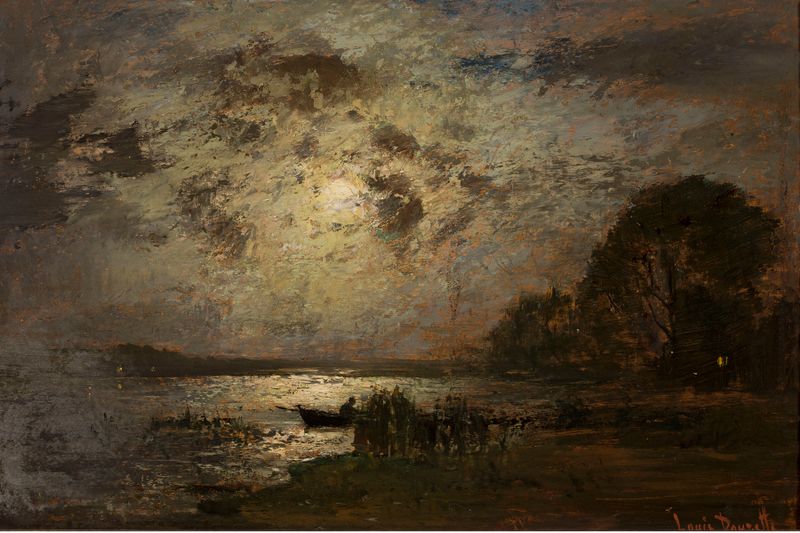
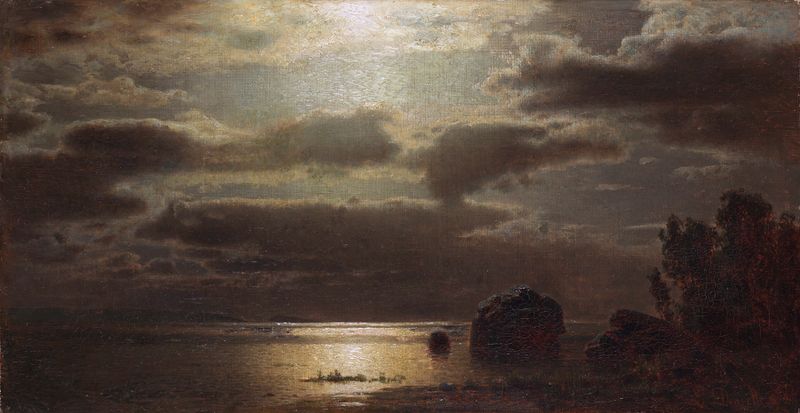
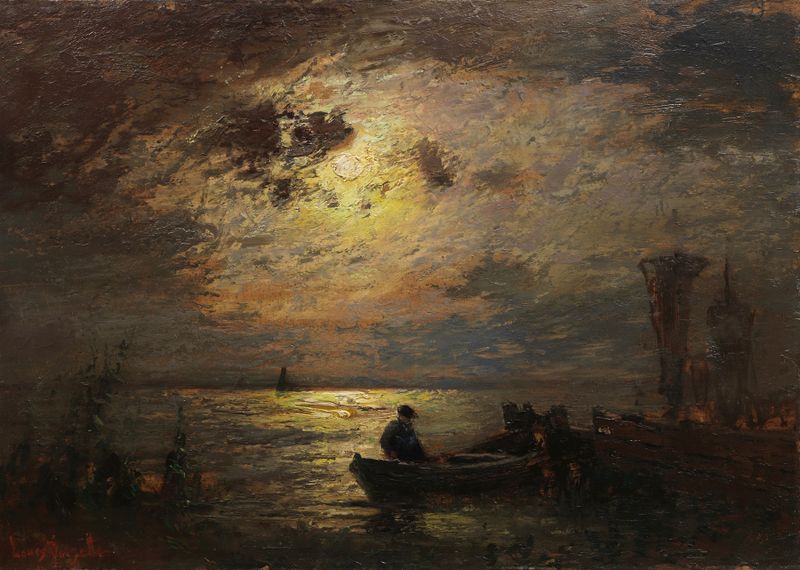
Where does light end, and longing begin? In the melancholic glow of a winter moon, the heart awakens to emotions both haunting and beautiful. Look to the center, where the silvery moonlight spills over the landscape, casting an ethereal glow that brings the winter scene to life. Notice how the delicate brush strokes create a shimmering blanket of snow, each fleck capturing the soft luminescence of the night sky. The deep blues and muted whites contrast sharply with the dark silhouettes of distant trees, drawing your eyes from the celestial orb downward into the stillness of the earth below. The interplay of light and shadow evokes a sense of tranquility, but beneath this calm surface lies a profound tension.
The moon, a symbol of solitude, watches over the icy expanse, suggesting both a serene beauty and an underlying yearning for connection. The coldness of the scene resonates with a sense of isolation, whispering to the viewer about the emotional landscapes we navigate in the depths of winter. Louis Douzette created this piece during a time when Romanticism was beginning to give way to Impressionism, a period marked by a deep engagement with nature and emotion. Although the exact date remains uncertain, the work reflects the artist's fascination with light and atmosphere, showcasing his mastery of capturing fleeting moments that resonate with the human experience.
At the time, Douzette was based in Berlin, where he found inspiration in the natural world around him, striving to evoke emotion through his art.