
Moonlight on the Medway at Chatham — History & Facts
When did color learn to lie? In the soft haze of twilight, hues whisper secrets of a fragile existence, revealing both beauty and loneliness reflected in the quiet waters. Look to the left, where the shimmering surface of the Medway cradles the pale glow of the moon. The delicate interplay of blues and silvers creates an ethereal atmosphere, drawing the eye toward the horizon where water meets sky. Notice how the artist employs subtle brushstrokes to evoke a sense of movement that breathes life into the stillness, while the muted palette imbues the scene with a contemplative calm. At first glance, the painting appears a serene landscape, yet beneath its tranquility lies an undercurrent of impermanence.
The interplay of light and shadow hints at a fleeting moment, as the moon's reflection trembles on the water, echoing the fragility of time itself. This fragile beauty is underscored by the presence of distant ships, their silhouettes suggesting the passage of life, the ever-changing nature of circumstance, and the quiet isolation one can feel even amid company. In 1920, Sir Frank Short created this work in response to a world recovering from the turmoil of the First World War. Living in Chatham, England, he sought to capture the essence of his surroundings, reflecting both personal introspection and a broader artistic movement that embraced impressionism’s legacy while seeking new forms of expression.
This piece embodies his commitment to merging reality with emotion, a testament to the delicate balance of life itself.
More Artworks by Sir Frank Short
Browse all →
Morning Haze in Chichester Harbor
Sir Frank Short
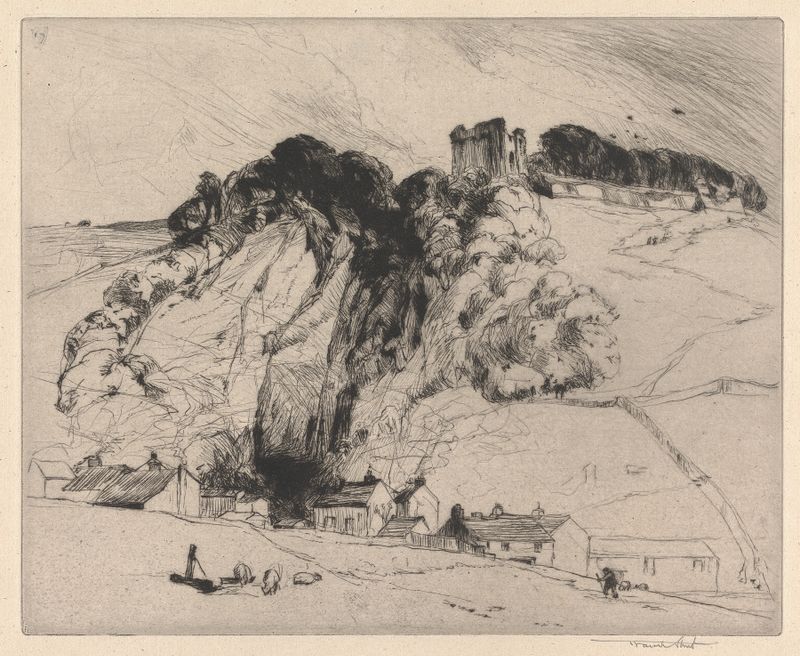
Peveril’s Castle, Derbyshire
Sir Frank Short
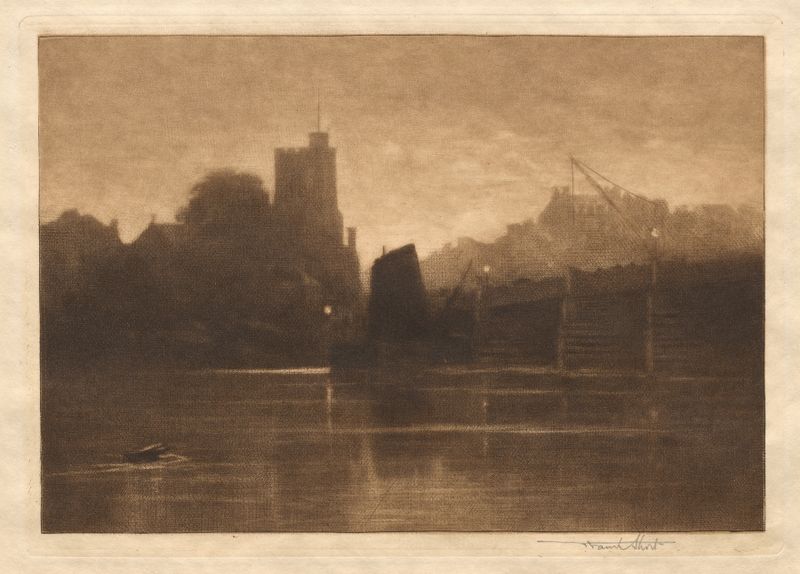
Ebb Tide, Putney Bridge
Sir Frank Short
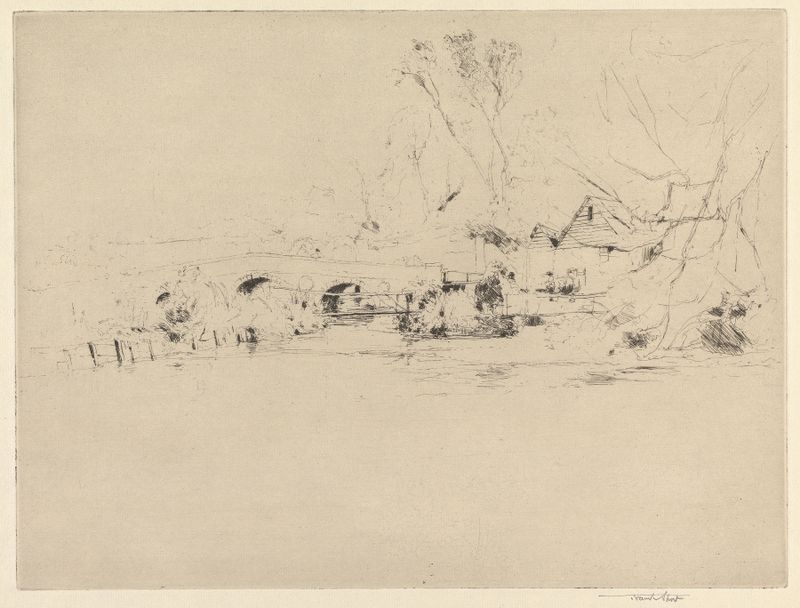
Old Mill on the Wandle, at Mitcham
Sir Frank Short

Parkgate
Sir Frank Short
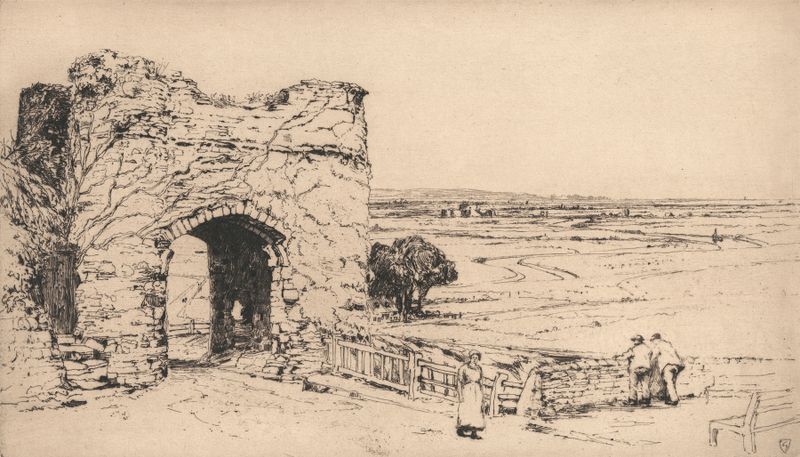
The Strand Gate, Winchelsea
Sir Frank Short

Bridgenorth
Sir Frank Short
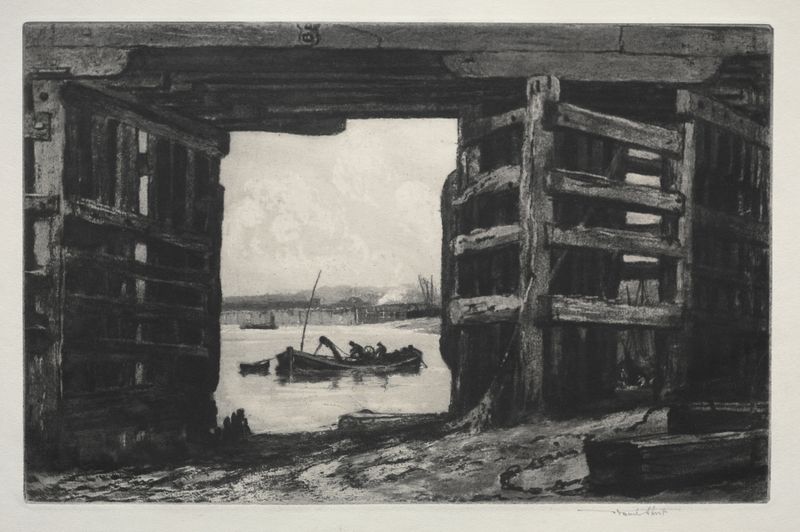
A Span of Old Battersea Bridge
Sir Frank Short

The Rope Walk, Spittal Bridge Whitby
Sir Frank Short
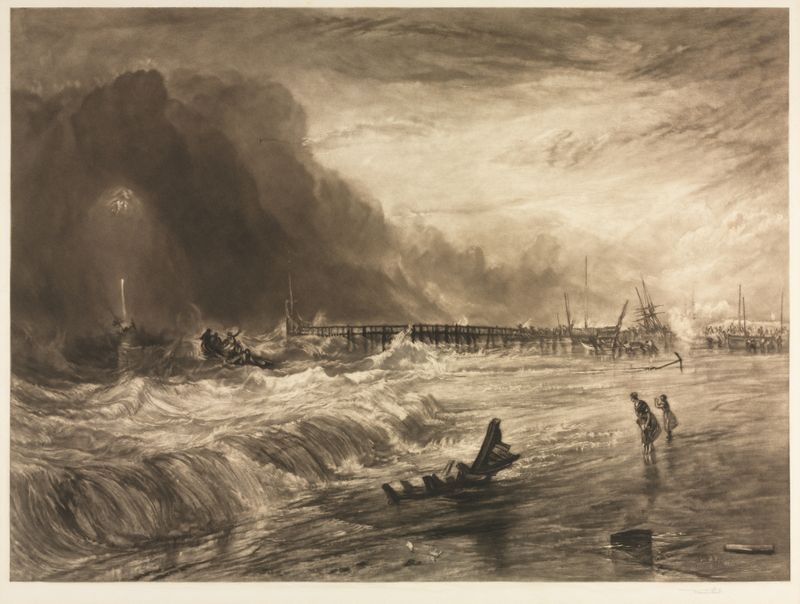
Vessel in Distress of Yarmouth
Sir Frank Short





