
Parkgate — History & Facts
In the delicate interplay of light and shadow, Parkgate evokes a bittersweet longing that transcends time and place. The artwork serves as a reminder of the fragility of joy, capturing not only the beauty of the environment but also the underlying emotions that often accompany such moments. Look to the foreground, where the riverbanks are lined with lush greens and deep blues that hint at the serenity of a summer day. Notice how the light dances upon the water's surface, creating a shimmering path that draws the eye further into the scene.
The careful brushwork reveals the texture of the foliage, while soft, muted tones in the sky suggest an impending twilight, inviting contemplation of what lies beyond the horizon. The juxtaposition of nature's vibrancy against the quiet solitude of the figures in the distance conveys a profound emotional tension. Each element—the gentle ripples of water, the distant boats, and the fading light—whispers of fleeting moments, urging viewers to reflect on their own experiences of beauty tinged with sorrow. The tranquil scene simultaneously evokes a sense of peace and a poignant awareness of life's transience. Sir Frank Short created Parkgate in 1890 while living in England, amidst the transition of Impressionism influencing the art world.
This period marked a time of exploration in landscape painting, as artists moved toward capturing ephemeral moments of light and atmosphere. Short’s own struggles for recognition and his desire to encapsulate the essence of beauty in his works reflect the broader artistic quest of his time, blending personal narrative with a universal theme of creation.
More Artworks by Sir Frank Short
Browse all →
Morning Haze in Chichester Harbor
Sir Frank Short
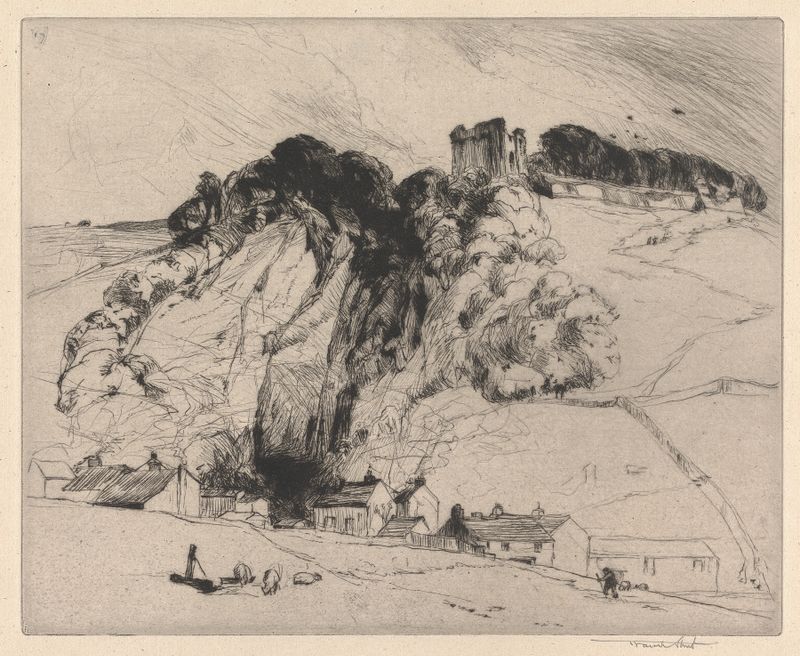
Peveril’s Castle, Derbyshire
Sir Frank Short
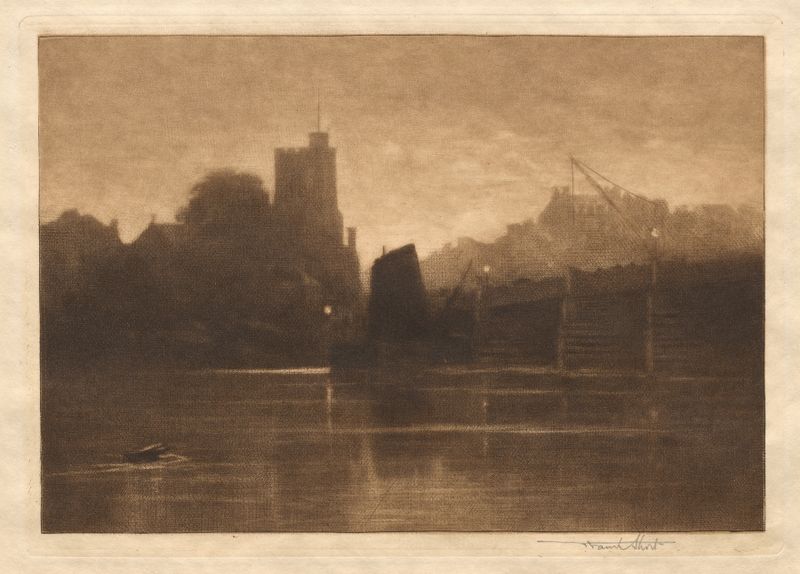
Ebb Tide, Putney Bridge
Sir Frank Short
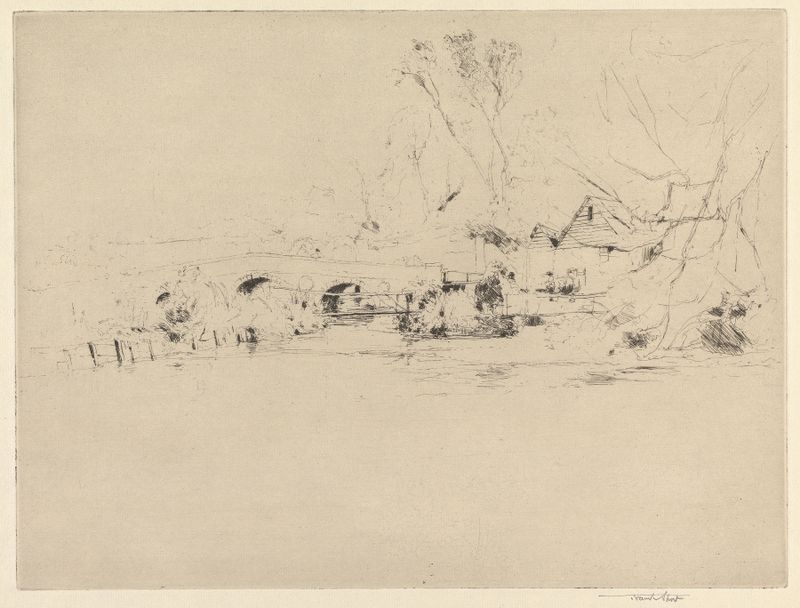
Old Mill on the Wandle, at Mitcham
Sir Frank Short

Moonlight on the Medway at Chatham
Sir Frank Short
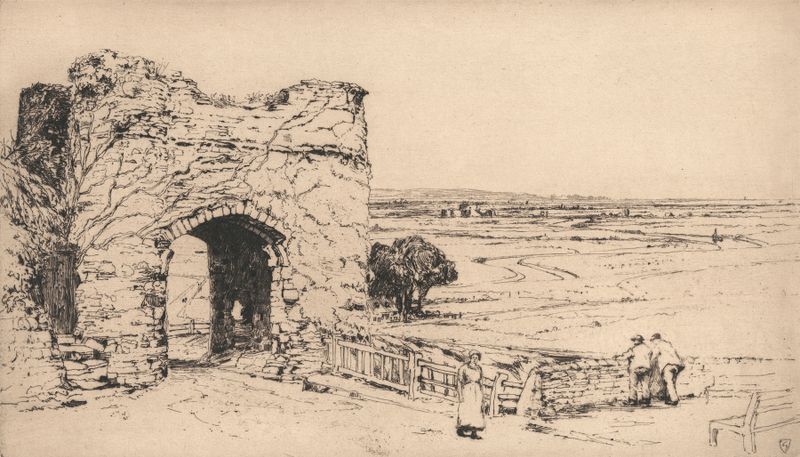
The Strand Gate, Winchelsea
Sir Frank Short

Bridgenorth
Sir Frank Short
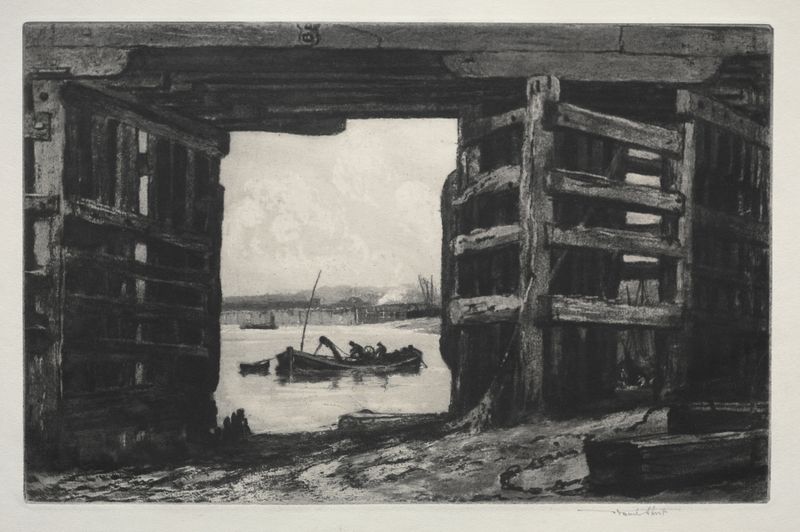
A Span of Old Battersea Bridge
Sir Frank Short

The Rope Walk, Spittal Bridge Whitby
Sir Frank Short
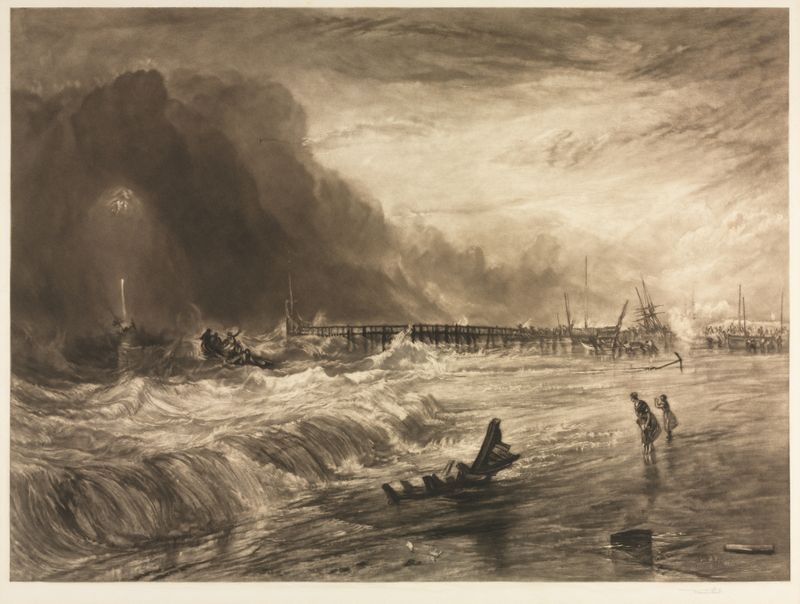
Vessel in Distress of Yarmouth
Sir Frank Short





