
Moonlight Scene with a Windmill — History & Facts
What first catches the eye in Moonlight Scene with a Windmill by Abraham Pether is the way the moon’s light slices through the night, transforming the familiar outlines of sails, clouds, and cottages into something quietly theatrical. The windmill stands as a hulking silhouette, its arms frozen mid-turn, while the moon, half-veiled by clouds, becomes both the painting’s hidden sun and its silent clock. Pether leads the viewer’s gaze from the dark, solid forms at the left—where the mill and a moored boat merge into shadow—across the water’s gleaming surface, toward the distant sails and the faint, inviting lights of houses on the right.
Every detail is there to heighten the contrast between the known and the mysterious: the sharp angles of the mill, the gentle curve of the riverbank, the soft, silvery reflections that ripple and fade. This kind of moonlit river scene was a favorite subject for late eighteenth-century British painters, who were drawn to the technical challenge of painting night and the poetic possibilities of nocturnal light. Abraham Pether became known in his lifetime as “Moonlight Pether” for his repeated explorations of this theme, often blending scientific curiosity with a taste for the picturesque. Works like this were not just exercises in atmosphere; they were prized by collectors eager to display both their taste and their knowledge of the latest advances in optics and astronomy.
Today, this painting is held in the Art UK collection, but its date and original context remain unrecorded—a reminder of how many such quiet marvels have slipped through the cracks of art history. The moon still hangs over the water, inviting us to linger and look again.
More Artworks by Abraham Pether

Sunset over a rural landscape
Abraham Pether
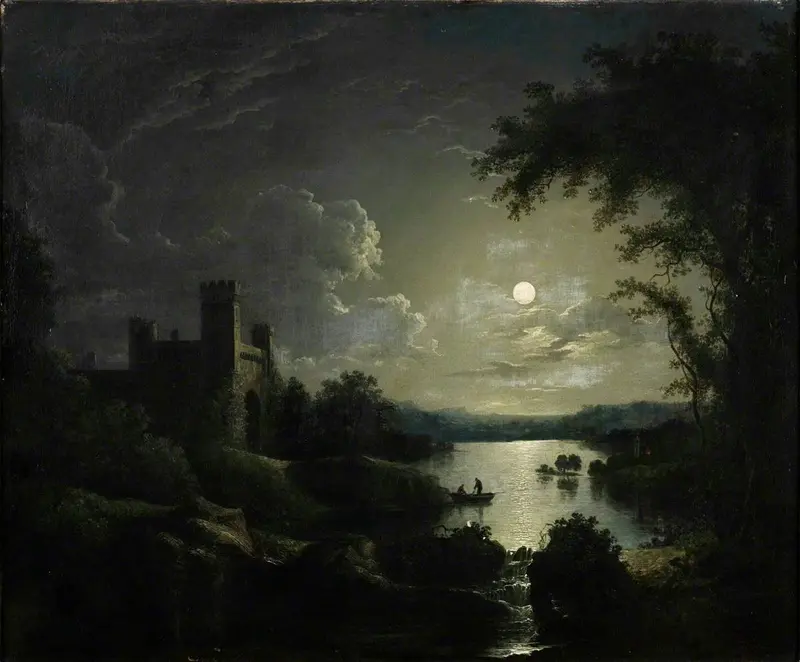
A Castle and Lake by Moonlight
Abraham Pether
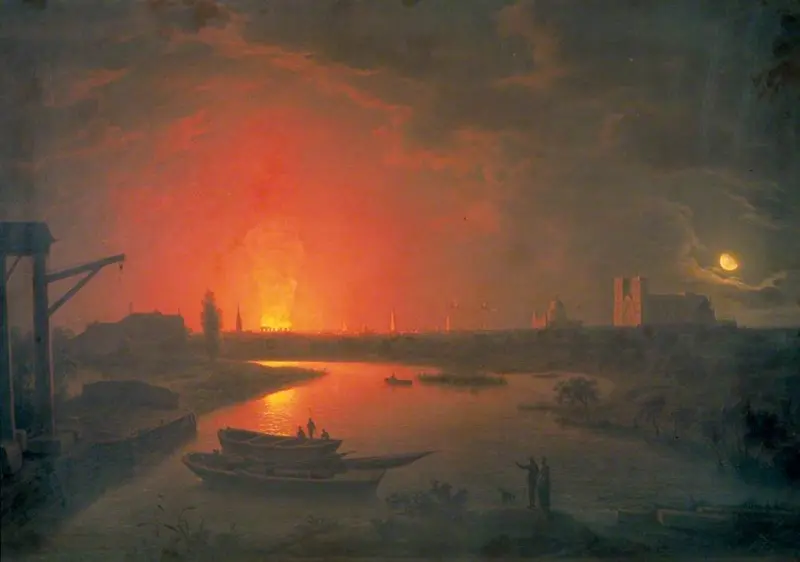
Old Drury Lane Theatre on Fire, London, 24 February
Abraham Pether
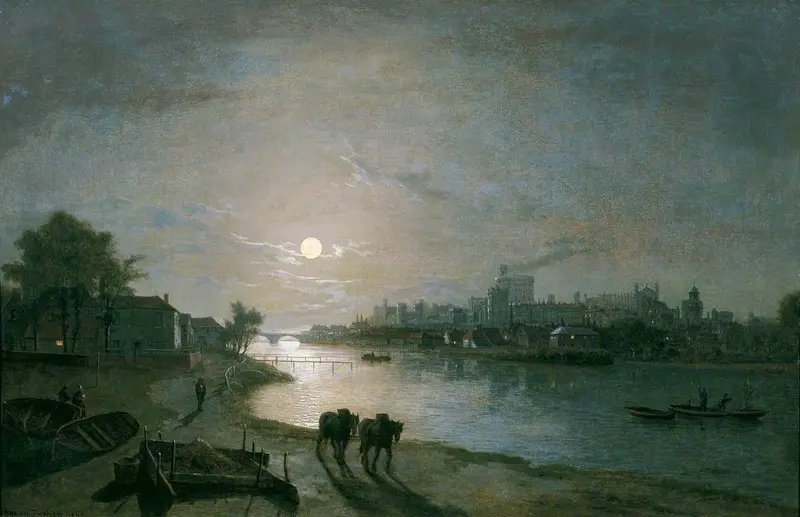
Windsor Castle by Moonlight
Abraham Pether
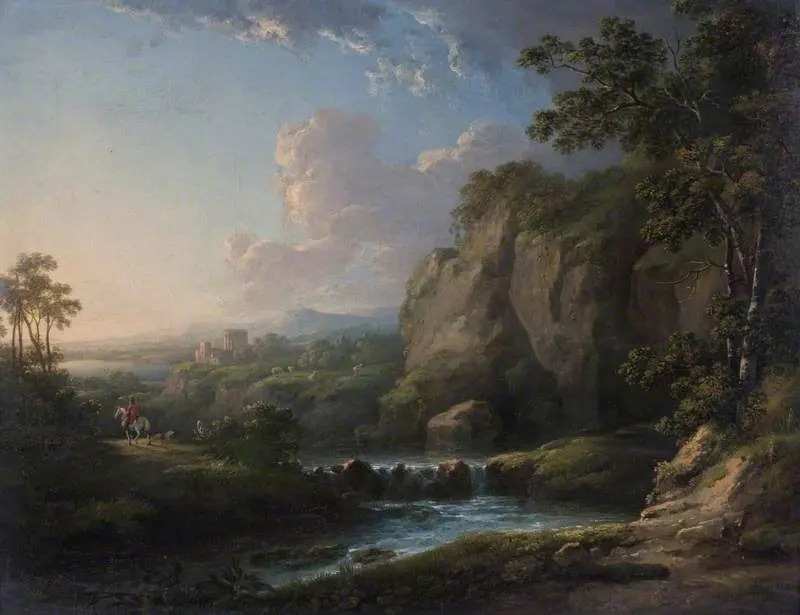
Wooded Landscape
Abraham Pether
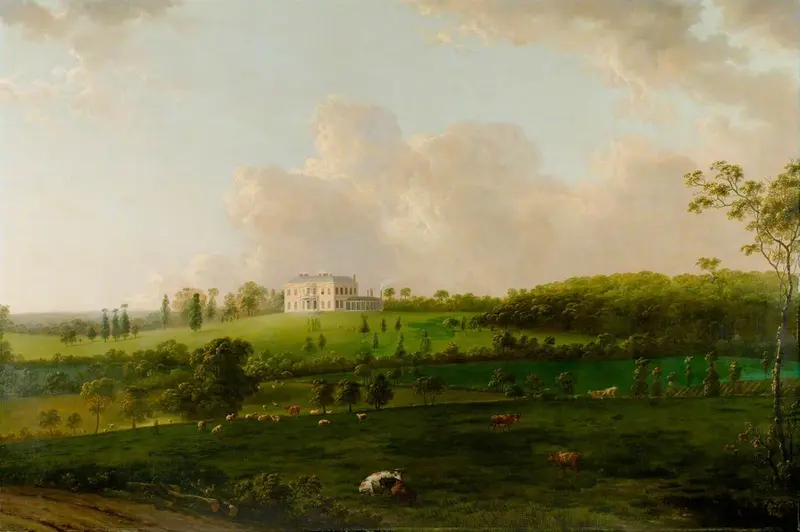
Claybury Hall, Essex
Abraham Pether
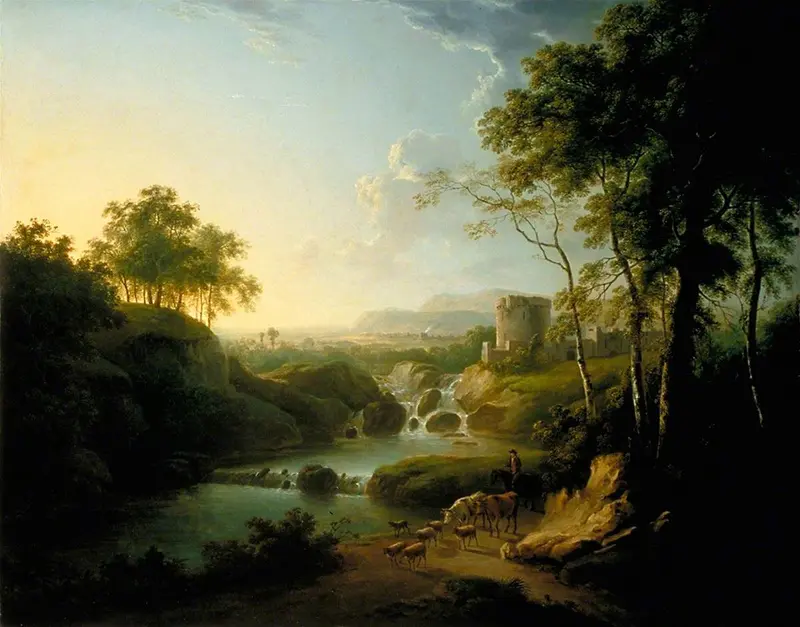
Landscape
Abraham Pether
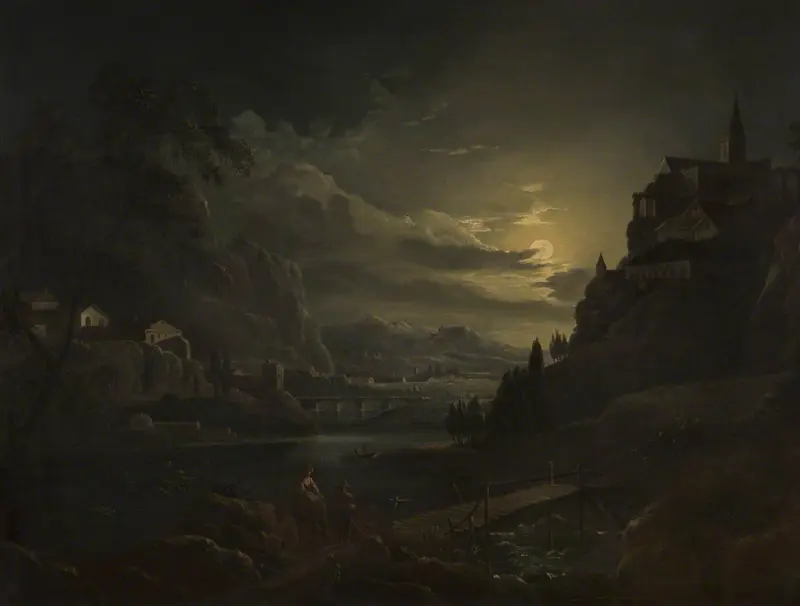
Classical Landscape by Moonlight
Abraham Pether
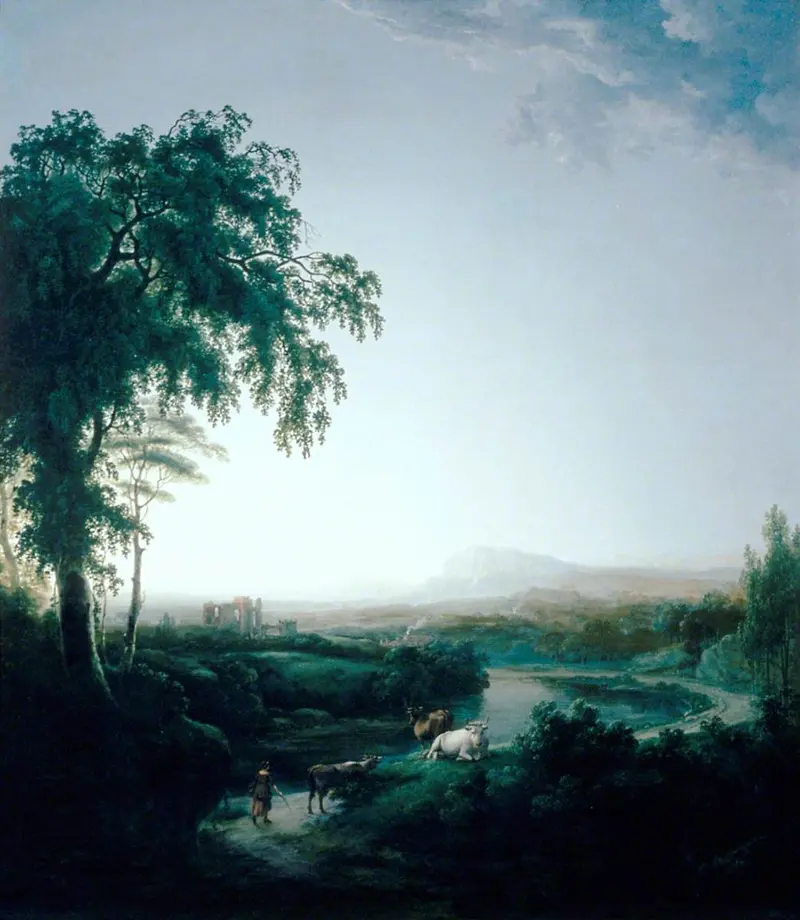
Landscape with River and Cows at Dusk
Abraham Pether
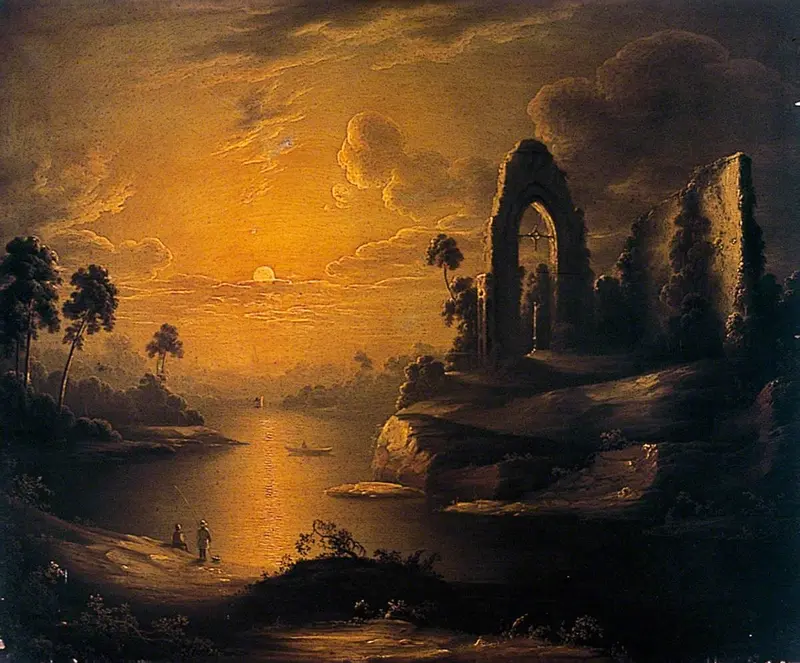
Moonlit Landscape with Lake and Ruined Abbey
Abraham Pether
More Landscape Art

The Starry Night
Vincent van Gogh

View of Delft
Johannes Vermeer

Water Lilies
Claude Monet

The Grand Canal, Venice, looking north-west from the Ca' Corner to the Ca' Contarini degli Scrigni, with the campanile of Santa Maria della Carità
Canaletto

Windsor Castle
Canaletto

The Grand Canal looking North-East from the Palazzo Dolfin-Manin to the Rialto Bridge
Canaletto