Moonrise Montigny — History & Analysis
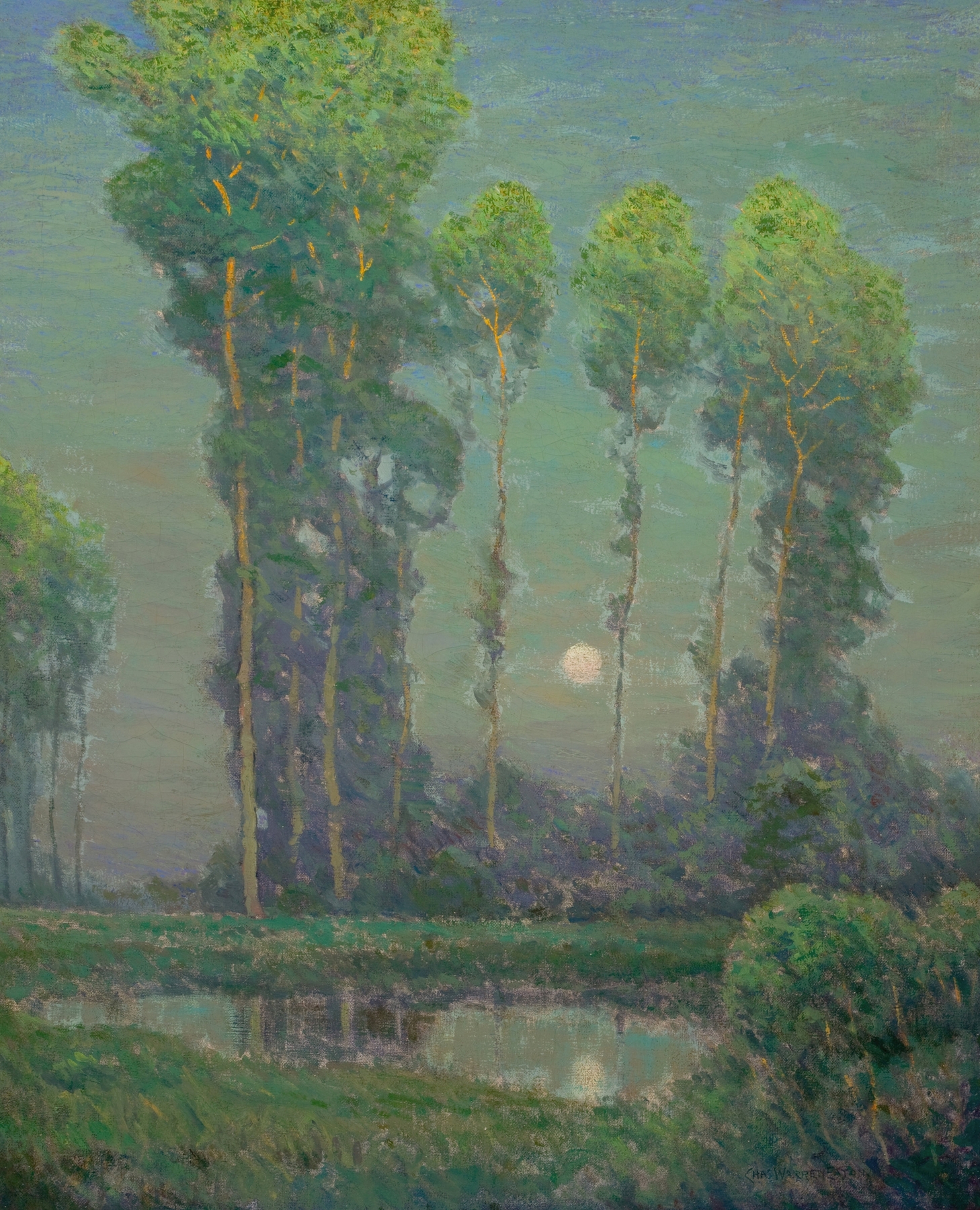
“The canvas doesn’t lie — it simply waits.” In a world where noise often drowns out the quiet, how do we find serenity amidst chaos? Focus first on the soft blues and gentle lavenders that dance across the sky, where the moon rises like a whispered promise. Notice how the tranquil waters below mirror this celestial glow, creating a seamless connection between land and sky. The horizon, bathed in the warm embrace of twilight, draws the eye toward a peaceful village nestled against the backdrop of rolling hills.
Every stroke imbues the scene with a sense of stillness, inviting the viewer to pause and breathe in the calm. Within this serene landscape, contrasts emerge: the delicate interplay between light and shadow speaks to the transitory nature of time, while the stillness of the water evokes a sense of introspection. The quiet village—seemingly untouched by the passage of time—stands in stark juxtaposition to the ephemeral beauty of the sky's shifting hues. Each element in the composition tells a story of balance, inviting contemplation on the nature of existence and the fleeting moments that define it.
Created in the early 20th century, this work reflects Eaton's profound connection to the natural world during a time marked by rapid industrialization. As he painted in Montigny, he was immersed in a period of artistic exploration, where impressionism and the emerging modernist movement influenced his approach. His dedication to capturing the serene beauty of twilight landscapes revealed not only his technical prowess but also an enduring appreciation for the quiet moments often overlooked in daily life.
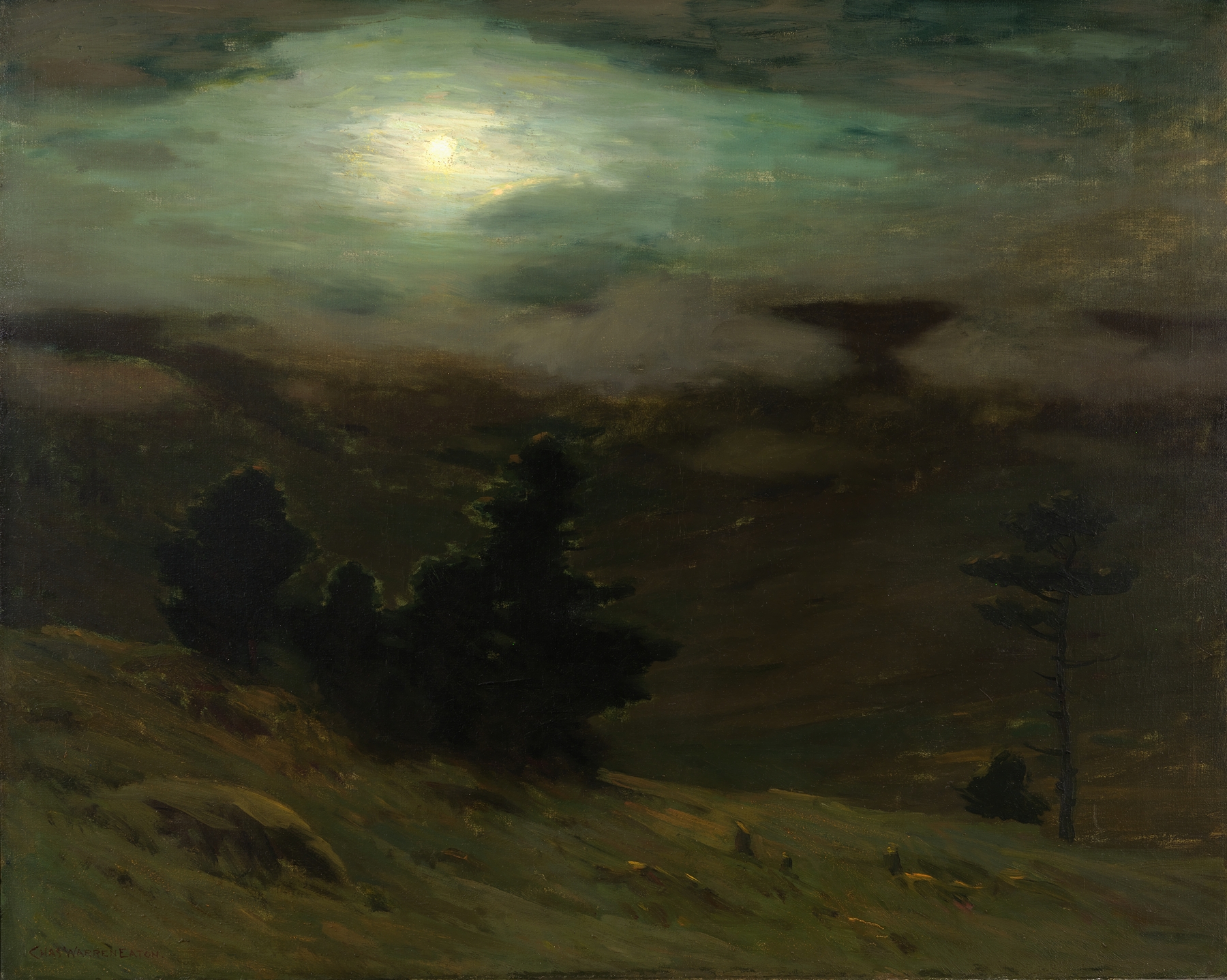
![Untitled [Winter landscape – New Jersey], by Charles Warren Eaton, public domain](https://froigstrpvutwqtqikzt.supabase.co/storage/v1/object/public/art-images/artworks/17ed94970d6769c12565cad4cc37b36809ab3535778ed83b4aa6ed0fa9d50ff3.jpg)