Moored fishing boats with windmills in the background — History & Facts
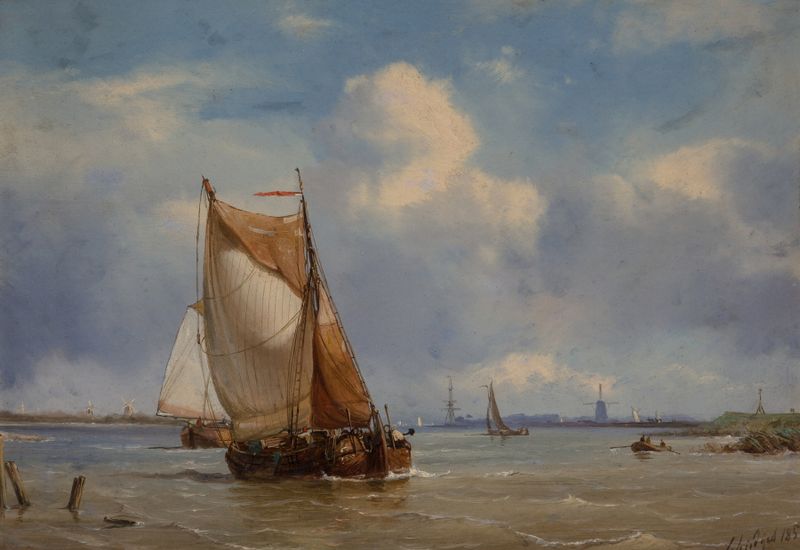
Can beauty exist without sorrow? In Moored fishing boats with windmills in the background, a tranquil scene captures the essence of life’s delicate balance, where nature and industry coexist in quiet harmony. The painting invites contemplation on the interweaving of labor, creation, and the fleeting moments that define existence. Look to the left, where the moored fishing boats, painted with subtle blues and earthy browns, draw the eye into the tableau. Notice how the gentle ripples in the water reflect the soft light of an overcast sky, creating a soothing, almost melancholic atmosphere.
The windmills stand sentinel in the background, their pale structures meeting the horizon with an air of quiet resilience, painted in muted greens that resonate with the surrounding landscape. This composition evokes a sense of stillness, yet the boats, tethered yet restless, hint at the life and stories that unfold around them. Beneath this serene surface lies a deeper reflection on the passage of time and the interplay between nature and human endeavor. The boats symbolize both sustenance and struggle, each curve and line echoing the toil of those who rely on the sea for their livelihood.
The windmills, once vital to the landscape, stand as a reminder of progress, but their presence also evokes nostalgia for simpler times, lending an emotional complexity to the serene beauty depicted. In 1858, residing in the Netherlands, Schiedges created this work during a period of social and industrial change. The world was increasingly embracing modernization, yet the artist remained focused on the enduring beauty of the pastoral landscape. This painting reflects his commitment to capturing the essence of rural life, bridging the gap between tradition and the awakening of the modern era.