
Moret Street — History & Facts
Is this a mirror — or a memory? The juxtaposition of streets, shadows, and solitude invites deep reflection on the essence of grief. Look to the center, where a figure stands, partially obscured by a veil of muted colors that bleed into the surrounding urban landscape. The soft, melancholic palette of browns and grays evokes a sense of stillness, while the expressive brushwork animates the scene with an undercurrent of emotion. Notice how the light struggles to penetrate the gloom, casting long shadows that stretch like whispers along the cobblestones, urging the viewer to confront the weight of loss. In every stroke, Henri captures the tension between presence and absence.
The solitary figure, caught in a moment of contemplation, seems to merge with the street itself, suggesting that grief is not just an individual experience but a shared space within the fabric of life. The contrasting softness of the figure against the harshness of the environment embodies an internal struggle that resonates with anyone who has faced a defining sorrow. Here, the street becomes a vessel of memory, both intimate and collective, allowing the viewer to engage with the complexities of mourning. Painting Moret Street during a transformative period in the early 20th century, Henri was deeply influenced by the burgeoning Ashcan School, which aimed to capture the rawness of urban life.
At that time, Henri was exploring his own artistic voice while grappling with the societal changes around him. The art world was shifting towards modernism, yet he remained devoted to portraying authentic human experience, revealing the profound emotional layers beneath ordinary moments.
More Artworks by Robert Henri
Browse all →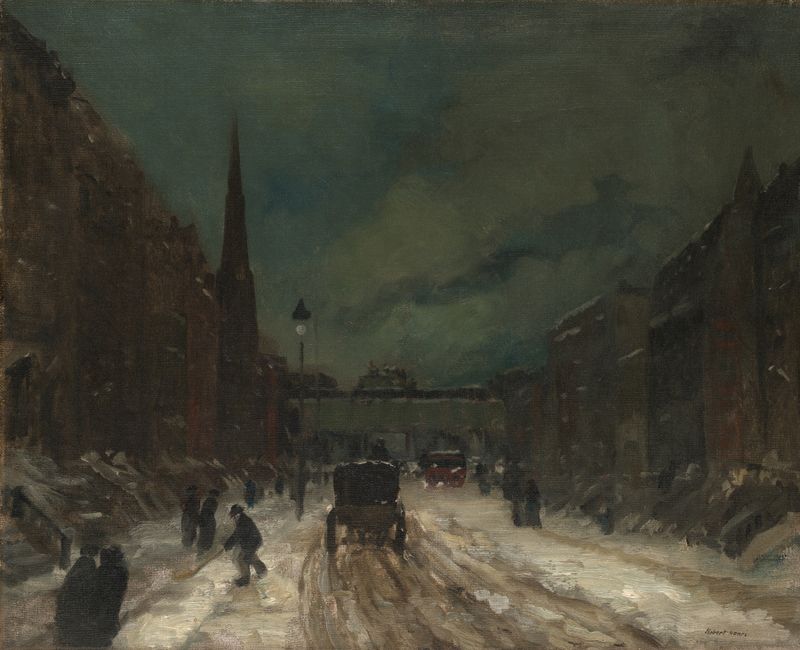
Street Scene with Snow (57th Street, NYC.)
Robert Henri
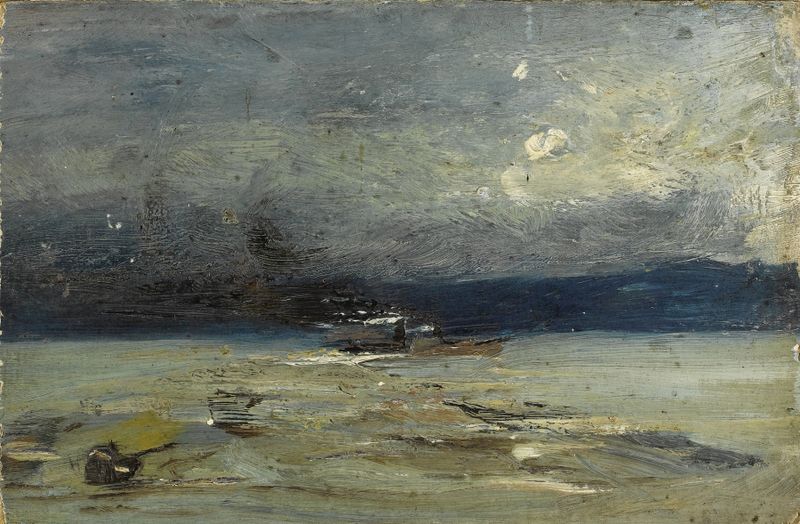
On the Hudson River
Robert Henri
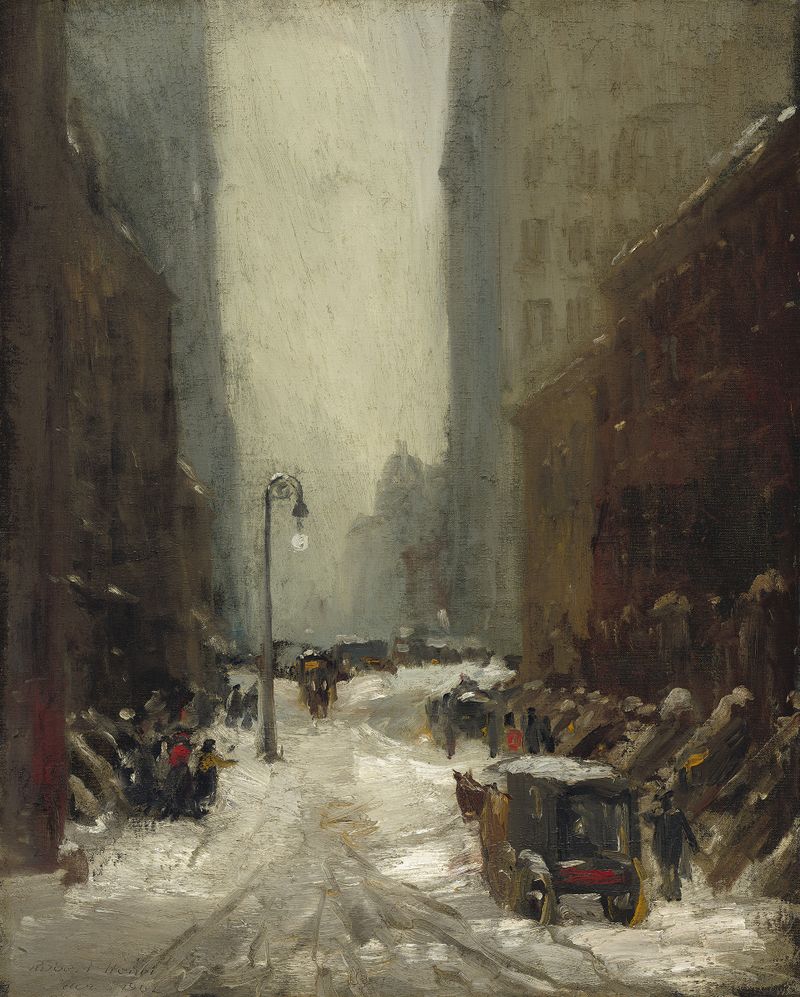
Snow in New York
Robert Henri
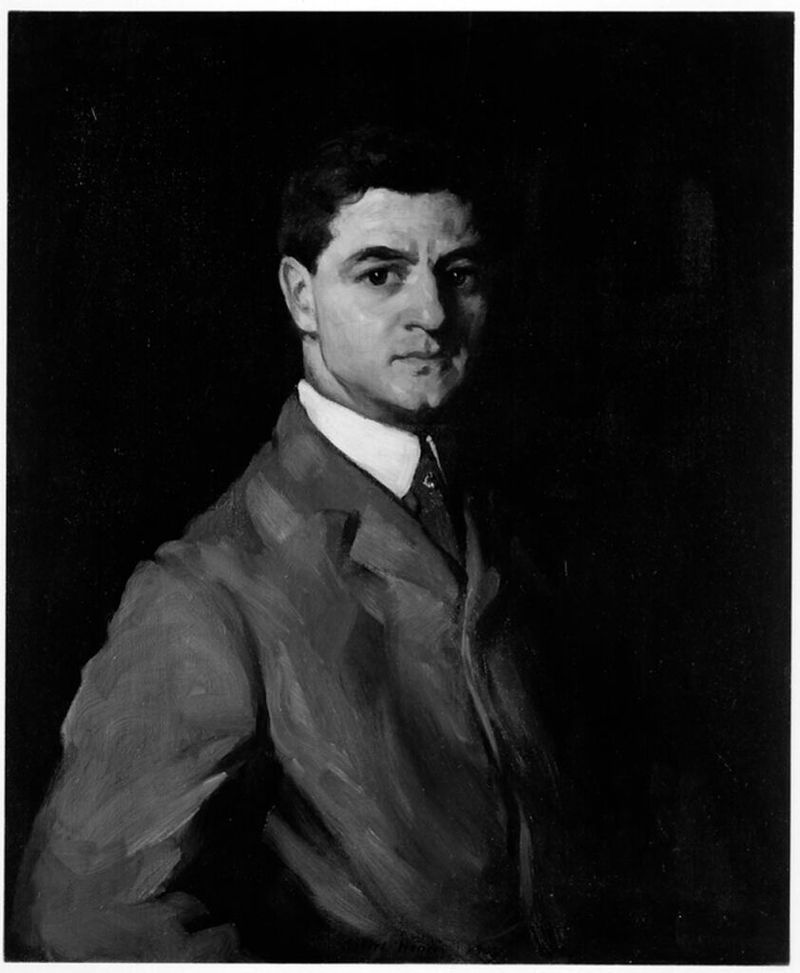
Carleton Eldredge Noyes (1872-1950)
Robert Henri
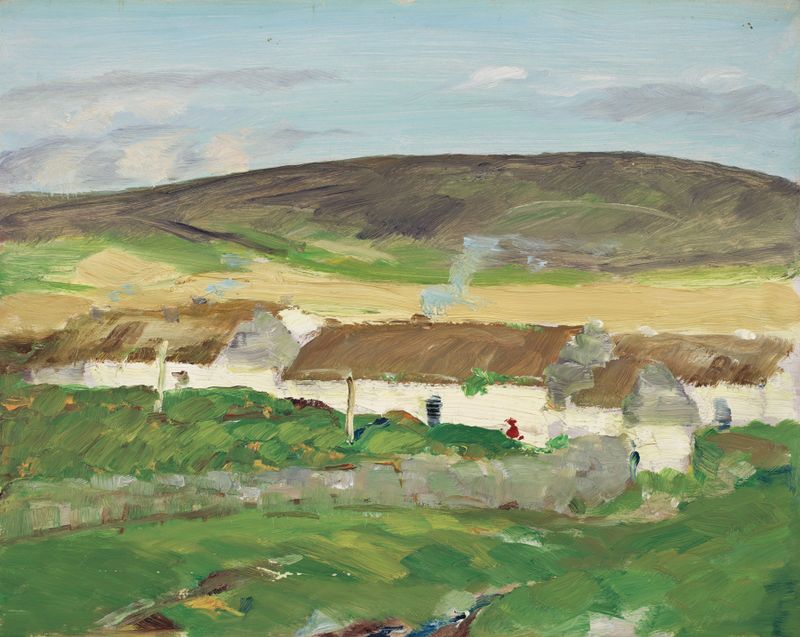
The White Cottage, Ireland
Robert Henri
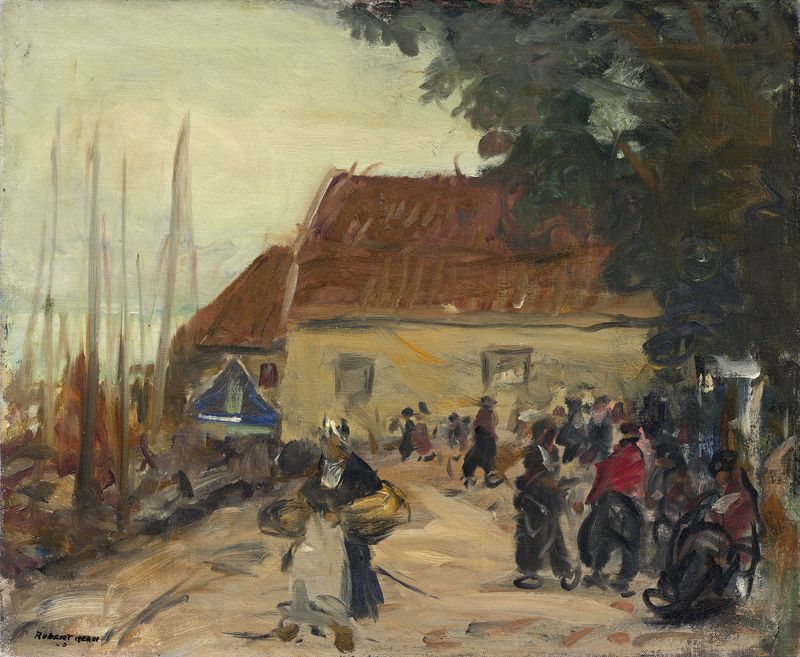
Volendam Street Scene
Robert Henri

Young Woman in Black
Robert Henri
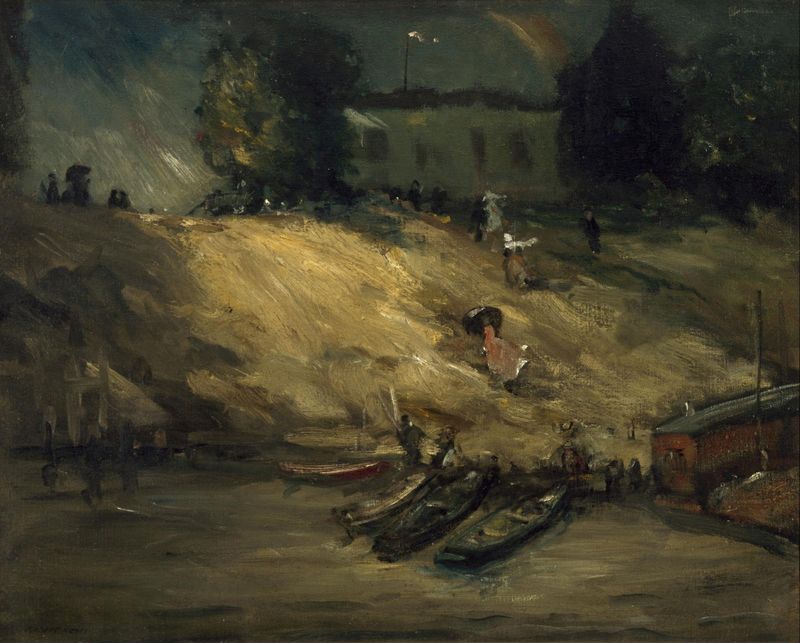
Sudden Shower
Robert Henri

Herself
Robert Henri
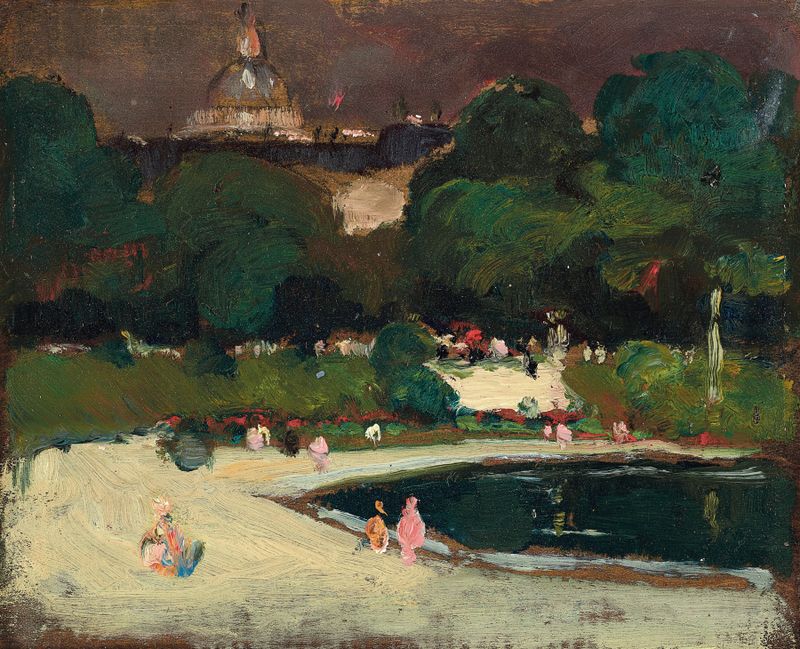
Luxembourg Gardens, Stormy Sky
Robert Henri





