Morning in the Polders — History & Facts
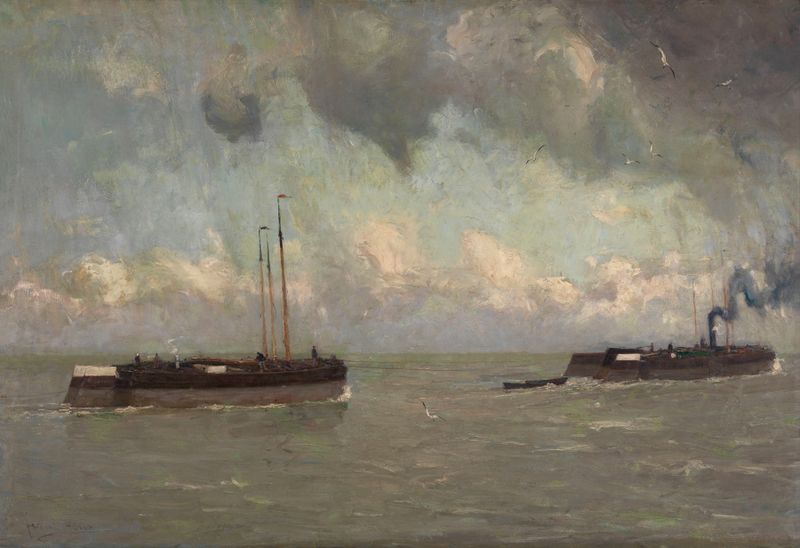
Is this a mirror — or a memory? In Morning in the Polders, a quiet reflection on the landscape captures a moment suspended in time, where nature's beauty intertwines with the essence of human experience. Look to the left at the gentle curve of the waterway, its surface a glassy sheet that flawlessly mirrors the pastel sky above. The soft blues and warm yellows of dawn blend seamlessly, inviting the eye to explore the tranquil expanse. Notice how the delicate strokes create a sense of movement in the reeds along the banks, their greenery contrasting with the subtle hues of the sky, crafting a harmonious dialogue between earth and water that draws one deeper into the scene. Yet this serene vista is not devoid of tension.
The stillness of the composition belies an underlying sense of nostalgia, as if the viewer is peering into a moment forever lost. The distant windmills stand as silent sentinels, their towering forms a reminder of the passage of time and the labor of humanity against the backdrop of nature's resilience. Each element holds a story, suggesting the intertwining fates of man and the land, evoking questions about memory and identity. Frans Hens painted Morning in the Polders in 1919, during a period of profound change in Europe following World War I.
Living in the Netherlands, he found inspiration in the serene yet complex landscapes of his homeland. At this time, artists were beginning to embrace new forms of expression, reflecting both personal introspection and the larger societal shifts. Hens’ work captures not only the beauty of the Dutch polders but also a longing for peace and continuity in a world emerging from conflict.