
Morning on the Grand Canal, Venice — History & Facts
Who listens when art speaks of silence? In Morning on the Grand Canal, Venice, the stillness of dawn envelops the city, inviting contemplation and reflection on the innocence that emerges with the day’s first light. Look to the left at the gentle wash of soft pastels—rosy pinks, tender yellows, and pale blues—that blend seamlessly in the sky and dance upon the water's surface. Notice how the light caresses the facades of the buildings lining the canal, casting delicate shadows that reveal the intricate architecture and draw the eye into the depths of the scene. The composition, with its serene horizontal lines and calm reflections, evokes a tranquil balance, suggesting a moment suspended in time. Beneath this serene exterior, hints of deeper emotional tensions simmer.
The juxtaposition of the stillness of the water against the subtle ripples caused by a distant boat speaks to the fragility of innocence, hinting at the inevitable flow of life as the world awakens. The soft light illuminating the scene captures a fleeting moment, while the muted colors suggest both nostalgia and longing, inviting the viewer to ponder what lies beyond this idyllic portrayal. In 1882, George Loring Brown painted this work during his time in Venice, a city that profoundly influenced many artists of the time. As part of the American expatriate community, he was immersed in a vibrant atmosphere of artistic exploration.
The world was witnessing significant changes, with the Impressionist movement gaining momentum, encouraging artists to capture the transient beauty of everyday life with a fresh perspective.
More Artworks by George Loring Brown
Browse all →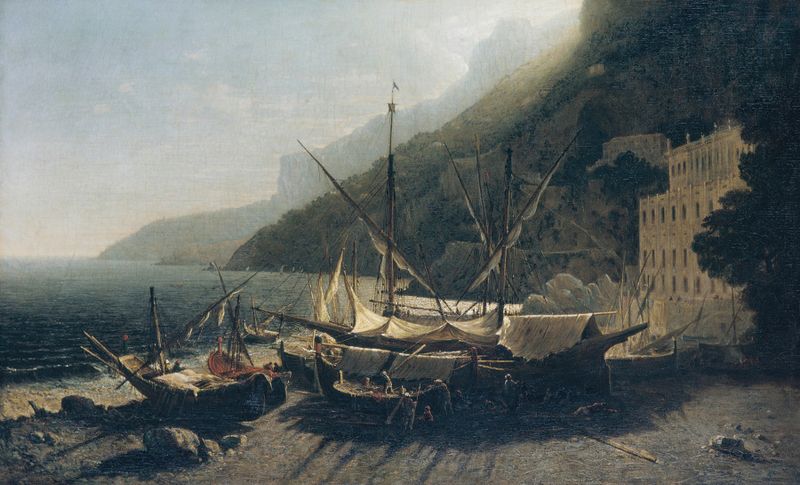
View at Amalfi, Bay of Salerno
George Loring Brown

Composition, Italian Scenery
George Loring Brown
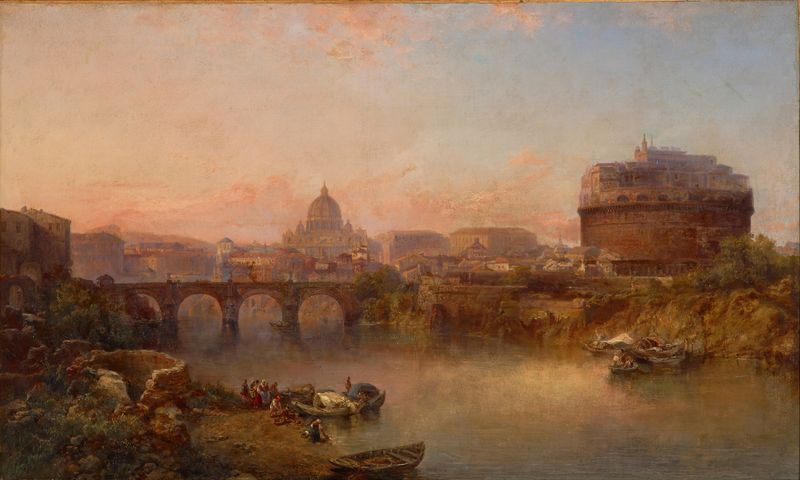
Sunset on the Tiber, Rome
George Loring Brown
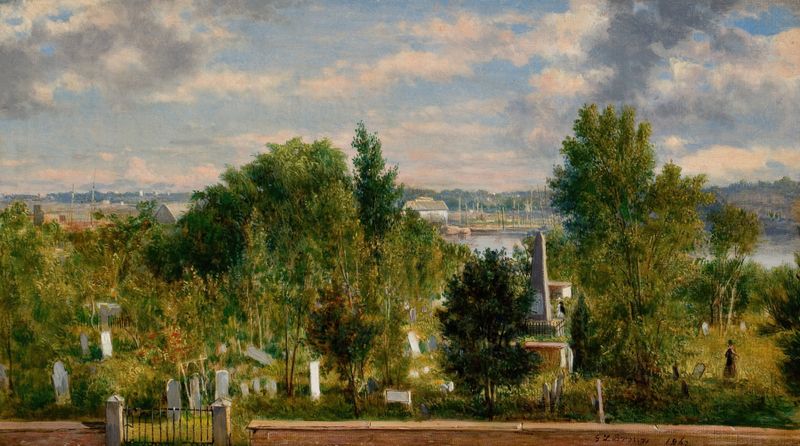
New England Landscape with Cemetery (possibly Medford, MA)
George Loring Brown
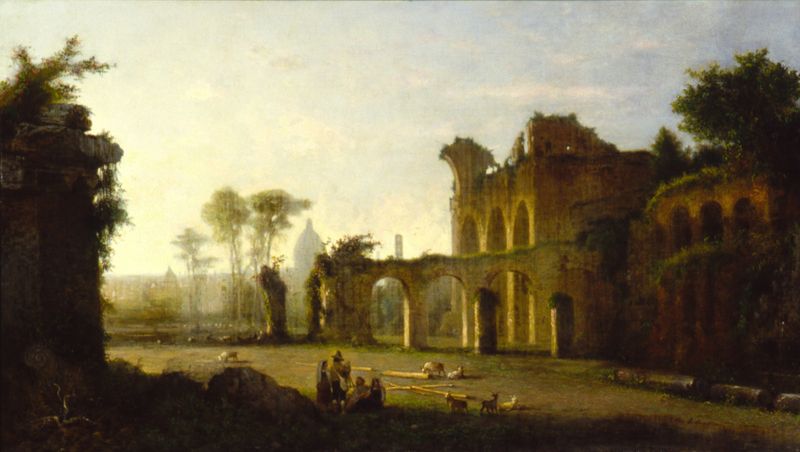
View of the Temple of Peace in the Roman Forum
George Loring Brown
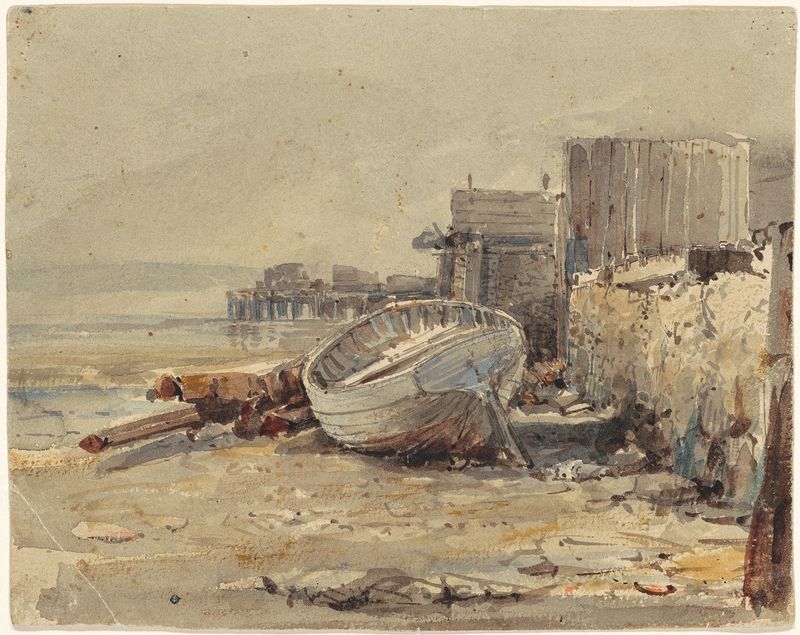
Beached Vessel
George Loring Brown
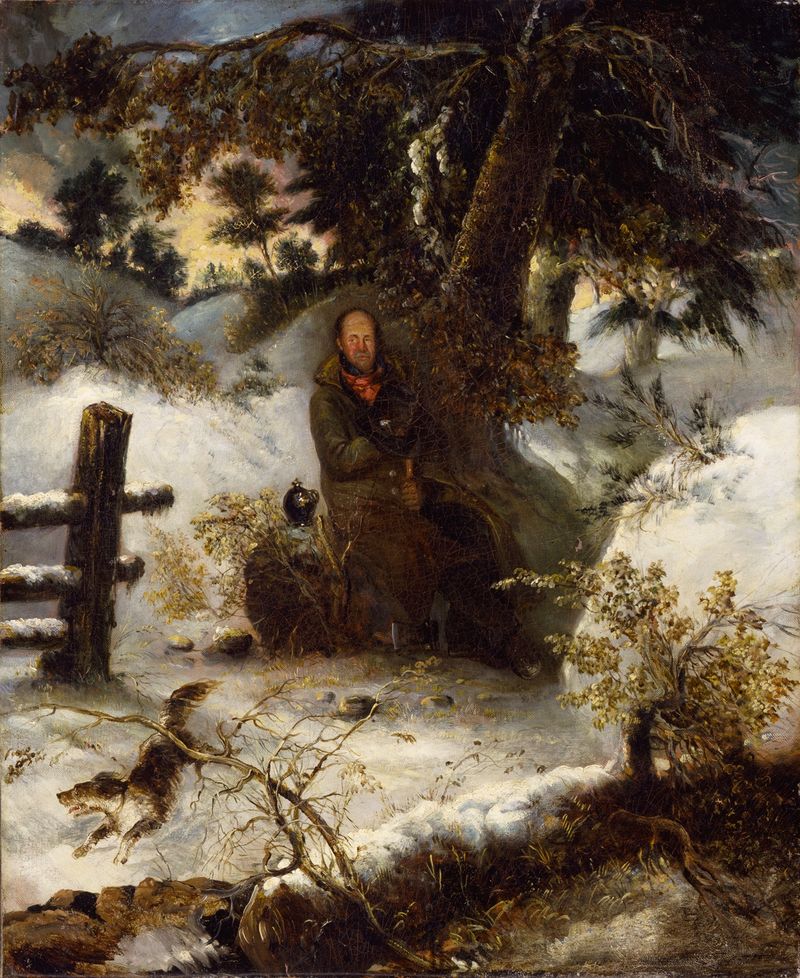
The Woodchopper
George Loring Brown





