
Sunset on the Tiber, Rome — History & Facts
As the sun sinks beneath the horizon, the Tiber flows, carrying whispers of countless stories. In this moment, the juxtaposition of light and dark reveals the complex truth of existence. Look to the left at the shimmering waters reflecting the fiery hues of the sunset; the rich oranges and deep purples bleed into one another. Notice how the artist employs a delicate yet vigorous brushstroke to depict the rippling surface, creating a sense of movement that invites the viewer deeper into the scene.
The silhouetted figures on the bank, their postures relaxed yet contemplative, draw your gaze across the landscape—a serene acknowledgment of life's transience. In Sunset on the Tiber, there is a palpable tension between warmth and melancholy. The golden light pours over the serene waters, yet the shadows harbor an undercurrent of solitude and introspection. The trees in the foreground frame the scene, their dark shapes a stark contrast to the radiant sky, hinting at the duality of beauty and sorrow intertwined in our lives. Painted in 1880, George Loring Brown was immersed in a period of artistic evolution, where Romanticism was giving way to Impressionism.
Living in Italy, he captured the essence of the Tiber after experiencing the vibrancy of this ancient city. At a time when artists were increasingly focused on light and atmosphere, Brown's work reflects both his personal journey and the shifting tides of artistic vision during the late 19th century.
More Artworks by George Loring Brown
Browse all →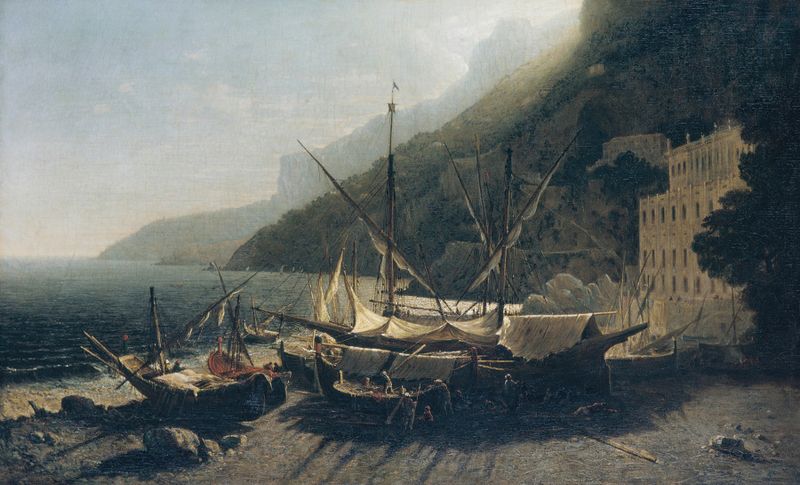
View at Amalfi, Bay of Salerno
George Loring Brown

Morning on the Grand Canal, Venice
George Loring Brown

Composition, Italian Scenery
George Loring Brown
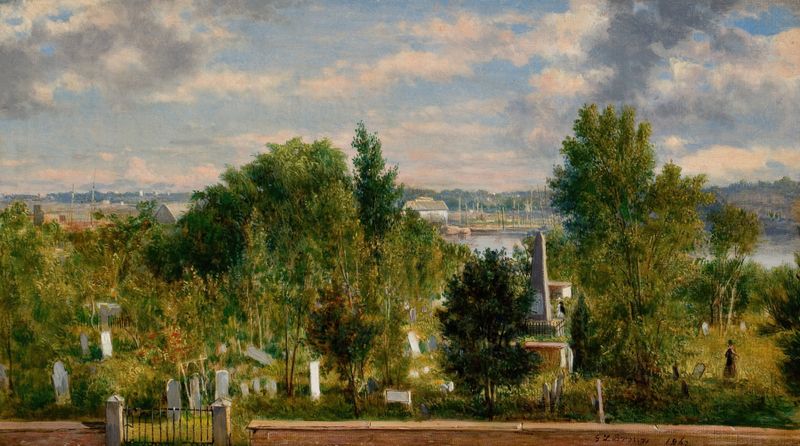
New England Landscape with Cemetery (possibly Medford, MA)
George Loring Brown
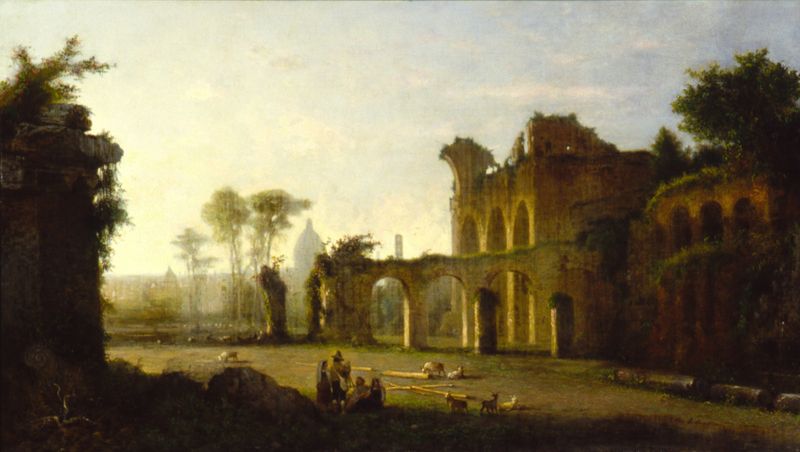
View of the Temple of Peace in the Roman Forum
George Loring Brown
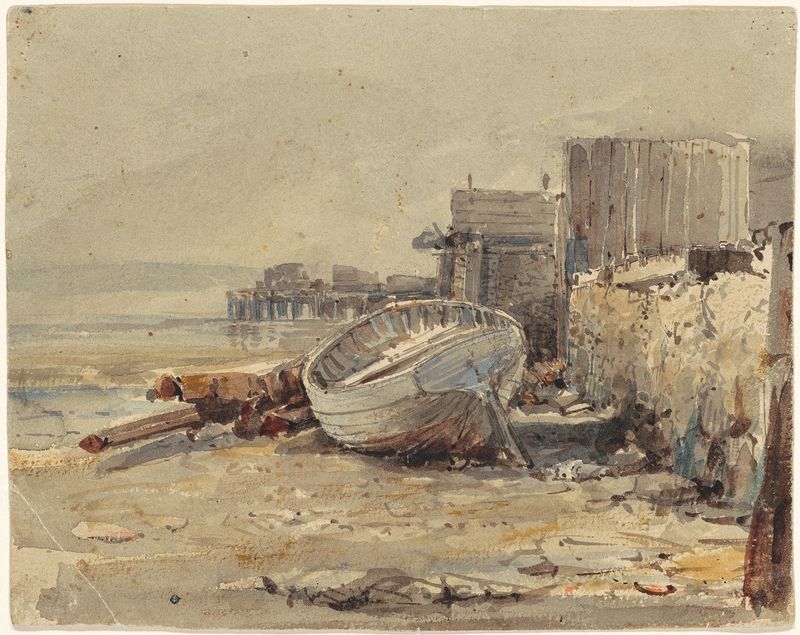
Beached Vessel
George Loring Brown

The Woodchopper
George Loring Brown





