
New England Landscape with Cemetery (possibly Medford, MA) — History & Facts
Could a single brushstroke hold eternity? In the quietude of the 19th century, the interplay of light and shadow on canvas became a vessel for capturing the fleeting moments of life and death. Look to the foreground, where the headstones emerge from the verdant grass, each stone a testament to existence. Notice how the soft greens of the landscape cradle the somber grays and whites of the cemetery, creating a delicate balance between life and remembrance. The artist employs a gentle palette, suffusing the scene with a tranquil light that washes over the graves, inviting contemplation and connection to the past. Within this serene setting lies an emotional tension—a juxtaposition of vitality and mortality.
The distant hills, painted in warm, inviting tones, suggest hope and continuity, while the grave markers stand resolute, bearing witness to the transience of human life. Each element, from the whispering trees to the placid sky, encapsulates a delicate dialogue between fleeting existence and the permanence of memory. In 1862, George Loring Brown crafted this evocative landscape amidst a nation grappling with the Civil War's turmoil. Living in Medford, Massachusetts, he found inspiration in the tranquility of his surroundings, seeking to express not just the beauty of nature but also the poignant reflections of life’s fragility.
This period, marked by profound societal change, influenced artists like Brown to explore themes of mortality and serenity, leaving an indelible mark on American art.
More Artworks by George Loring Brown
Browse all →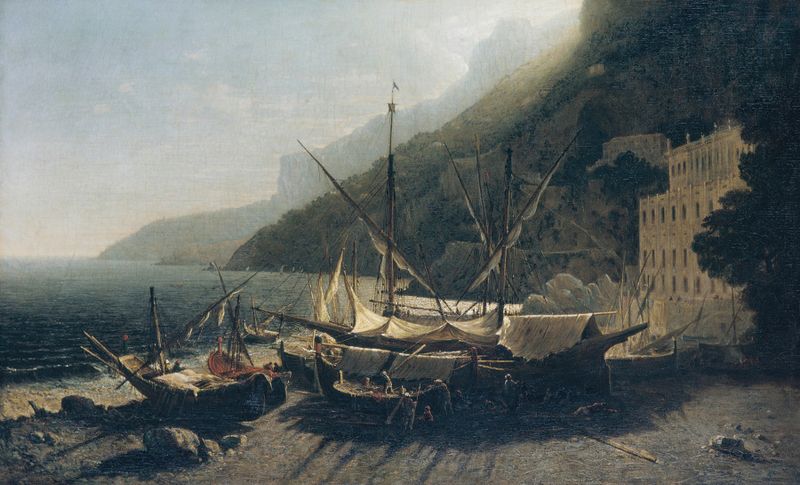
View at Amalfi, Bay of Salerno
George Loring Brown

Morning on the Grand Canal, Venice
George Loring Brown

Composition, Italian Scenery
George Loring Brown
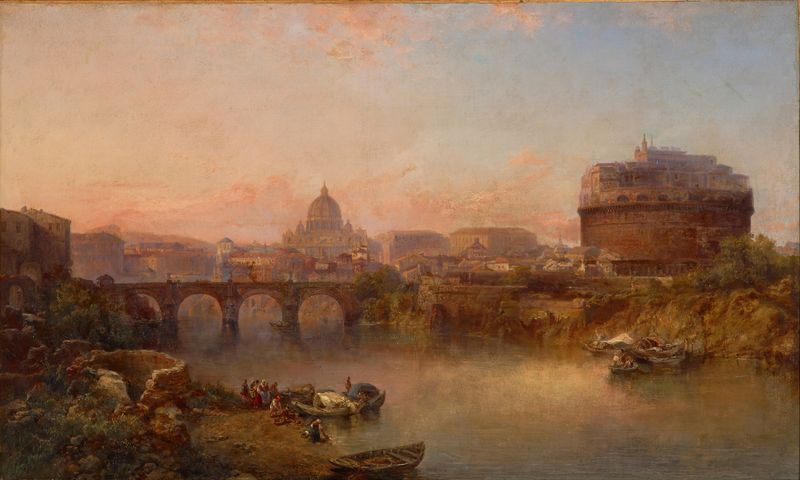
Sunset on the Tiber, Rome
George Loring Brown
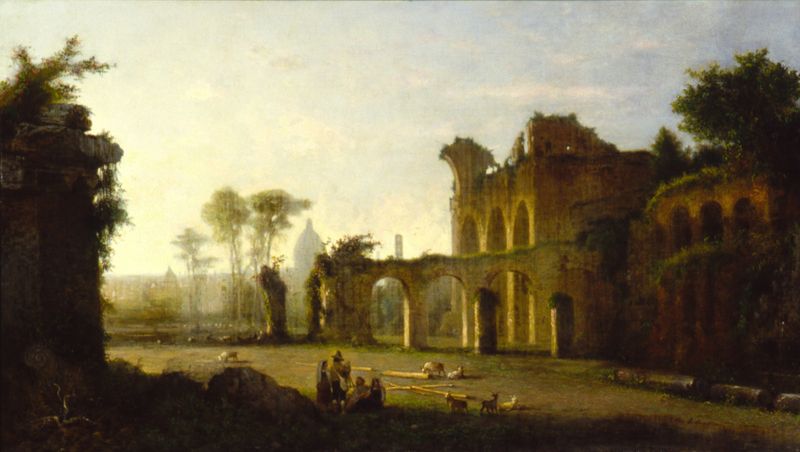
View of the Temple of Peace in the Roman Forum
George Loring Brown
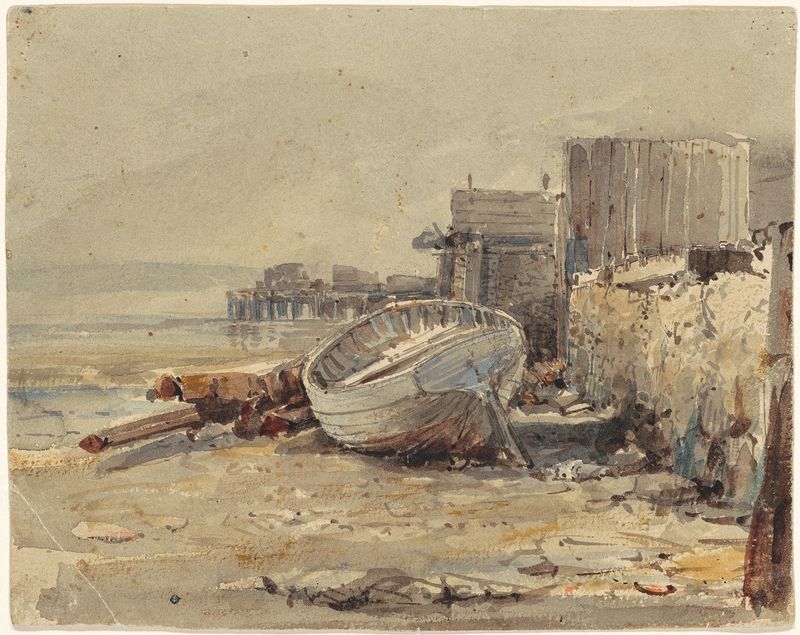
Beached Vessel
George Loring Brown

The Woodchopper
George Loring Brown





