
Mosque in Jaffa — History & Facts
Can beauty exist without sorrow? This poignant inquiry resonates deeply within the realm of art, where every brushstroke carries the weight of emotion and history, particularly in the context of revolution. Look to the center of the canvas where a majestic mosque rises, its graceful minarets piercing the sky. The warm hues of sunset cast a golden glow, illuminating the intricate patterns of the mosque’s facade, inviting you to explore the delicate artistry. Notice how the painter juxtaposes light and shadow, creating a sense of depth that simultaneously elevates and isolates the sacred structure against the backdrop of a tumultuous landscape. Yet, the mosque stands not merely as an architectural marvel but as a symbol of resilience amidst upheaval.
The contrasting dark tones in the surrounding terrain whisper of the struggles faced by the community, hinted at in the tumultuous waves crashing below. Each brushstroke tells a story of survival, evoking feelings of nostalgia and loss, while also celebrating the beauty that persists through adversity, allowing the viewer to feel both the weight of sorrow and the solace of beauty. In 1934, Konstantin Ivanovich Gorbatov painted this piece during a period marked by political unrest and societal shifts. Living in the aftermath of the Russian Revolution, he found himself in a world where the echoes of change were palpable.
His work reflected not only his personal journey as an émigré but also the broader artistic movements of the time, blending realism with emotional depth to capture a moment that resonates far beyond its time and place.
More Artworks by Konstantin Ivanovich Gorbatov
Browse all →
View Of Capri
Konstantin Ivanovich Gorbatov
Russian Town Under The Snow
Konstantin Ivanovich Gorbatov
Autumn Landscape
Konstantin Ivanovich Gorbatov
Chioggia
Konstantin Ivanovich Gorbatov
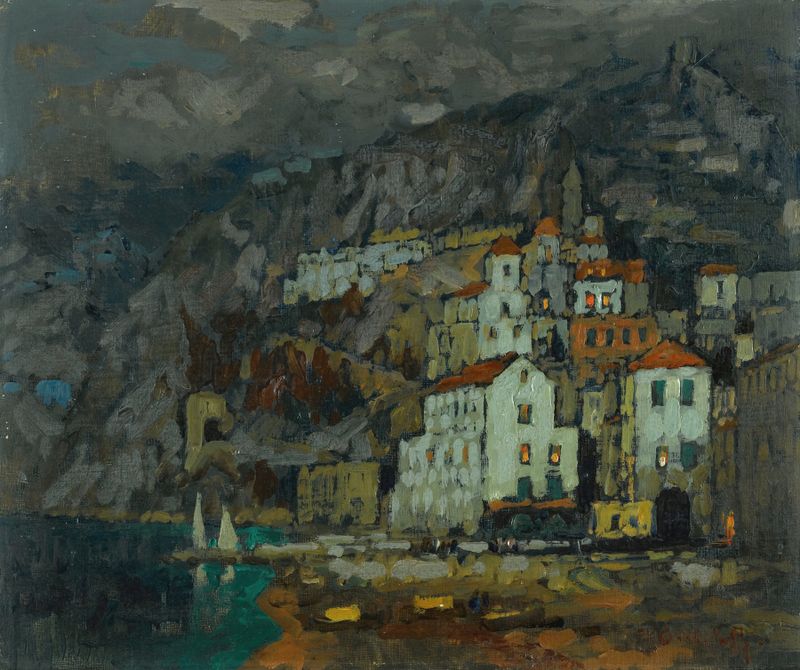
View Of Amalfi
Konstantin Ivanovich Gorbatov
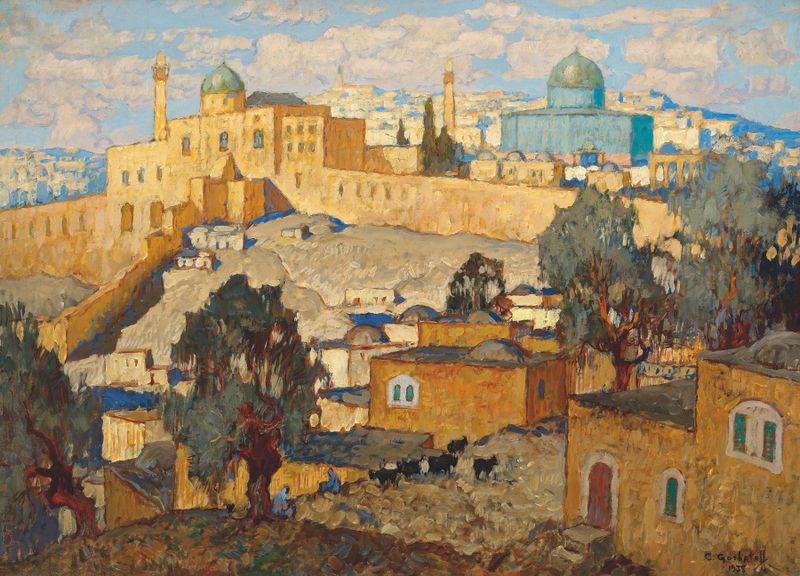
Jerusalem
Konstantin Ivanovich Gorbatov
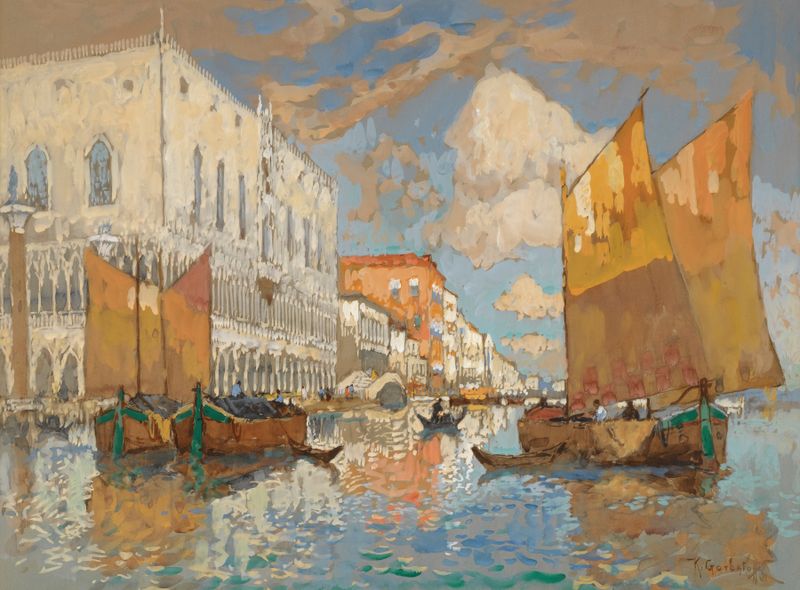
The Doge’s Palace, Venice
Konstantin Ivanovich Gorbatov
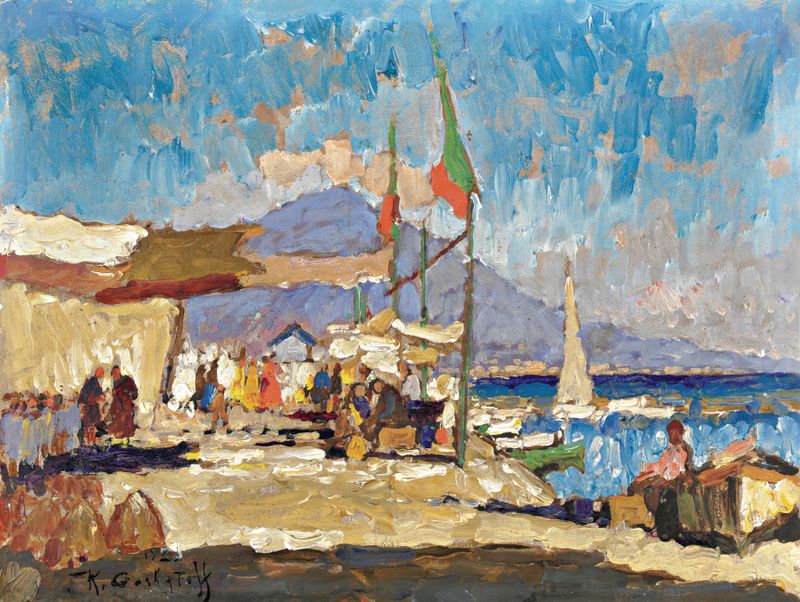
View Of Naples
Konstantin Ivanovich Gorbatov
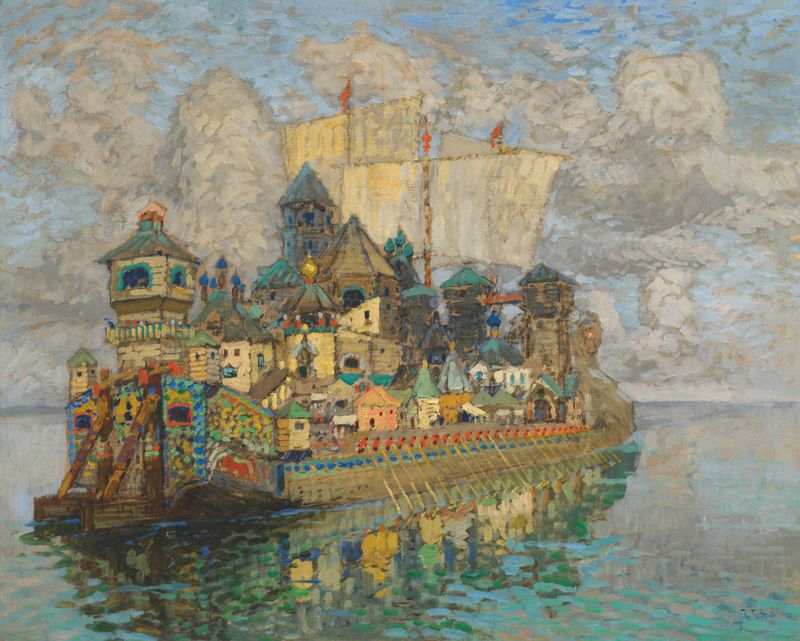
The Invisible City of Kitezh
Konstantin Ivanovich Gorbatov
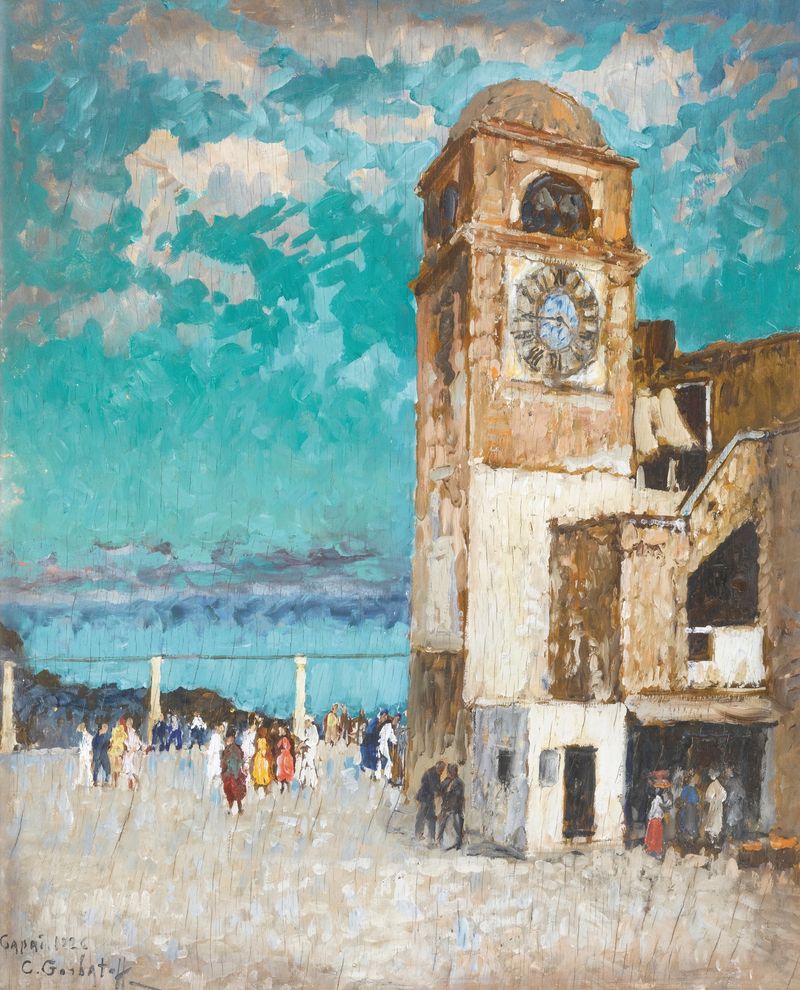
Capri
Konstantin Ivanovich Gorbatov
More Architecture Art
Browse all →
The statue of Liberty
Frédéric Auguste Bartholdi

View of Houses in Delft, Known as ‘The Little Street’
Johannes Vermeer

View of Houses in Delft, Known as ‘The Little Street’
Johannes Vermeer

The Cathedral in Rouen. The portal, Grey Weather
Claude Monet

The yellow house
Vincent van Gogh

The Church in Auvers-sur-Oise, View from the Chevet
Vincent van Gogh