
Mosque in Kairouan — History & Facts
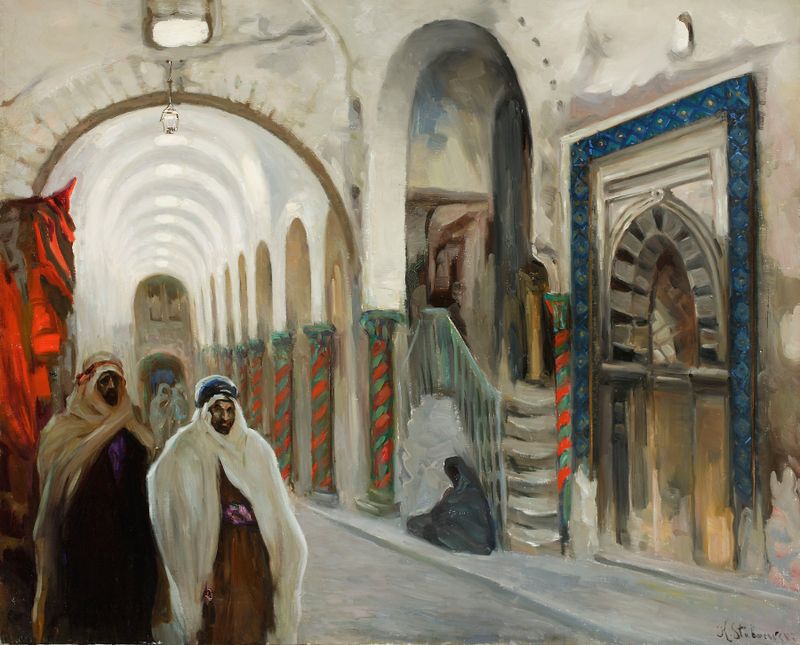
What secret hides in the quiet of the canvas? In the stillness of Mosque in Kairouan, a profound sense of transcendence echoes through its intricate forms and shadows. Look to the center, where the grand minaret rises majestically against the sky, a beacon of cultural identity and spiritual aspiration. Notice how the warm earth tones contrast with the cool blues of the sky, creating a harmony that envelops the viewer. The play of light accentuates the delicate architectural details—the arches and columns intricately woven into the fabric of this sacred space, inviting a meditative gaze. Delve deeper into the artwork, and observe the juxtaposition between the man-made and the natural.
The mosque stands as a testament to human ingenuity, yet it is nestled within an expansive, almost ethereal landscape that suggests an eternal connection to the divine. The soft brushstrokes hint at the passage of time, evoking a sense of longing and reverence for traditions that transcend generations. Each crevice and contour tells a story of devotion, whispering of the prayers offered within its walls. Kazimierz Stabrowski painted Mosque in Kairouan in 1926 during a period when he sought to capture the essence of his surroundings while living in Tunisia.
This time marked a significant shift in his artistic journey, as he embraced the vibrant culture and history of North Africa amidst the broader movements of modernism and regionalism. The mosque stands not just as an architectural marvel, but as a symbol of Stabrowski's exploration of identity, faith, and connection to the world around him.
More Artworks by Kazimierz Stabrowski
Browse all →
Ruins of the Krzyżtopór castle in Ujazd
Kazimierz Stabrowski
Souq in Kairouan
Kazimierz Stabrowski

Landscape with three trees
Kazimierz Stabrowski
View of Taormina
Kazimierz Stabrowski

Vilnius – Cathedral Bell Tower
Kazimierz Stabrowski
Autumn flora
Kazimierz Stabrowski
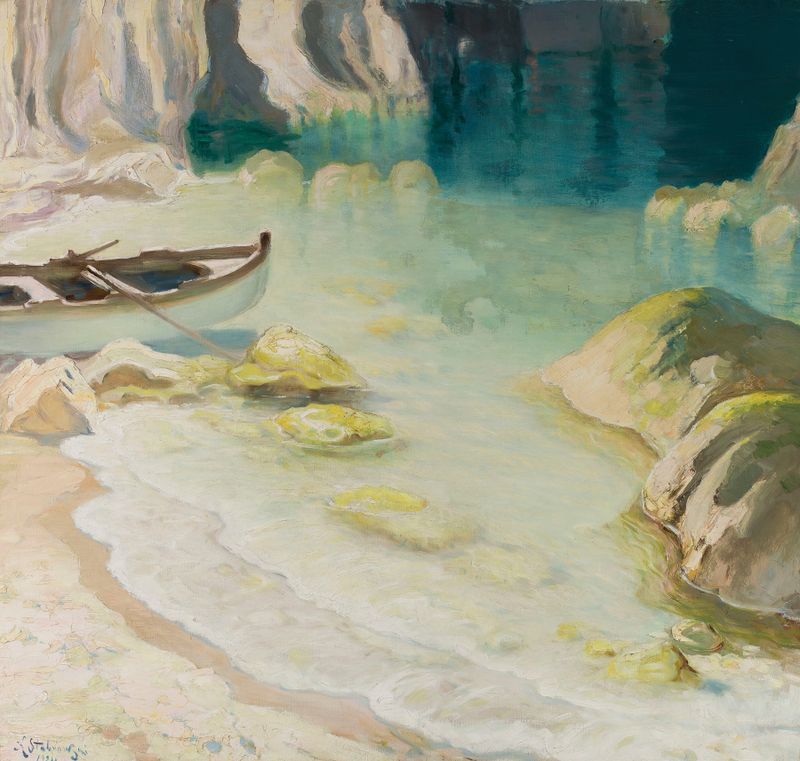
Boat at rocky coast
Kazimierz Stabrowski
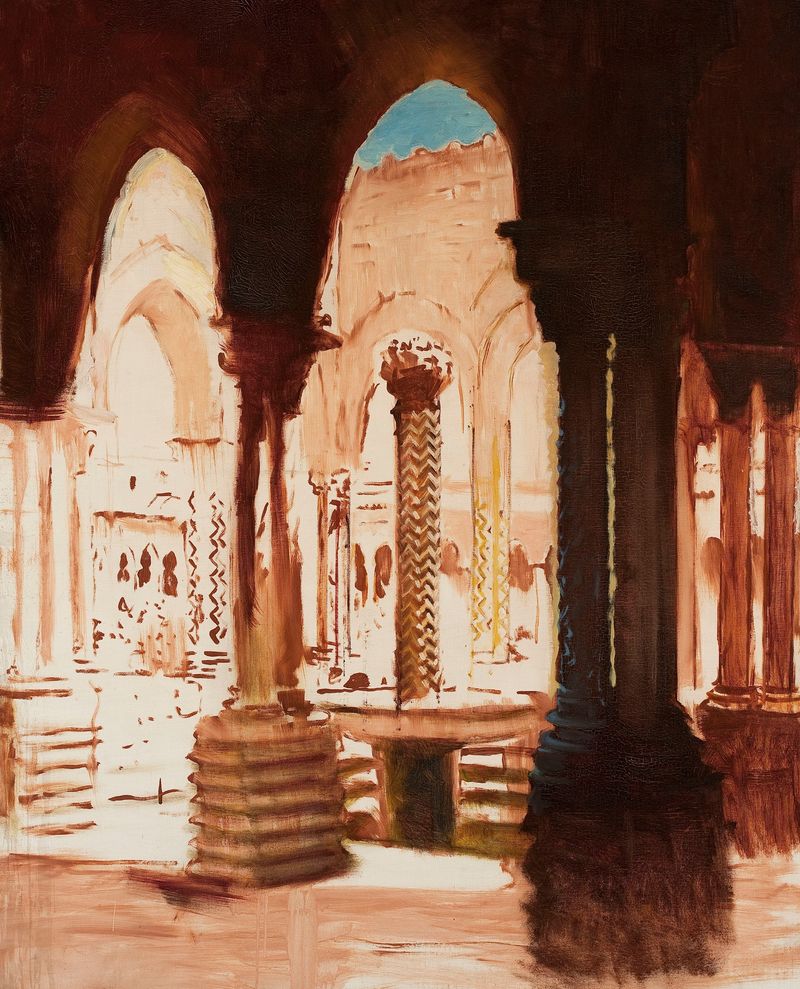
Monastery courtyard in Monreale-Palermo
Kazimierz Stabrowski
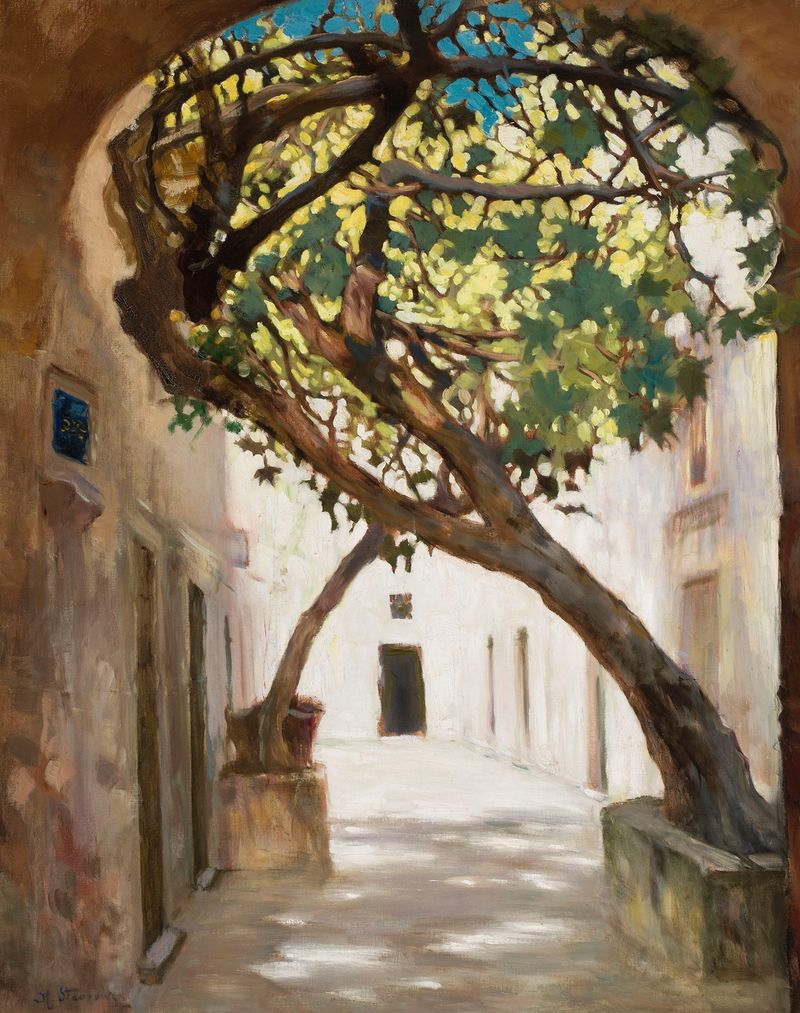
Street in Sarajevo
Kazimierz Stabrowski

Norwegian fjord
Kazimierz Stabrowski
More Architecture Art
Browse all →
The statue of Liberty
Frédéric Auguste Bartholdi

View of Houses in Delft, Known as ‘The Little Street’
Johannes Vermeer

View of Houses in Delft, Known as ‘The Little Street’
Johannes Vermeer

The Cathedral in Rouen. The portal, Grey Weather
Claude Monet

The yellow house
Vincent van Gogh

The Church in Auvers-sur-Oise, View from the Chevet
Vincent van Gogh