
Souq in Kairouan — History & Facts
Who listens when art speaks of silence? In Souq in Kairouan, the weight of stillness permeates the bustling market, inviting contemplation amidst the chaos. Look to the right at the textured brushwork that forms the shops and stalls, each a vibrant tapestry of color — warm ochres and sunlit whites juxtaposed by deep cobalt blues. Notice how the artist skillfully captures the essence of the souq, using light to delineate the figures of merchants and shoppers, their movements stilled in the moment of transaction. The composition draws your gaze through a narrow passageway, creating a sense of intimacy while echoing the vibrant life that fills this marketplace. Yet, beneath its lively surface lies an intricate interplay of solitude and camaraderie.
The merchants’ expressions range from engaged to contemplative, reflecting a shared experience that resonates through time. Small details, like the delicate patterns on fabrics hanging from awnings, evoke a rich cultural heritage, while the absence of sound in this painted moment suggests a deeper narrative, one of connection transcending the clamor of daily life. Kazimierz Stabrowski painted this piece between 1926 and 1927 during a pivotal moment in his artistic journey. Living in France at the time, he was deeply influenced by the vibrant colors and forms of the post-impressionist movement, which shaped his approach to capturing the essence of North African culture.
The world was undergoing significant changes, with art increasingly reflecting individual experiences, making this depiction of a souq a celebrated exploration of both place and emotion.
More Artworks by Kazimierz Stabrowski
Browse all →
Mosque in Kairouan
Kazimierz Stabrowski
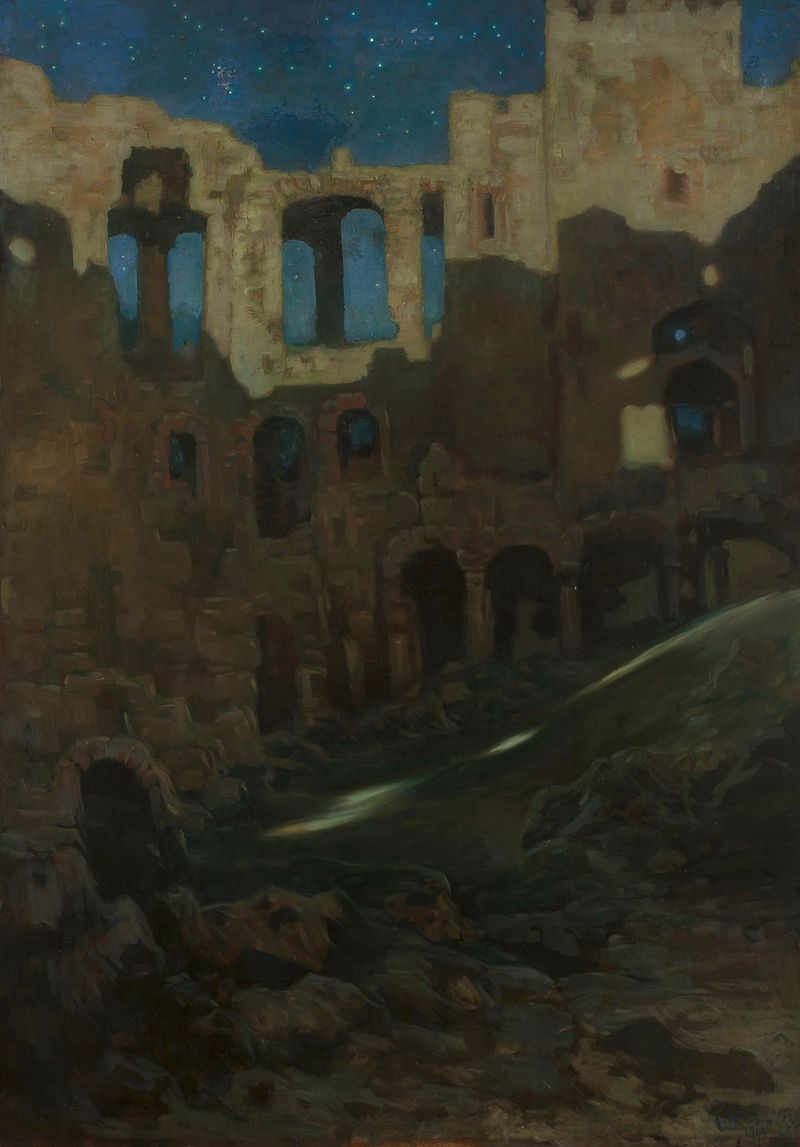
Ruins of the Krzyżtopór castle in Ujazd
Kazimierz Stabrowski

Landscape with three trees
Kazimierz Stabrowski
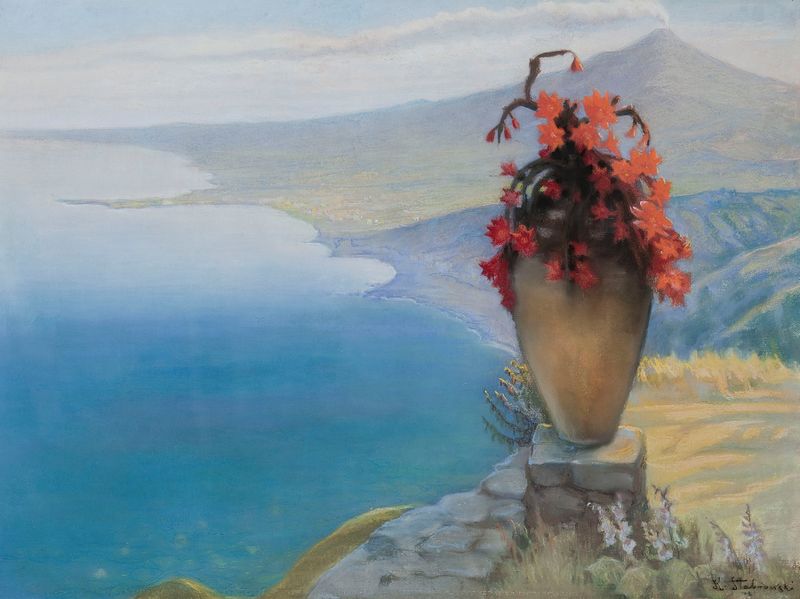
View of Taormina
Kazimierz Stabrowski

Vilnius – Cathedral Bell Tower
Kazimierz Stabrowski
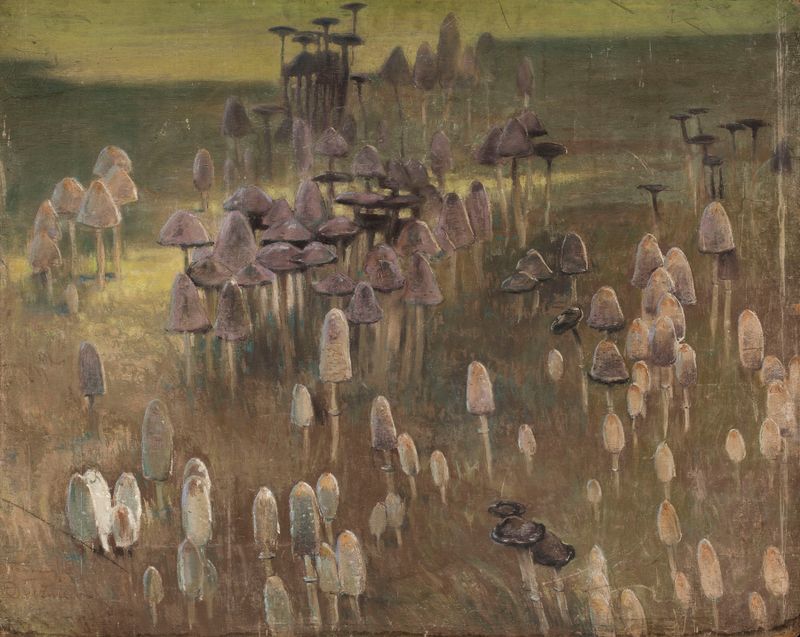
Autumn flora
Kazimierz Stabrowski
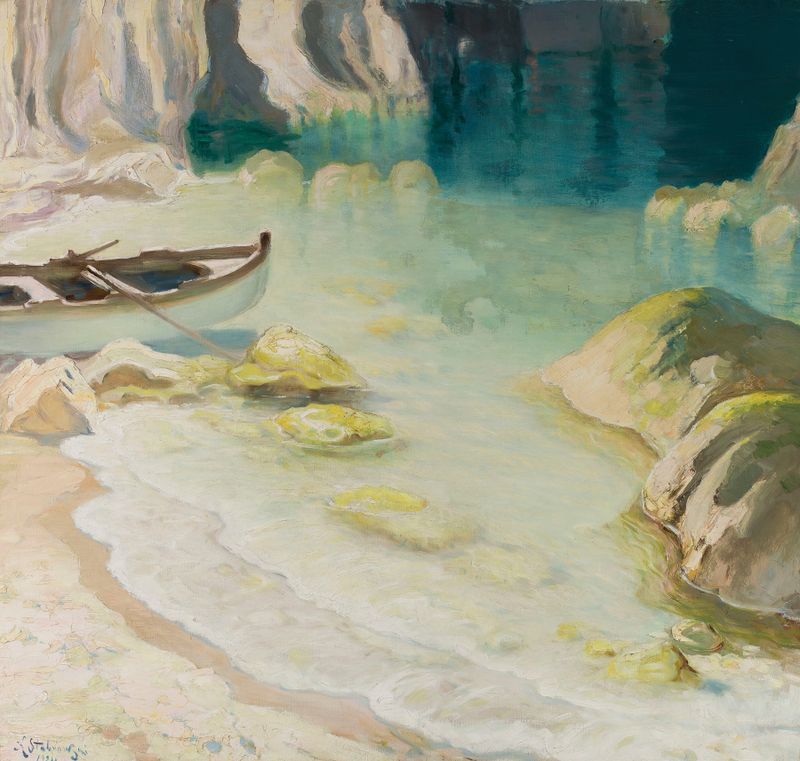
Boat at rocky coast
Kazimierz Stabrowski
Monastery courtyard in Monreale-Palermo
Kazimierz Stabrowski
Street in Sarajevo
Kazimierz Stabrowski

Norwegian fjord
Kazimierz Stabrowski





