
Mosque of Sultan Hassan, Cairo — History & Facts
In the silent echo of centuries, the essence of a place transcends time, capturing the ecstasy of devotion and architecture intertwined. Look to the upper left at the grand minaret, its towering presence reaching for the heavens while grounding the ornate details that adorn its surface. Notice how the light dances across the intricate carvings and deep blues of the tiled façade, allowing each pattern to shimmer with life. The warm hues of ochre and soft creams in the stonework create a harmonious dialogue with the cooler shadows, illustrating the interplay of sunlight and the built environment in a scene that feels both sacred and alive. Delve deeper into the interplay of space and scale; the vastness of the mosque invites contemplation while simultaneously imposing a sense of intimacy within its walls.
The juxtaposition of the monumental structure against the soft, whispering sky suggests both grandeur and humility, mirroring the spiritual journey of the faithful. Every architectural detail, from the arches to the domes, speaks to the union of art and devotion, revealing a path to the divine through the very act of creation. In 1870, Goodall painted this work while immersed in the rich historical tapestry of Egypt. During this period, Western interest in Orientalism was burgeoning, and the artist found himself captivated by the cultural legacy and architectural marvels of Cairo.
His depiction of the Mosque of Sultan Hassan reflects not only an appreciation for its aesthetic beauty but also a fascination with the complexity of Islamic art amidst a changing world.
More Artworks by Edward Angelo Goodall
Browse all →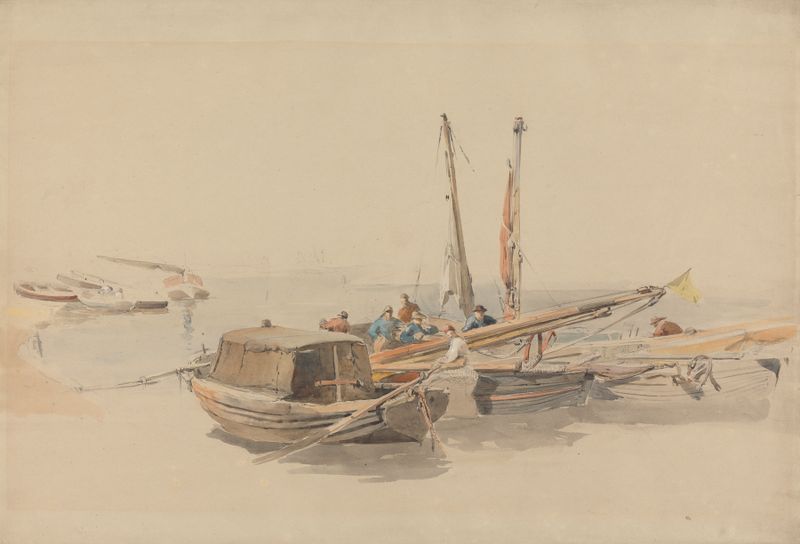
Fishing Boats at Anchor
Edward Angelo Goodall
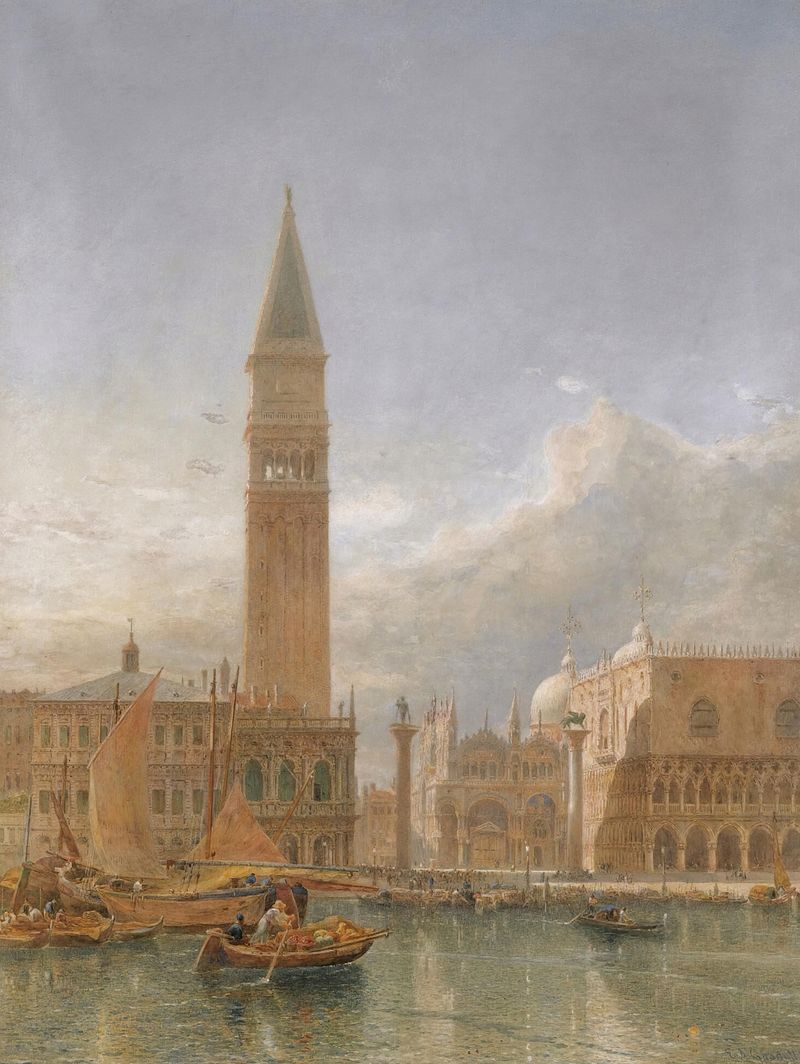
Piazzetta San Marco, Venice
Edward Angelo Goodall
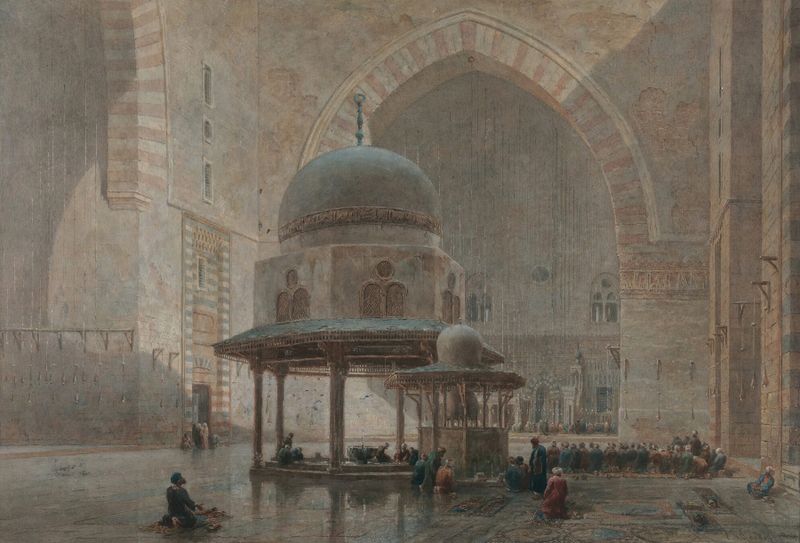
The Interior Of Sultan Hassan Mosque, Cairo
Edward Angelo Goodall
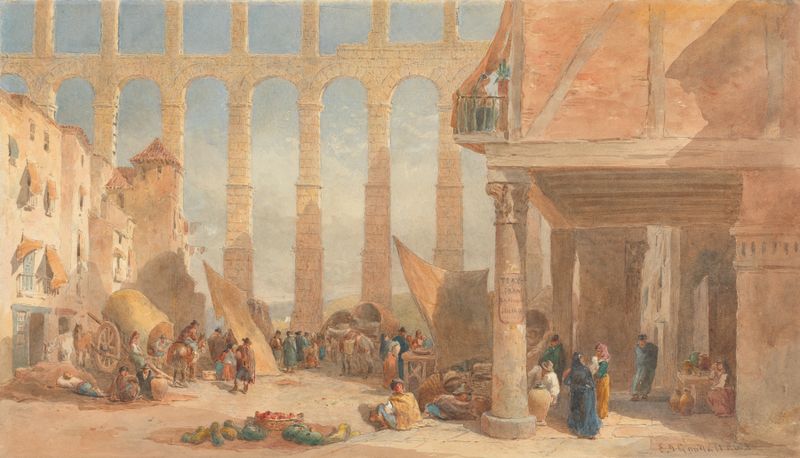
Aquaduct at Segovia, Spain
Edward Angelo Goodall
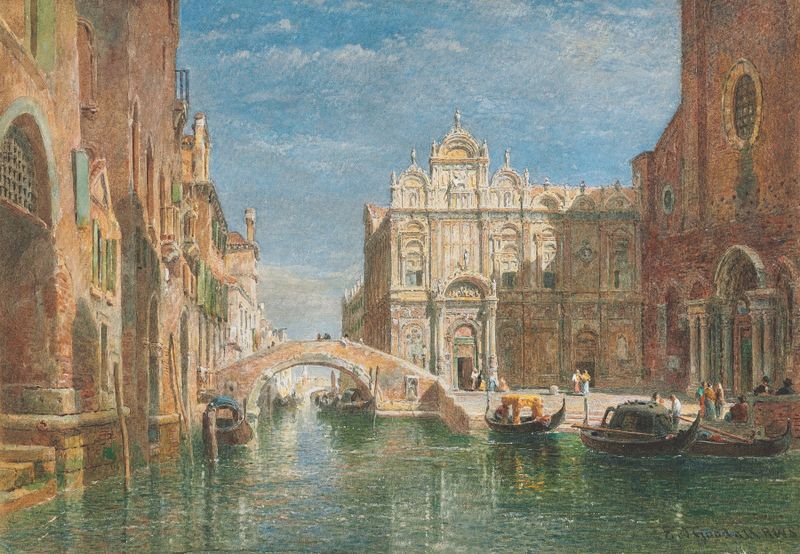
The Church of SS. Giovanni e Paolo, Venice
Edward Angelo Goodall
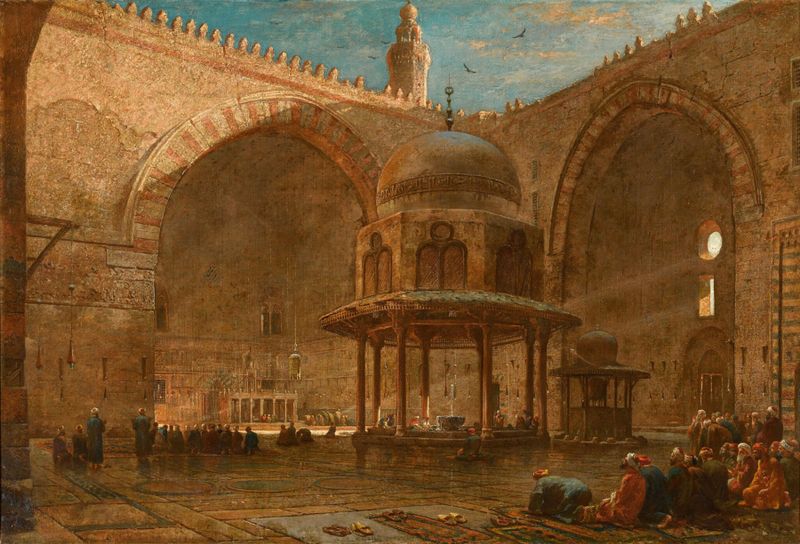
The Mosque of Sultan Hassan, Cairo
Edward Angelo Goodall

Spar and Anchor
Edward Angelo Goodall
More Architecture Art
Browse all →
The statue of Liberty
Frédéric Auguste Bartholdi

View of Houses in Delft, Known as ‘The Little Street’
Johannes Vermeer

View of Houses in Delft, Known as ‘The Little Street’
Johannes Vermeer

The Cathedral in Rouen. The portal, Grey Weather
Claude Monet

The yellow house
Vincent van Gogh

The Church in Auvers-sur-Oise, View from the Chevet
Vincent van Gogh