
The Mosque of Sultan Hassan, Cairo — History & Facts
What secret hides in the quiet of the canvas? In the vast emptiness of space, shadows linger, and the silence wraps itself around the towering minarets and ancient stone, evoking an unsettling fear of the unknown. Look to the foreground, where intricate carvings emerge from the meticulously painted walls, each detail a testament to craftsmanship. Notice how the light filters through the arches, casting elongated shadows that dance across the cobblestones. The muted earth tones blend seamlessly with deep blues, creating a sense of depth that draws the viewer into the architectural wonder.
The composition invites exploration, yet the stillness harbors a sense of foreboding. Beneath the surface, contrasts abound. The grandeur of the mosque stands against the desolate surroundings, suggesting a once-bustling hub now cloaked in silence. The absence of human figures amplifies the isolation, inviting contemplation of a lost vibrancy.
Furthermore, the towering structures, while appearing majestic, also evoke a looming presence that can be interpreted as both spiritual sanctuary and oppressive weight. Goodall painted this work during a time when Western artists sought to represent the exoticism of Middle Eastern architecture. Though the exact date remains uncertain, his travels in the mid-19th century, particularly to Egypt, reflect a growing fascination with the region's cultural richness amidst political turmoil. The mosque stands as a symbol of architectural prowess, yet also as a reminder of the complexities inherent in colonial perspectives.
More Artworks by Edward Angelo Goodall
Browse all →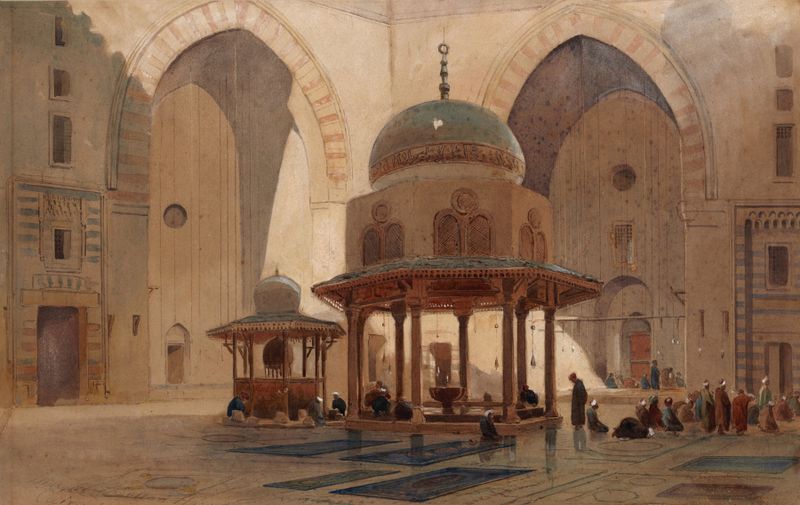
Mosque of Sultan Hassan, Cairo
Edward Angelo Goodall
Fishing Boats at Anchor
Edward Angelo Goodall
Piazzetta San Marco, Venice
Edward Angelo Goodall
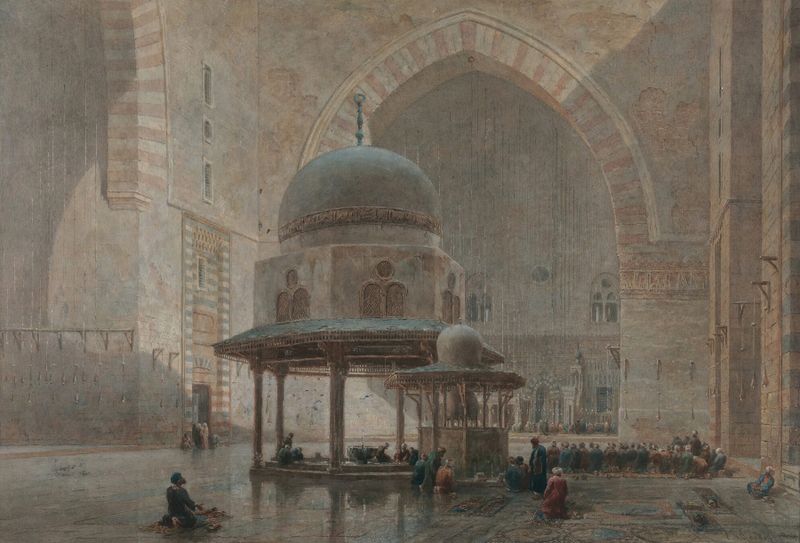
The Interior Of Sultan Hassan Mosque, Cairo
Edward Angelo Goodall
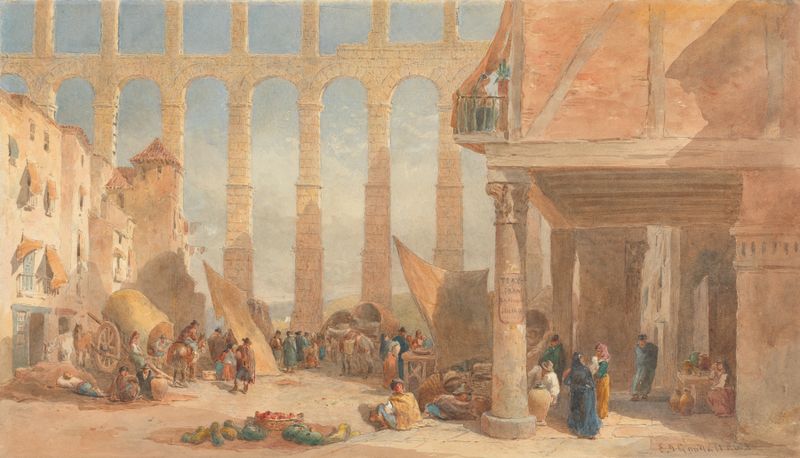
Aquaduct at Segovia, Spain
Edward Angelo Goodall
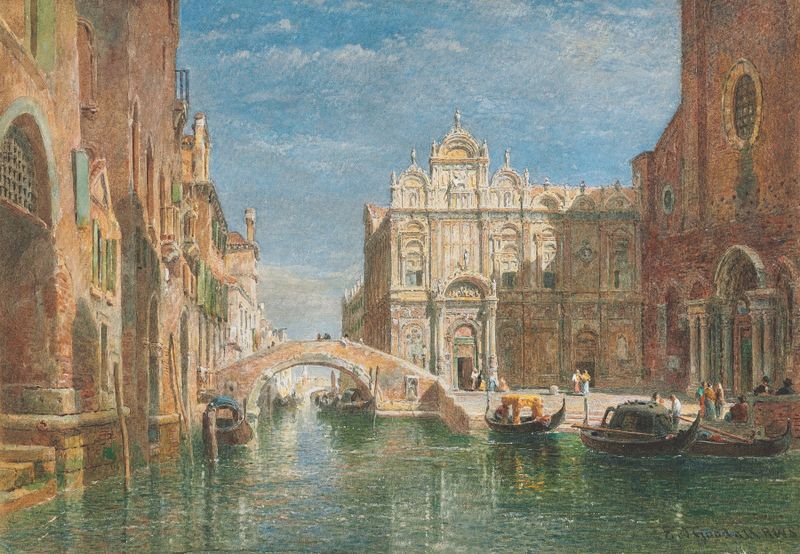
The Church of SS. Giovanni e Paolo, Venice
Edward Angelo Goodall

Spar and Anchor
Edward Angelo Goodall
More Architecture Art
Browse all →
The statue of Liberty
Frédéric Auguste Bartholdi

View of Houses in Delft, Known as ‘The Little Street’
Johannes Vermeer

View of Houses in Delft, Known as ‘The Little Street’
Johannes Vermeer

The Cathedral in Rouen. The portal, Grey Weather
Claude Monet

The yellow house
Vincent van Gogh

The Church in Auvers-sur-Oise, View from the Chevet
Vincent van Gogh