
Piazzetta San Marco, Venice — History & Facts
This duality of experience lingers in the memory of Venice, where splendor and sorrow intertwine like the reflections in its shimmering canals. In Piazzetta San Marco, the space between joy and nostalgia reveals itself as a fleeting moment captured in paint. Look to the foreground, where the vibrant hues of the architecture command attention. Notice how the warm ochres and deep browns contrast with the cool blues of the sky — a dance of color that evokes both warmth and melancholy.
The figures milling about the piazza, rendered with delicate strokes, breathe life into the scene, yet their postures suggest a deep-seated contemplation. The artist’s meticulous attention to detail draws the eye upwards, inviting you to admire the towering campanile, standing as a silent witness to the ebb and flow of time. As you explore further, the interplay of light and shadow becomes evident. The sun casts long shadows that stretch across the cobblestones, hinting at the passage of time and the weight of memory carried by each visitor.
The quaint cafes, adorned with billowing awnings, hint at stories left untold, while the distant figures seem to be both part of the scene and estranged from it, echoing the longing for connection amidst the bustling backdrop of a city steeped in history. In 1889, Edward Angelo Goodall painted this representation of Venice during a transformative time in his life. Emerging as a significant figure in British painting, he was captivated by the allure of Italy, which served as both muse and refuge. The late 19th century, marked by a fascination with realism and impressionism, found its way into his works, as he documented the beauty of a city that held both artistic promise and the weight of its past.
More Artworks by Edward Angelo Goodall
Browse all →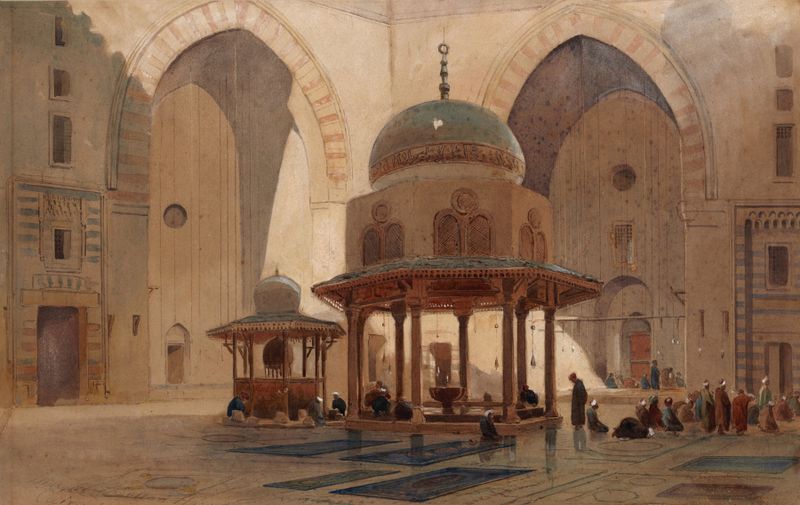
Mosque of Sultan Hassan, Cairo
Edward Angelo Goodall
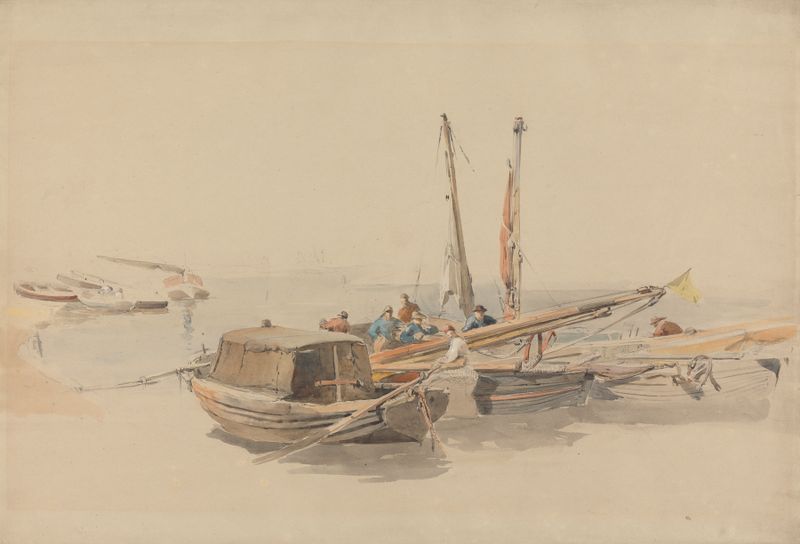
Fishing Boats at Anchor
Edward Angelo Goodall
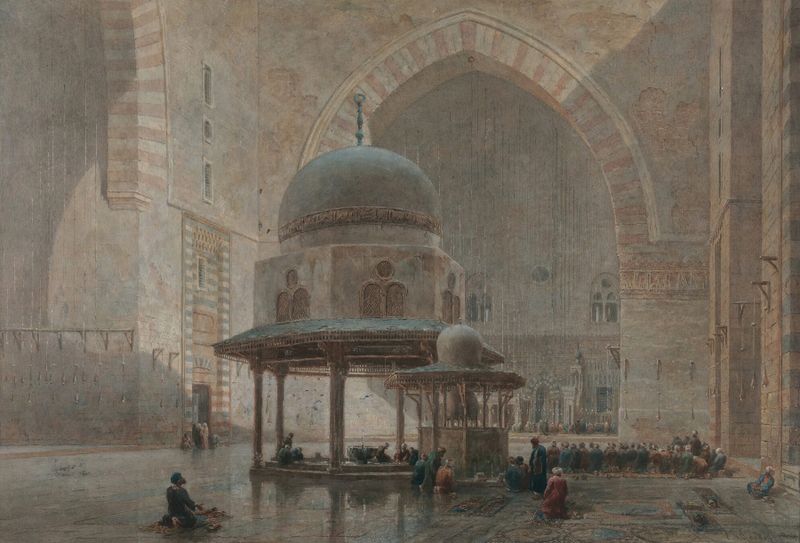
The Interior Of Sultan Hassan Mosque, Cairo
Edward Angelo Goodall
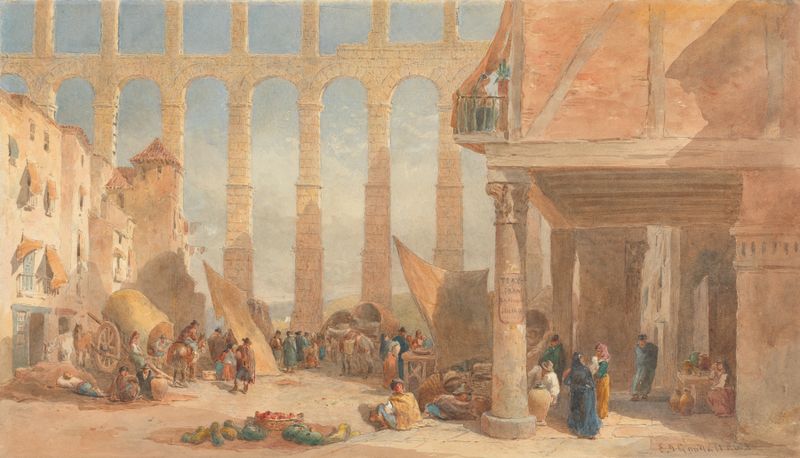
Aquaduct at Segovia, Spain
Edward Angelo Goodall
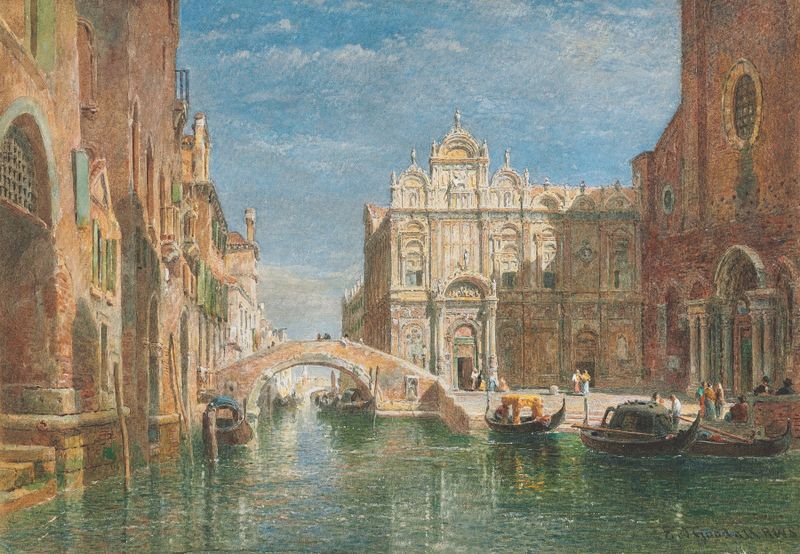
The Church of SS. Giovanni e Paolo, Venice
Edward Angelo Goodall
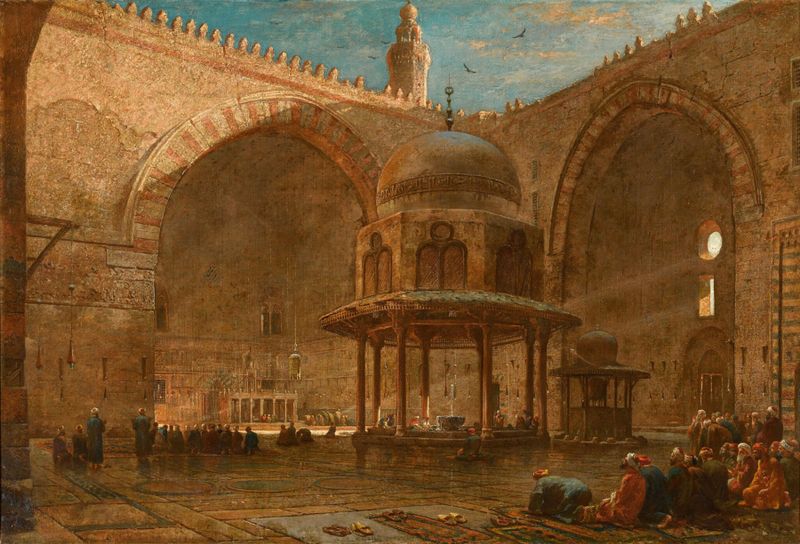
The Mosque of Sultan Hassan, Cairo
Edward Angelo Goodall

Spar and Anchor
Edward Angelo Goodall
More Architecture Art
Browse all →
The statue of Liberty
Frédéric Auguste Bartholdi

View of Houses in Delft, Known as ‘The Little Street’
Johannes Vermeer

View of Houses in Delft, Known as ‘The Little Street’
Johannes Vermeer

The Cathedral in Rouen. The portal, Grey Weather
Claude Monet

The yellow house
Vincent van Gogh

The Church in Auvers-sur-Oise, View from the Chevet
Vincent van Gogh