The Interior Of Sultan Hassan Mosque, Cairo — History & Facts
Within the stillness of a grand space, the echoes of footsteps fade into the cool stone, leaving behind whispers of destiny written in the intricate mosaics and vaulted ceilings. Each beam of light that filters through the windows cradles the air, transforming the sacred interiors into a realm where time seems to bend and history breathes. Focus on the delicate interplay of light and shadow as you gaze upon the rich patterns adorning the walls. Notice the ornate arabesques that spiral with grace, guiding your eyes toward the intricate dome above, which rises like a crown over the mosque's solemnity.
The deep blues and warm ochres harmonize, creating a sanctuary of color that invites contemplation, while the geometry of the architecture speaks to a profound order and divine inspiration. Beneath the surface beauty lies a tapestry of contrasts—the grandeur of devotion against the quiet solitude of worshippers. The lack of figures in the scene emphasizes the mosque’s role as a spiritual haven, a space where the individual grapples with the weight of existence. Each curve and line embodies the idea of faith shaped by history, suggesting that every prayer whispered here is intertwined with the destinies of those who have come before. Edward Angelo Goodall painted this work during a period when European artistic interest in orientalism was flourishing, likely in the mid-19th century.
At that time, he was captivated by the rich cultural landscapes he encountered, providing him the opportunity to explore the intersection of architecture, faith, and belonging. The world around him was shifting, with colonial influence expanding; his work reflects both admiration and an urge to understand the depths of a culture that, though foreign, becomes intimately familiar through the lens of art.
More Artworks by Edward Angelo Goodall
Browse all →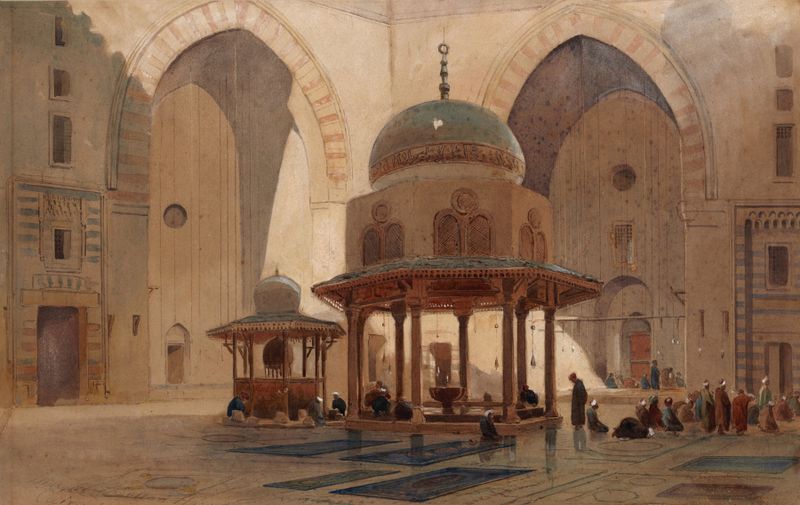
Mosque of Sultan Hassan, Cairo
Edward Angelo Goodall
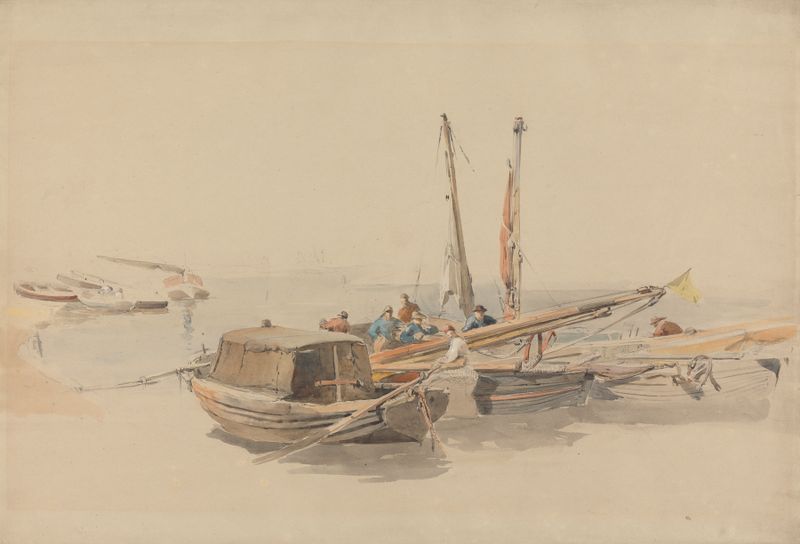
Fishing Boats at Anchor
Edward Angelo Goodall
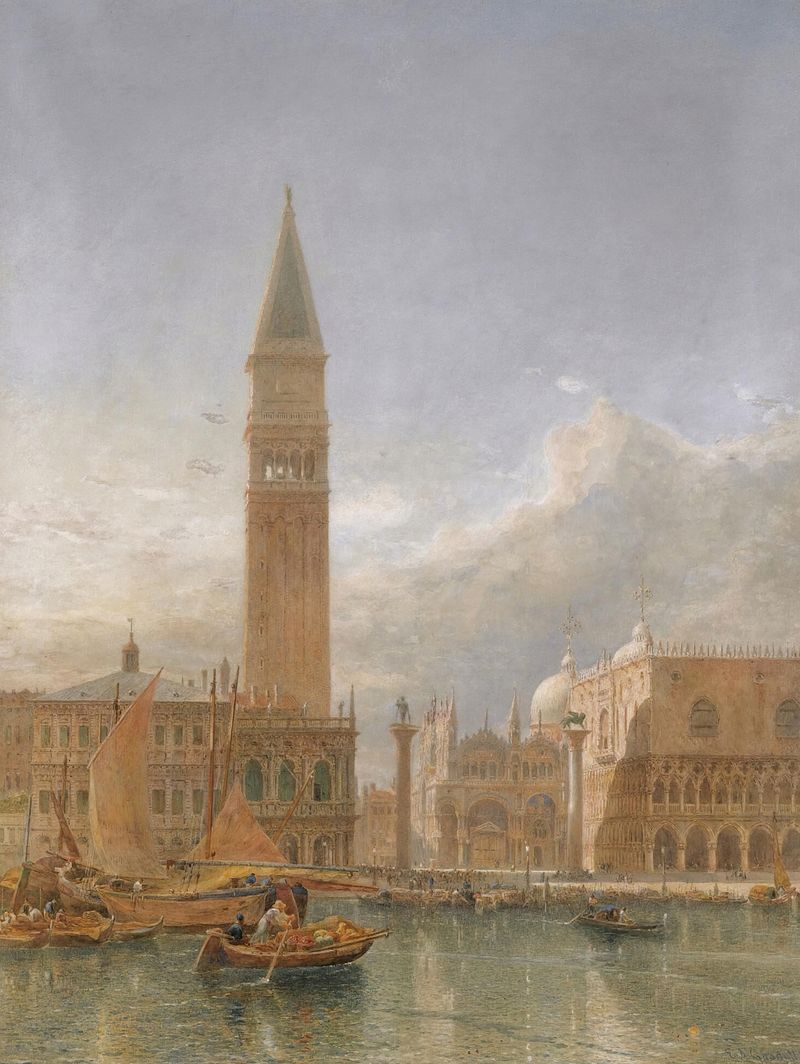
Piazzetta San Marco, Venice
Edward Angelo Goodall
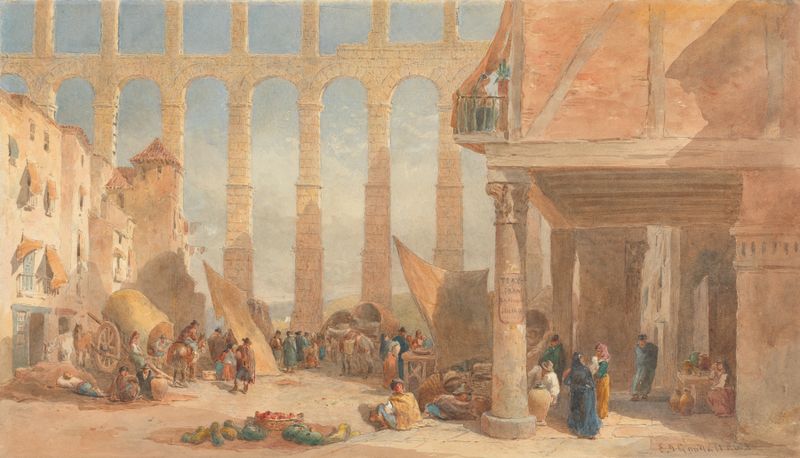
Aquaduct at Segovia, Spain
Edward Angelo Goodall
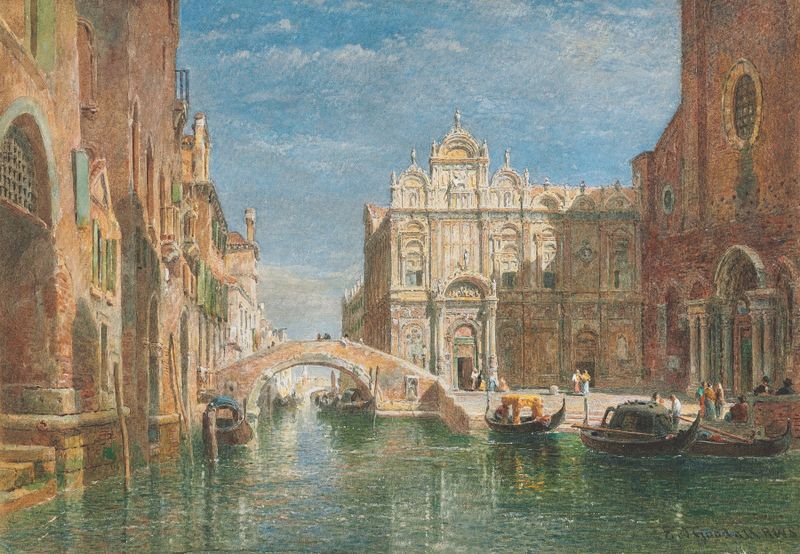
The Church of SS. Giovanni e Paolo, Venice
Edward Angelo Goodall
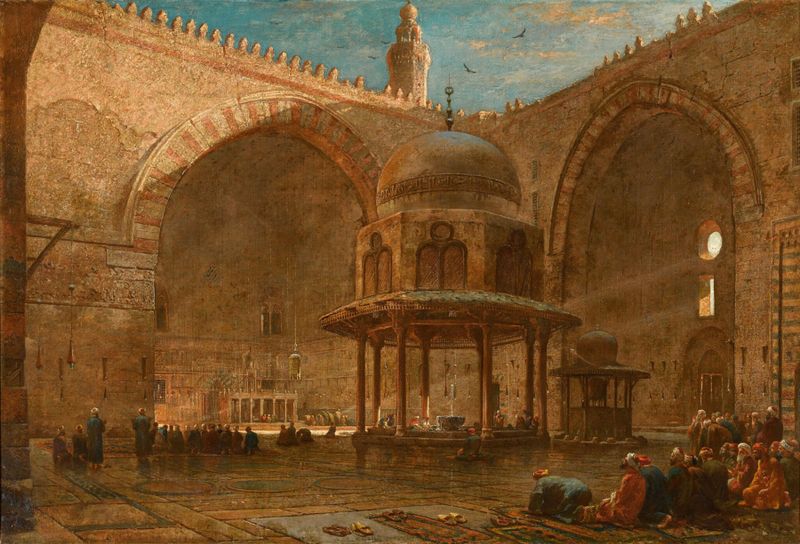
The Mosque of Sultan Hassan, Cairo
Edward Angelo Goodall

Spar and Anchor
Edward Angelo Goodall