
Mount Hood from the Banks of Little Sandy River — History & Facts
In the embrace of nature, serenity finds its voice, whispering softly to those willing to listen. Look to the left at the gentle cascade of the Little Sandy River, its ripples gliding over smooth stones while reflecting the muted hues of a tranquil sky. Notice how the artist employs soft brushstrokes to blend greens and blues, creating an ethereal quality that speaks to the calm of the scene. The looming presence of Mount Hood anchors the composition, its snow-capped peak contrasted against the lush greenery, inviting the eye to wander through the serenity of the landscape. Delve deeper into the details — the interplay of light and shadow reveals the delicate balance of nature, where each blade of grass seems to hold its breath in reverence.
The distant mountain, both majestic and tranquil, symbolizes steadfastness in contrast to the flowing river — a reminder of life’s constant movement. This juxtaposition fosters a sense of peace, urging viewers to reflect on their own inner landscapes amidst the chaos of life. In 1869, Keith created this work during a period of artistic exploration and personal reflection in California. He was deeply influenced by the Romantic tradition, seeking to convey the sublime beauty of the American wilderness.
As he painted, the country was undergoing rapid changes, yet his focus remained on capturing the timeless essence of nature, allowing his viewers to escape into a world of calm and contemplation.
More Artworks by William Keith
Browse all →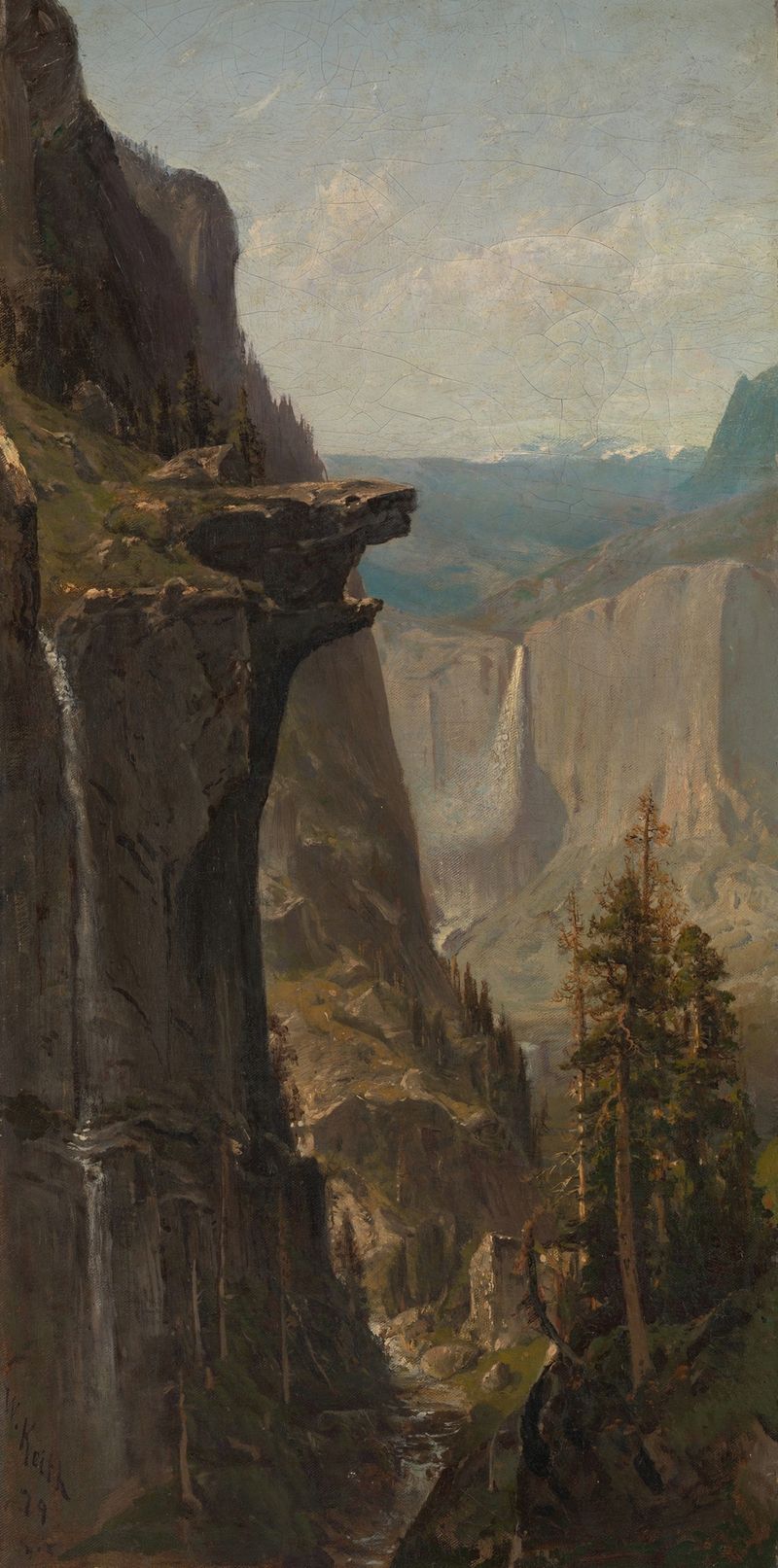
Yosemite Falls, from Glacier Point
William Keith

Half Dome, Yosemite
William Keith
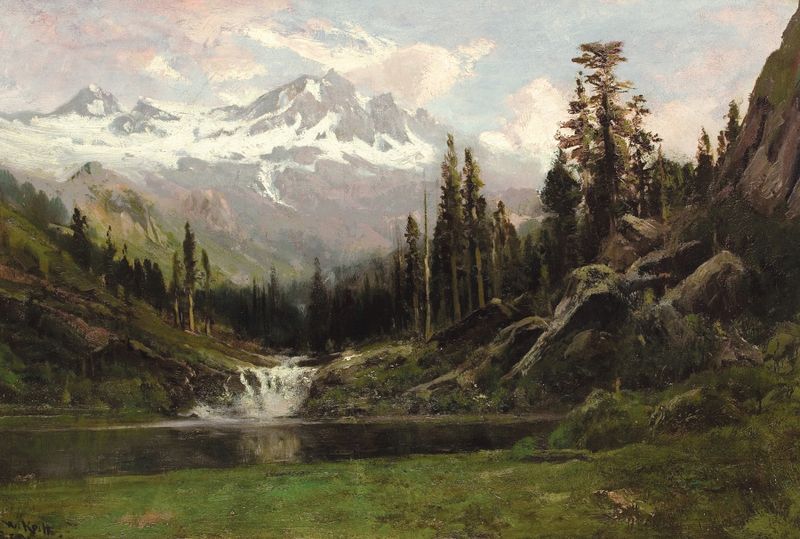
View of Mount Shasta
William Keith
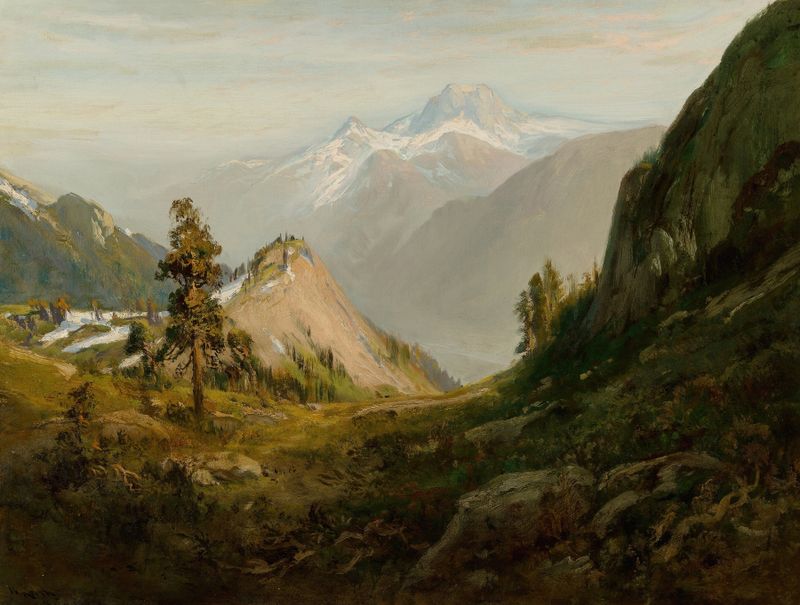
Where Gold was Found in California
William Keith

Mount Tamalpais from the North West
William Keith

Yosemite Valley
William Keith
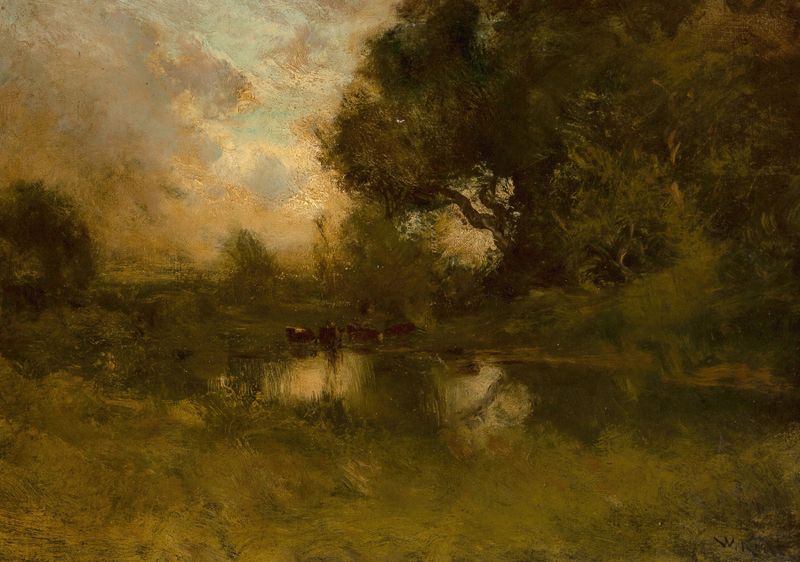
Napa Creek
William Keith
Path through California oaks
William Keith

Landscape
William Keith

Landscape Painting
William Keith





