
Mountain landscape in winter — History & Facts
Could beauty survive in a century of chaos? Look closely at the sweeping panorama of white-capped peaks and glistening frost that fills the canvas. The sharp contrast between the vividly blue sky and the stark whites of the snow captures an ethereal essence, pulling you into a world both serene and invigorating. Notice how the gentle gradient of light, shifting from the delicate blush of dawn to the harsh brilliance of midday, highlights the texture of the snow, transforming it into a shimmering blanket that invites both admiration and introspection. As your gaze lingers, consider the hidden elements in the scene.
The distant mountains, though seemingly majestic and untouchable, are softened by the chill of winter, hinting at fragility beneath their grandeur. Each brushstroke speaks to a tension between permanence and impermanence, evoking emotions of ecstasy tinged with melancholy. The tranquility of the landscape juxtaposes with the chaos of the early 20th century, reflecting a longing for peace amidst turmoil. Stefan Filipkiewicz created this winter landscape between 1914 and 1920, during a tumultuous period shaped by World War I and its aftermath.
Living in Poland, he navigated a world in upheaval, with art movements evolving across Europe as reactions to the war intensified. His dedication to capturing nature's beauty—unspoiled and awe-inspiring—was both a personal sanctuary and a universal statement, asserting that even in disruption, the sublime can ignite hope and resilience.
More Artworks by Stefan Filipkiewicz
Browse all →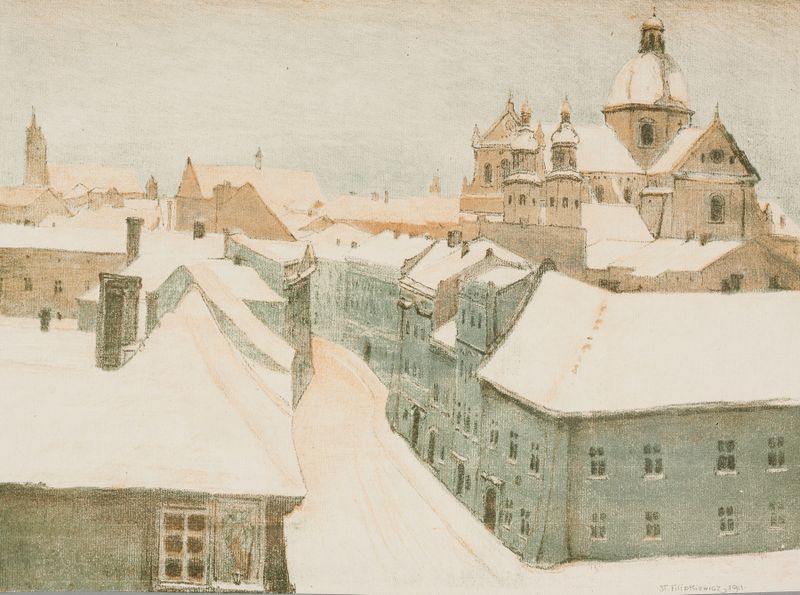
View of Krakow from Wawel
Stefan Filipkiewicz
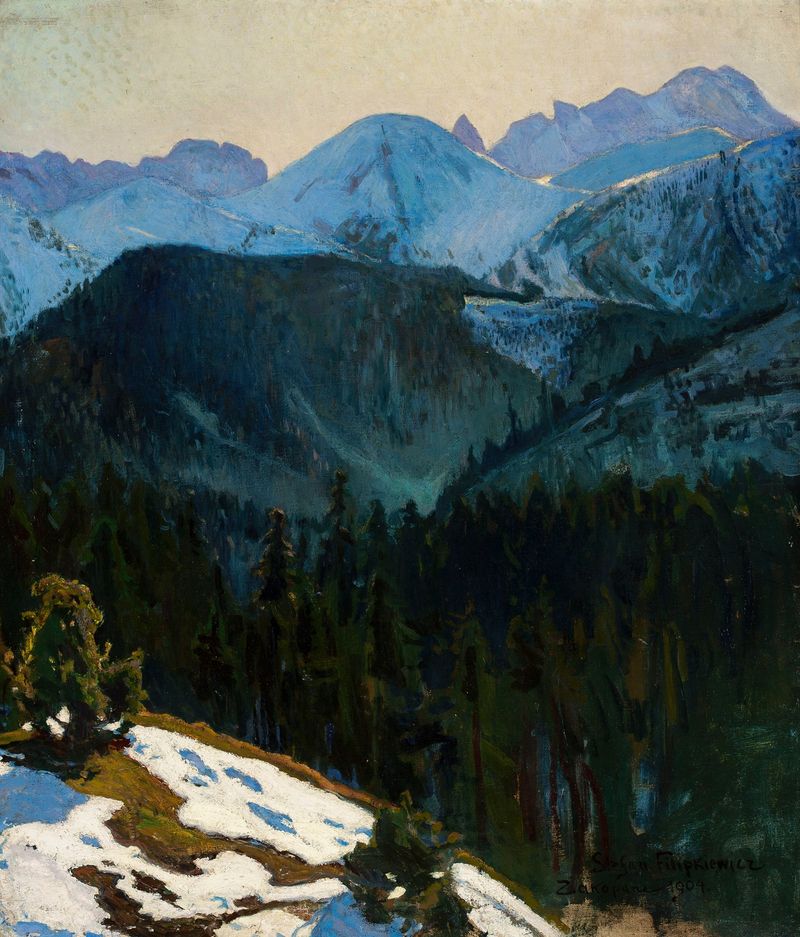
Tatra Mountain view
Stefan Filipkiewicz

Thaw in the Tatra Mountains
Stefan Filipkiewicz

Sad w cieniu
Stefan Filipkiewicz

Forest stream in winter
Stefan Filipkiewicz
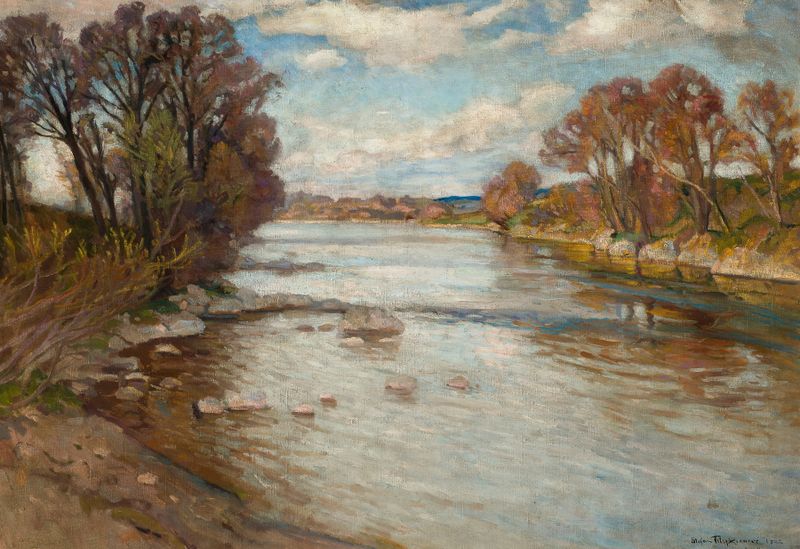
The Dunajec River at Szaflary
Stefan Filipkiewicz

Dorfkirche
Stefan Filipkiewicz

Forest Stream
Stefan Filipkiewicz
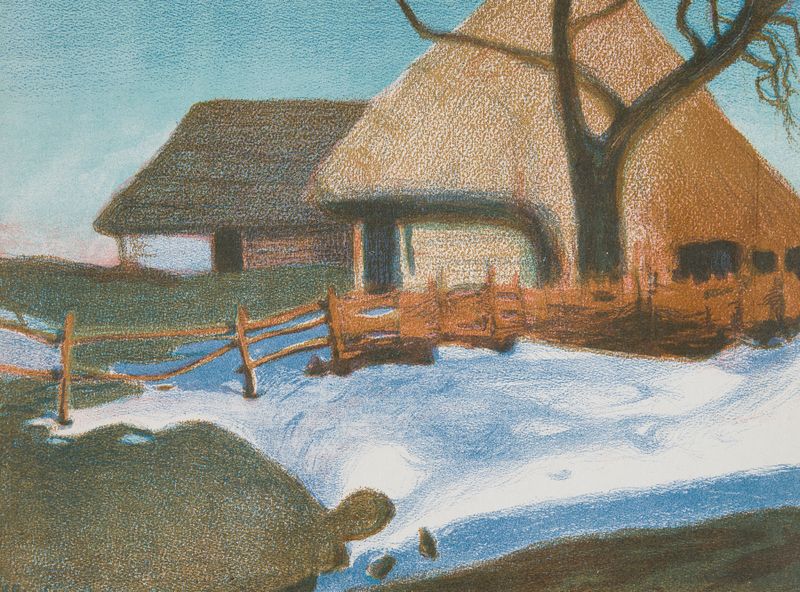
Rural landscape
Stefan Filipkiewicz

Tatra Mountain view
Stefan Filipkiewicz





